

Addressing pollution, fire hazards, and narrow, multi-story houses.
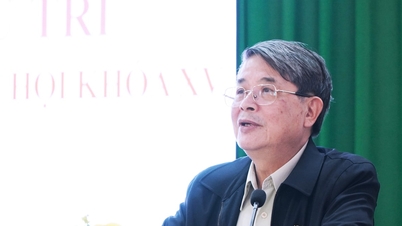
National Assembly Deputy Nguyen Anh Tri ( Hanoi Delegation) agrees with the city's directions and solutions for renovating old apartment buildings, especially in light of the current serious fire and explosion incidents, as well as addressing polluted rivers and issues related to waste and wastewater.
Mr. Tri suggested that urban planning should focus on wide roads for easy access and emergency escape routes in case of fire or explosion. He emphasized the need to reduce and eventually eliminate narrow, tube-shaped houses in Hanoi, and stressed the importance of discussing this with residents to achieve high levels of consensus. "We've gone through decades of tube-shaped houses, leaving behind a situation that is now very difficult to address and rectify. This time, we need to gradually limit them, eliminate new ones, and replan to bring about change," Mr. Tri stated.
Regarding elevated roads, Mr. Tri suggested that development should only be on the outskirts, while in densely populated areas of the city, it should be minimized. He argued that high-rise buildings should not be built in the Old Quarter, even on very beautiful streets, as they would obstruct views and detract from the city's appearance. Regarding healthcare system planning, he emphasized that planning should not only benefit the people of Hanoi but also the entire region, and even the nation, as most major, leading hospitals are concentrated in Hanoi. Large hospitals, especially specialized ones, should be highly concentrated, and there should even be medical centers containing specialized institutes to facilitate collaboration. General hospitals with fewer than 500 beds should be present in all districts and counties. Multi-specialty clinics should be located throughout residential areas, ideally as close to residents as possible, creating a system that directly serves the public, allowing people to reach a clinic within 15 minutes of even minor illnesses.
Regarding transportation, attention should be paid to urban development based on the TOD (Transit-Oriented Development) model (meaning using the development of a public transportation system as the basis for urban planning, and using transportation hubs as points of population concentration to further develop a dispersed transportation system), especially in the suburbs, connecting regions across the country with all types of road, rail, water, and air transport.
According to National Assembly Deputy Tran Van Tien (Vinh Phuc Delegation), currently, planning adjustments are made according to the 2009 Urban Planning Law. Meanwhile, the Government is submitting to the National Assembly for consideration a Law on Urban and Rural Planning to replace the 2009 Urban Planning Law. Therefore, it is suggested that the consultants implementing the adjustment of the Capital's master plan must adhere closely to the Capital's master plan and the draft Law on Urban and Rural Planning to avoid a situation where the newly adjusted master plan has to be adjusted again according to the Law on Urban and Rural Planning.
Regarding the revised urban planning project, which adopts the "city within a capital" model, National Assembly Deputy Nguyen Van Than (Thai Binh delegation) expressed his desire for "Hanoi within Hanoi city." He suggested that perhaps the inner city districts should be considered "Hanoi Capital," while Hanoi itself should be "Hanoi City comprising Hanoi Capital and other areas." This would allow the state to focus its resources on the capital. "Hanoi currently has 12 million inhabitants, and by 2030, that number will reach 17-18 million. We should do this because other countries have already done it," Mr. Than said, suggesting that the inner city could have 4-6 districts.
"Building high-rise buildings in the inner city is unacceptable now because it's very dangerous. High-rise buildings cannot be allowed in the inner city. Therefore, I hope the National Assembly, the Party, and the State will study the view that Hanoi should be located within Hanoi city," Mr. Than said.
Untie the 3 knots
As someone involved in the development of the Hanoi Capital City Planning for the period 2021-2030, with a vision to 2050, and the revised master plan for Hanoi Capital City to 2045, with a vision to 2065, National Assembly Deputy Hoang Van Cuong (Hanoi Delegation) raised three issues that need attention. Accordingly, the biggest bottleneck facing Hanoi today must be addressed: traffic congestion. The focus should be on investing in and constructing 14 urban railway lines as outlined in the plan, creating a railway network capable of connecting transportation and serving the people.
Mr. Cuong analyzed: This will automatically replace private vehicles. Current problems of traffic congestion and environmental pollution will be solved through the development of a railway system connecting to suburban areas; it will automatically disperse economic activities currently concentrated in the inner city, developing in new urban areas, especially since this railway system will also connect with provinces such as Bac Ninh, Vinh Phuc, Hung Yen, and Ha Nam. Thus, these provinces and cities will become almost like satellite cities, creating connectivity for development while also dispersing concentration.
Once such a railway system is in place, existing urban areas with old apartment buildings and dilapidated low-rise housing can automatically be transformed into modern urban models. The underground space can be developed into a commercial and service area, creating underground neighborhoods, while the surface becomes open space for green areas and public services – this is the image of a civilized and modern city.
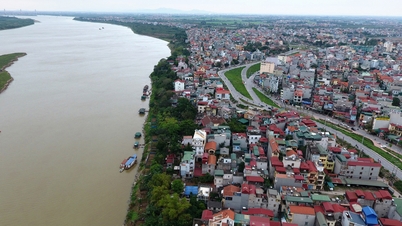
Secondly, according to Mr. Cuong, it is necessary to invest in building a wastewater collection system separate from the rainwater system and to construct and arrange local and centralized wastewater treatment areas so that when wastewater from urban areas is discharged into the environment, it is clean and free from pollution. This should be done simultaneously with the immediate construction of two spillway dams on the Red River and the Duong River. When these two dams are built, the water level of the Red River will rise during the dry season, pushing water into rivers such as the Day River, the Nhue River, and the Bac Hung Hai river system, automatically "reviving" these rivers and preventing droughts like the current ones.
Of particular significance is that this dam system will save approximately 5 billion cubic meters of water annually from reservoirs like Hoa Binh Lake, eliminating the need to release water during the dry season. The immense benefit is the availability of water for agricultural production throughout the Red River Delta region, ensuring sufficient water for power generation, and transforming the river surface in the Hanoi area into a large, overflowing lake. This will allow us to construct the two heritage roads along the river as planned. It will become a space for tourism, a cultural space, and a space for organizing commercial and service activities along the river.
Thirdly, according to Mr. Cuong, there needs to be a mechanism to support residents in the Old Quarter. If we want to renovate and beautify this area, we must support them with housing and implement a mechanism that prevents the expropriation of their homes, even if they receive housing assistance. With such support, residents will dedicate this space to business and commercial activities. Their property will remain theirs. They can produce and conduct business themselves, or allow investors to invest in and renovate it into accommodation or commercial spaces. This will develop a vibrant night-time economy for Hanoi, not just around Hoan Kiem Lake as it is currently, but the entire Old Quarter, West Lake, and the Red River will become a hub for tourism and night-time economic development. "These will be key factors creating a huge impetus for the capital's development," Mr. Cuong said.
Meanwhile, according to Minister of Construction Nguyen Thanh Nghi, it is necessary to focus on implementing comprehensive and synchronized solutions to overcome air and water pollution, as well as other environmental pollution issues in the capital city, by implementing synchronized green development and green transformation solutions, minimizing pollution sources such as transforming public transportation, changing production technologies, and investing in waste and wastewater treatment technologies for the capital city in stages.
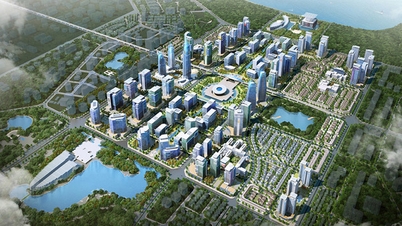
Meanwhile, Minister of Planning and Investment Nguyen Chi Dung stated that the city's development orientation towards the river, the expansion of urban railway lines, and the development of underground spaces need to address water environmental issues, including the treatment and cleaning of the Nhue, To Lich, and Tich rivers, as well as Hanoi's air quality. The plan differs significantly from other plans, focusing on cultural and heritage issues, positioning Hanoi as a hub of national cultural excellence, a leading center for research and innovation, and a driver of human potential, promoting science, technology, and innovation.
COMMUNIQUE NO. 23 OF THE 7TH SESSION OF THE 15TH NATIONAL ASSEMBLY
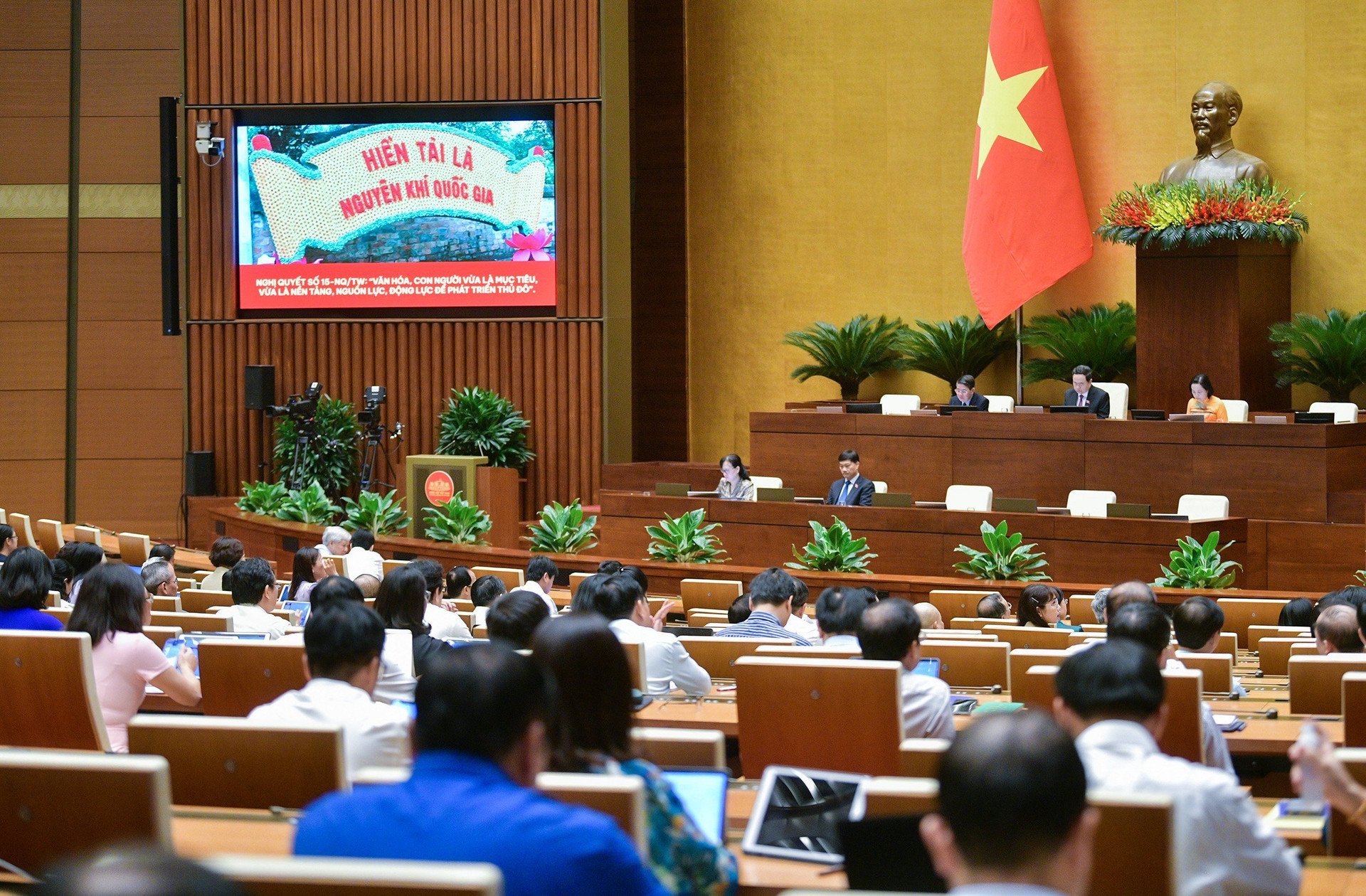
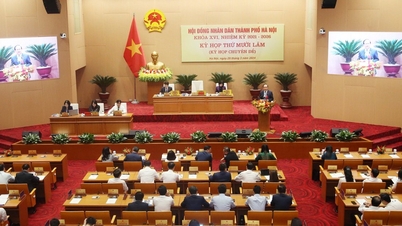
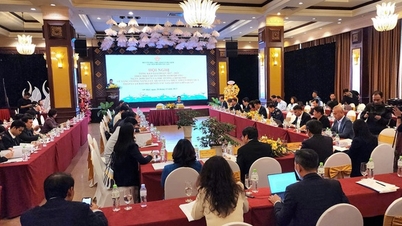
On June 20th, the National Assembly continued its 21st working day. In the morning, the National Assembly held a plenary session in the Assembly Hall to discuss the Capital City Planning for the period 2021-2030, with a vision to 2050; and the overall adjustment plan for the General Planning of Hanoi Capital City until 2045, with a vision to 2065. Following the discussion, Minister of Construction Nguyen Thanh Nghi and Minister of Planning and Investment Nguyen Chi Dung gave explanations and clarified some issues of concern to National Assembly deputies. Subsequently, the National Assembly held group discussions on the draft Law amending and supplementing several articles of the Land Law, the Housing Law, the Real Estate Business Law, and the Law on Credit Institutions.
In the afternoon, the National Assembly held a plenary session in the Assembly Hall, listening to the Minister of Construction Nguyen Thanh Nghi present the draft Law on Urban and Rural Planning; the Chairman of the National Assembly's Economic Committee Vu Hong Thanh present the verification report; the Minister of Natural Resources and Environment Dang Quoc Khanh present the draft Law on Geology and Minerals; and the Chairman of the National Assembly's Science, Technology and Environment Committee Le Quang Huy present the verification report. Following this, the National Assembly held group discussions on the draft Law on Geology and Minerals and the draft Law on Urban and Rural Planning.
According to the National Assembly Office
Source: https://daidoanket.vn/quy-hoach-thu-do-ha-noi-can-nhieu-doi-moi-cung-tu-duy-sang-tao-10283791.html


![[Photo] Prime Minister Pham Minh Chinh presides over a meeting on private sector economic development.](/_next/image?url=https%3A%2F%2Fvphoto.vietnam.vn%2Fthumb%2F1200x675%2Fvietnam%2Fresource%2FIMAGE%2F2025%2F12%2F20%2F1766237501876_thiet-ke-chua-co-ten-40-png.webp&w=3840&q=75)










































































Comment (0)