

A rare opportunity, creating momentum for breakthroughs and fundamental changes for the capital city.
On the morning of May 27th, speaking to the press on the sidelines of the 7th Session of the 15th National Assembly, delegate Hoang Van Cuong ( Hanoi City Delegation) emphasized the special significance of the National Assembly simultaneously considering and approving the Draft Law on the Capital City (amended), and providing feedback on two major planning projects for the Capital City (Hanoi Capital City Planning for the period 2021-2030, with a vision to 2050 and the Revised Master Plan for Hanoi Capital City to 2045, with a vision to 2065) at the same session. He noted that this amendment to the Law on the Capital City reflects the desire to create a superior and unique legal framework to develop the Capital City into a true representative of the entire nation.
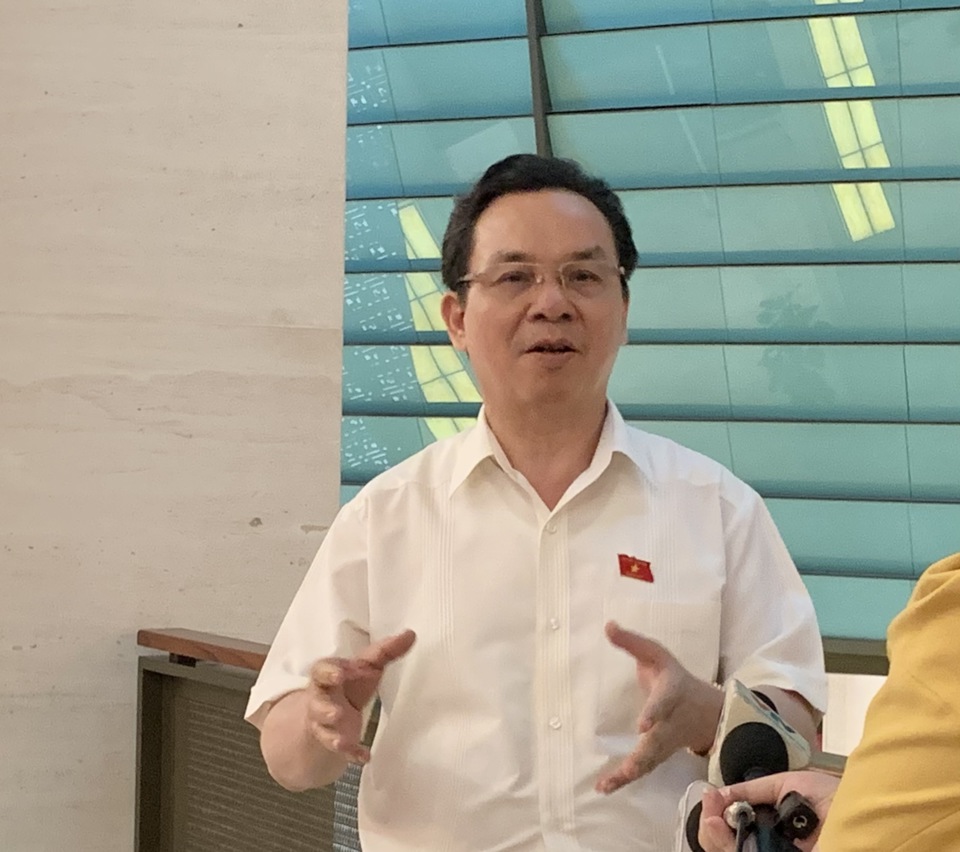
According to Representative Hoang Van Cuong, with that in mind, when amending the Law, everyone is entrusting their thoughts, aspirations, and wishes, as well as those of the people nationwide, to the mechanisms and policies for the development of the capital city. The participation of the National Assembly's committees and National Assembly representatives demonstrates both their commitment and their own work, contributing to the development of the capital city.
Based on that, for Hanoi City, amending the Law on the Capital City is fulfilling the important responsibility and mission entrusted by the people, voters, and localities in "building the Capital City into the representative face of the whole country."
At this session, the National Assembly simultaneously considered and approved the Draft Law on the Capital City (amended), and provided feedback on the Hanoi Capital City Planning for the period 2021-2030, with a vision to 2050, and the Revised Master Plan for Hanoi Capital City until 2045, with a vision to 2065. According to delegate Hoang Van Cuong, this is a rare opportunity to create a development orientation for the Capital City and provide a legal basis for implementing that orientation. This is because the Capital City planning creates a general, comprehensive, and long-term development orientation for the Capital City, enabling Hanoi to represent the entire nation and be on par with other capital cities around the world .
The adjustment of the master plan involves concretizing the ideas and specific contents regarding infrastructure and urban development that have been outlined in the Capital City plan. This concretization of the master plan will result in specific development options and models to give the Capital City a new look in the future.
To implement the orientations and ideas for the Capital City's planning and to carry out the construction plans in the revised master plan, legal frameworks, mechanisms, and regulations are needed. This framework creates a development mechanism, allowing ideas to become reality; this is the mission of the Law on the Capital City. Therefore, it must be affirmed that the National Assembly's simultaneous implementation of the three important contents mentioned above at this session is a very good and rare opportunity to create breakthroughs and fundamental changes for the Capital City.
Aiming to address pressing current issues.
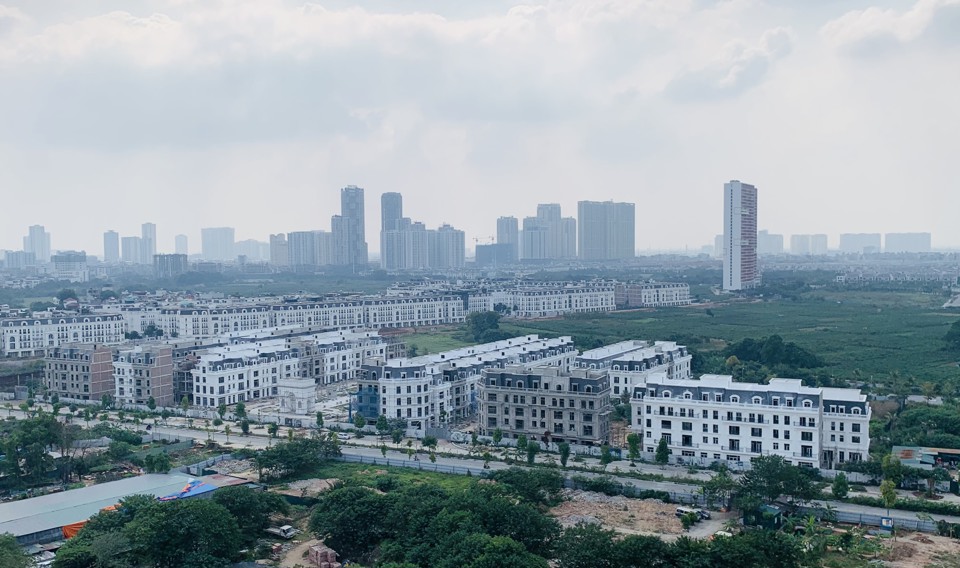
According to delegate Hoang Van Cuong, we have all seen the shortcomings in Hanoi's urban development, leaving regrettable consequences. The Capital City Law, as well as the Capital City planning documents, must aim to address these pressing issues. For example, according to the law, many areas within the historical inner city boundaries are restricted in terms of investment in renovation. This leads to many old apartment buildings not being renovated; many self-built houses do not meet technical requirements, fire safety standards, or environmental living conditions, but there is no mechanism for renovation.
Therefore, this revised draft of the Capital City Law must create a legal framework to ensure that areas truly designated as conservation zones are protected for their historical value related to Thang Long - Hanoi, as well as important architectural works with historical significance. Other areas must be developed with a model for investment and renovation towards a modern urban direction, rather than allowing the capital to develop spontaneously, with people building according to their own subjective will, without adhering to the planning standards of a major city.
Proposing solutions for long-established residential areas with high building density, lack of public space, and negative impacts on quality of life, especially posing potential safety risks in the event of fires or explosions, delegate Hoang Van Cuong suggested that areas lacking fire safety, rescue space, or public activity spaces should be included in renovation plans to address all existing concerns in a civilized and modern development direction.
"This is entirely possible because most of the areas we're talking about are chaotic and dilapidated, located in the heart of the capital. If properly renovated, they will create areas with high economic value. The key is to create a legal framework that allows for the exploitation of underground and elevated spaces, and a modern public infrastructure system such as a high-capacity public transport system like urban rail," said Representative Hoang Van Cuong.
It was also argued that, if successful, areas with high population density and many low-rise buildings would be transformed into a few high-rise buildings. Underground living spaces would be moved to higher levels, freeing up ground for the development of green spaces, public areas, transportation infrastructure, and service facilities.
Representative Hoang Van Cuong assessed that the draft law is of very good quality at this point. In particular, it embodies the spirit of empowering and assigning responsibility to Hanoi to fulfill its mission of creating a breakthrough and outstanding development for the capital city.
Developing the capital city is a long process and cannot be measured in a short period of time. We have set a goal that by 2045, Vietnam must be a high-income country, on par with developed nations. The capital city planning also aims for Hanoi to be a leading capital city in the region by 2050, on par with the capitals of advanced countries worldwide.
"Whether that roadmap is achieved depends on exploiting the regulations and mechanisms that have been specifically designed for the capital city; it requires high determination not only from the capital's government in the transformation but also a significant concentration of resources from society to create a truly groundbreaking image for the country, worthy of a developed nation by 2045," said delegate Hoang Van Cuong.
Source: https://kinhtedothi.vn/luat-thu-do-sua-doi-chat-luong-tot-tao-co-hoi-but-pha-cho-ha-noi.html


![[Photo] Prime Minister Pham Minh Chinh receives Lao Minister of Education and Sports Thongsalith Mangnormek](/_next/image?url=https%3A%2F%2Fvphoto.vietnam.vn%2Fthumb%2F1200x675%2Fvietnam%2Fresource%2FIMAGE%2F2025%2F12%2F16%2F1765876834721_dsc-7519-jpg.webp&w=3840&q=75)
![[Image] Leaked images ahead of the 2025 Community Action Awards gala.](/_next/image?url=https%3A%2F%2Fvphoto.vietnam.vn%2Fthumb%2F1200x675%2Fvietnam%2Fresource%2FIMAGE%2F2025%2F12%2F16%2F1765882828720_ndo_br_thiet-ke-chua-co-ten-45-png.webp&w=3840&q=75)
![[Live] 2025 Community Action Awards Gala](/_next/image?url=https%3A%2F%2Fvphoto.vietnam.vn%2Fthumb%2F1200x675%2Fvietnam%2Fresource%2FIMAGE%2F2025%2F12%2F16%2F1765899631650_ndo_tr_z7334013144784-9f9fe10a6d63584c85aff40f2957c250-jpg.webp&w=3840&q=75)
![[Photo] Prime Minister Pham Minh Chinh receives the Governor of Tochigi Province (Japan)](/_next/image?url=https%3A%2F%2Fvphoto.vietnam.vn%2Fthumb%2F1200x675%2Fvietnam%2Fresource%2FIMAGE%2F2025%2F12%2F16%2F1765892133176_dsc-8082-6425-jpg.webp&w=3840&q=75)










































































Comment (0)