

Ms. NTH, from Lien Bao ward, Vinh Yen city, shared: “At the end of March, while browsing Facebook to find some tourist destinations for the upcoming April 30th - May 1st holiday, I saw a fanpage promoting a 3-day, 2-night tour to Ha Long Bay at a shocking price of only 1.2 million VND per person, including transportation, a 3-star hotel, and breakfast buffet at the hotel.
Trusting the fanpage because it had a large number of followers and many beautiful pictures, I transferred a deposit for a tour for four people. However, after transferring the money, the fanpage immediately blocked my messages, and the phone number was unreachable. Upon further investigation, I discovered that this was a fake page impersonating a well-known travel company.”
Ms. H's case is not uncommon. Scammers meticulously create fake websites and fan pages that are identical to the official pages of hotels, resorts, homestays, or large travel companies, even including the "blue checkmark" (the verification mark provided by Facebook to personal accounts or fan pages) to build trust.
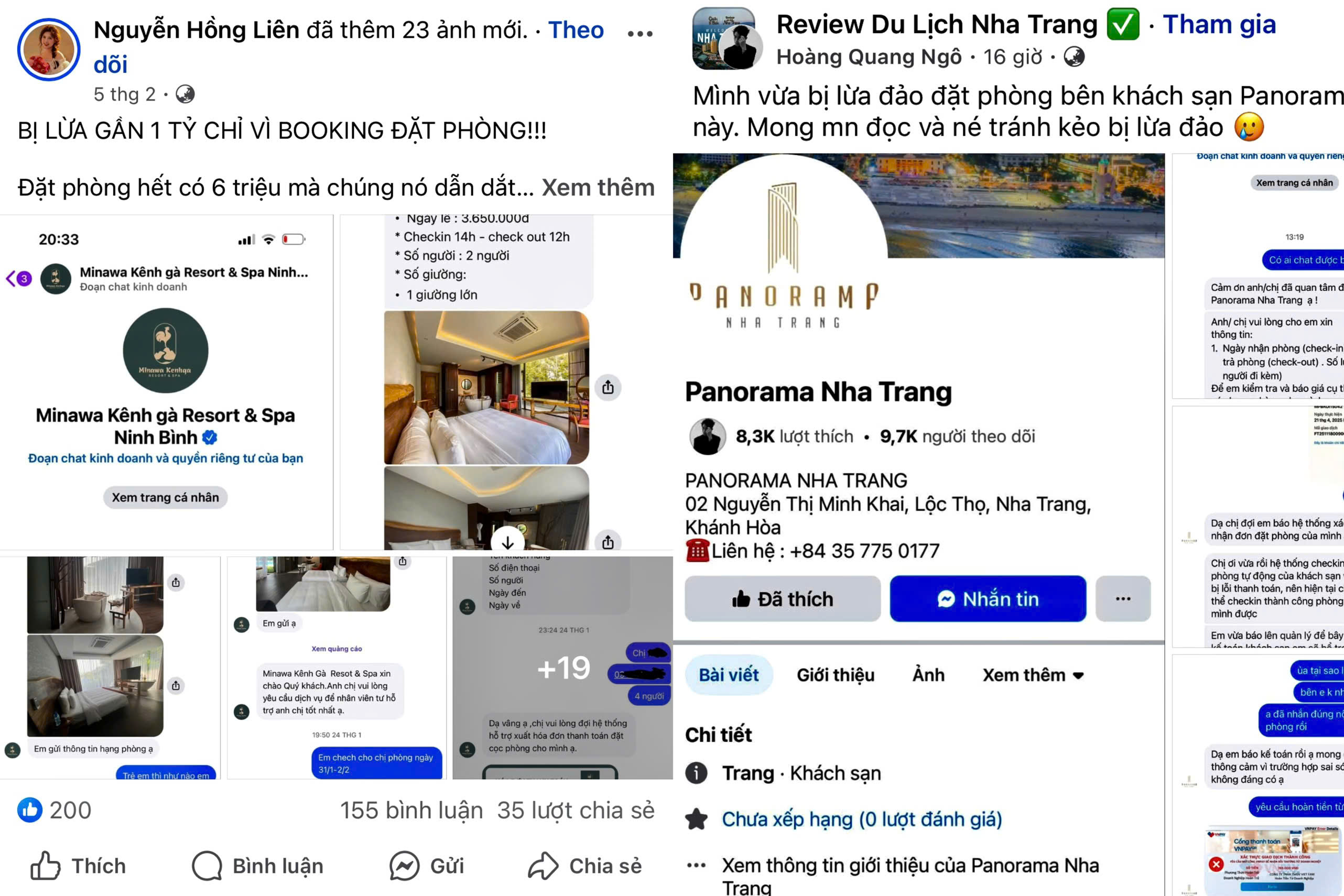
From the logo and similar domain name to the professional interface – everything was designed to build trust and encourage quick transfers. Buyers, fearing tickets would sell out or rooms would be fully booked, transferred money to reserve their seats without verification.
After receiving the money, they immediately delete the posts, block contact, and disappear. More importantly, the desire for cheap deals, the need to book quickly to catch the holiday, coupled with the mix of real and fake information on social media, leads many people to fall into the trap and become victims. Several cases shared on social media show that many victims transferred deposits, or even 100% of the money, to the scammers, only to realize they had been cheated when it was too late.
A representative from a travel company in Vinh Yen city said: "During every holiday, Tet (Lunar New Year), or peak tourist season, the company posts clear announcements on its official fanpage and website about tour packages or information about airline tickets and hotline numbers for customers who need advice on services."
However, during peak seasons, we receive more calls from customers asking to verify suspicious information on social media. Some people claim to have booked tours with us but were actually scammed by another fake fan page. We always advise customers to book tour services or airline tickets through our official website, call our hotline, or visit our company directly for specific and safer advice, to avoid unfortunate scams.”
Authorities note that cases of people being scammed online through hotel bookings and airline ticket reservations have been occurring for several years now; however, the number of victims reporting to the authorities is not high.
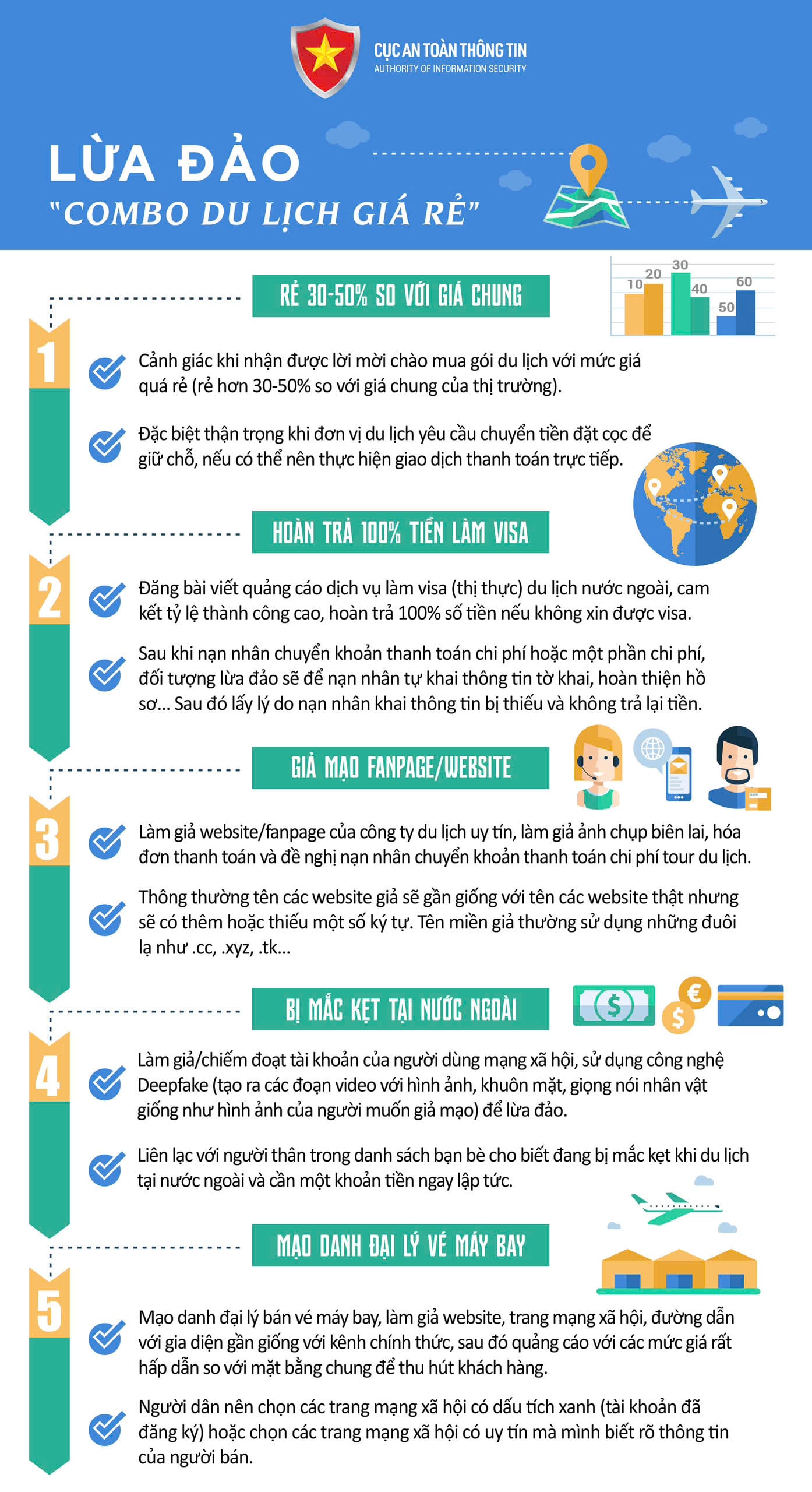
Authorities advise the public to be vigilant against increasingly sophisticated scams. When booking airline tickets, train tickets, tours, or hotel rooms, people should carefully check the contact information, business licenses, or legal documents (if necessary) of travel agencies, hotels, resorts, etc.
Do not transfer the entire amount before thorough verification, and do not blindly trust the blue checkmark on social media sites. Even though it's a verification badge from a social media platform, it can still be exploited or faked. Check multiple sources of information such as the official website, hotline, contact email, and user reviews to compare information.
Transactions should be conducted through official websites, fan pages, or directly at ticket offices and authorized agents of the airlines. Stop the transaction immediately if you detect any unusual signs during the booking process, such as requests for refunds, failure to respond to messages, vague information, etc. Furthermore, authorities advise citizens to report violations so that timely preventative measures can be taken.
Recently, Prime Minister Pham Minh Chinh issued Official Dispatch No. 29 "On strengthening the prevention and handling of activities using high technology in cyberspace to defraud and appropriate property".
In this context, the Ministry of Public Security directed police units and localities to focus on effectively implementing the peak period of attacking and suppressing crimes using high technology and exploiting cyberspace for criminal activities, especially fraud and property appropriation, particularly during the period of reorganizing the local police apparatus (without establishing district-level police).
Regularly review, promptly detect, prevent, and remove content, websites, links, applications, groups, and accounts on the internet related to fraudulent activities, suspicious fraudulent calls and messages, especially calls from abroad, calls using VoIP technology, and OTT applications...
Huyen Linh
Source: http://baovinhphuc.com.vn/Multimedia/Images/Id/127101/Can-trong-nan-lua-dao-dat-phong-tour-dip-le-304-15

![[Photo] Prime Minister Pham Minh Chinh attends the Conference on the Implementation of Tasks for 2026 of the Industry and Trade Sector](/_next/image?url=https%3A%2F%2Fvphoto.vietnam.vn%2Fthumb%2F1200x675%2Fvietnam%2Fresource%2FIMAGE%2F2025%2F12%2F19%2F1766159500458_ndo_br_shared31-jpg.webp&w=3840&q=75)






































































Comment (0)