

The US dollar is "hotter" than gold.
The dollar rose on Friday as traders weighed the uncertain US inflation report and tensions in the Middle East, where the US and Britain conducted air and sea attacks targeting Houthi targets in Yemen.
The US dollar index, which tracks the currency against six major currencies, rose 0.26% to 102.48 on Friday. It has gained about 1.1% in the first half of 2024 due to stronger-than-expected US data, after falling 2% in 2023.
After the first half of 2024, the US dollar rose 1.1% while the price of gold fell slightly from $2,072/ounce to $2,058/ounce, equivalent to a 0.7% decrease. It's clear that the greenback is significantly "hotter" than gold.
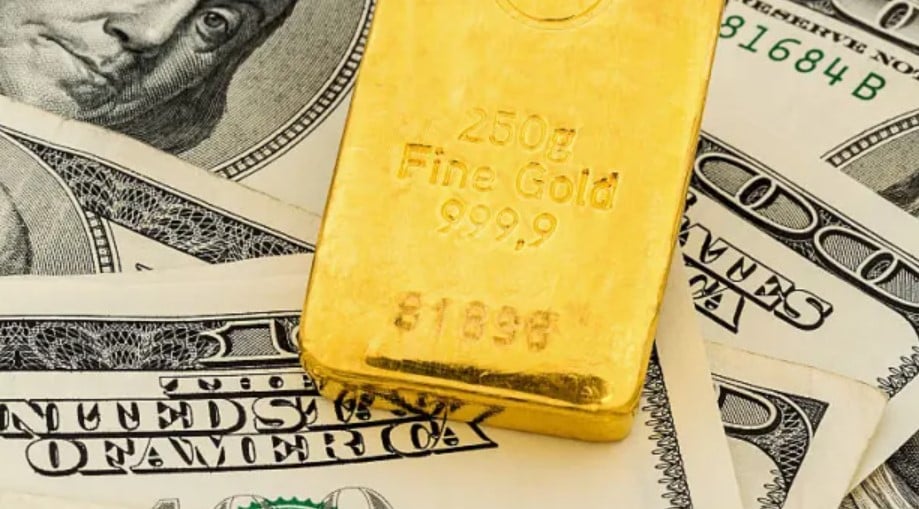
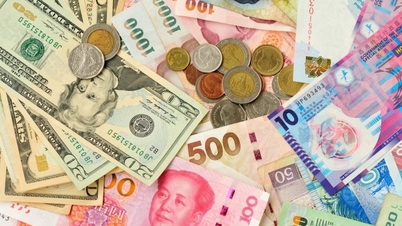
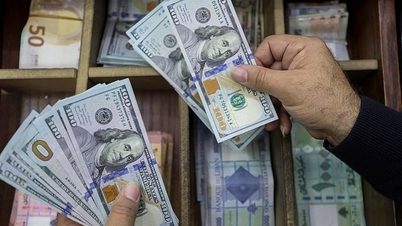
Middle Eastern tensions are making the US dollar "hotter" than gold. While world gold prices have fallen slightly, the US dollar index has risen 1.1% in the first half of 2024. (Illustrative image)
US consumer prices rose in December as rents continued to increase, rising 0.3% for the month and 3.4% year-on-year, compared to economists ' forecasts of increases of 0.2% and 3.2%, respectively. The dollar strengthened after the data but ended Thursday virtually unchanged.
The euro fell 0.2% to $1.0949 on Friday. It has declined about 0.8% through 2024 after rising 3% last year.
Traders are pricing in a 68% chance that the first 25-basis-point rate cut by the Federal Reserve will occur in March, according to CME Group's FedWatch Tool, up from 65% on Thursday despite stronger inflation data.
Investors are eyeing the Middle East, where US and British attacks on Houthi targets mark an escalation of the consequences of the Israel-Hamas war in Gaza.
Oil prices surged, with Brent crude rising 3.9% to $80.45 a barrel, although the reaction in currency markets was relatively quiet.
The dollar was unchanged against the Japanese yen, a traditional safe-haven currency, at 145.24 yen per dollar. The Swiss franc, another safe-haven currency, fell by about 0.17%.
The British pound fell 0.25% to $1.273. Data showed better-than-expected growth in November, but it remained at a three-month low.
In the cryptocurrency world, bitcoin remained virtually unchanged at $45,965, after surging to a two-year high overnight following the U.S. Securities and Exchange Commission's green light to offer bitcoin-linked ETFs.
The US dollar is appreciating more slowly domestically than globally.
As can be seen, over the past two weeks, the US dollar has risen by 1.1% in the global market, higher than the common increase of 0.9% in the domestic market.
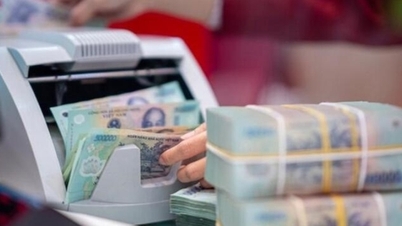
The USD/VND exchange rate at Vietnam Foreign Trade Commercial Bank ( Vietcombank ) closed the week at: 24,290 VND/USD – 24,630 VND/USD, an increase of 210 VND/USD, equivalent to 0.87% in both buying and selling rates compared to the last trading session of 2023.
The Vietnam Investment and Development Bank (BIDV) adjusted the USD/VND exchange rate, increasing it by 220 VND/USD, equivalent to 0.9%, to 24,330 VND/USD – 24,630 VND/USD. The exchange rate at the Vietnam Agricultural and Rural Development Bank (Agribank) also increased by 220 VND/USD, equivalent to 0.9%, to 24,320 VND/USD – 24,640 VND/USD.
At Techcombank, the USD/VND exchange rate closed the week at 24,340 VND/USD – 24,660 VND/USD, an increase of 230 VND/USD, equivalent to 0.95%. Similarly, at TPBank, the USD was traded at 24,328 VND/USD – 24,658 VND/USD, an increase of 233 VND/USD, equivalent to 0.95%.
Vietnam Joint Stock Commercial Bank for Industry and Trade (VietinBank) is one of the few institutions that adjusts the USD/VND exchange rate at a rate corresponding to the global market. The exchange rate at VietinBank is listed at: 24,295 VND/USD – 24,715 VND/USD, an increase of 290 VND/USD, equivalent to 1.2%, after two weeks of trading.
Meanwhile, at some commercial banks, cash transactions for USD incur significantly higher fees.
For example, at TPBank, the listed exchange rate for transfers is 24,328 VND/USD – 24,658 VND/USD. For cash transactions, the rate is 24,285 VND/USD – 24,725 VND/USD.
Source

![[Photo] First session of the 14th Congress of the Vietnam Trade Union](https://vphoto.vietnam.vn/thumb/1200x675/vietnam/resource/IMAGE/2026/06/03/1780465947883_ndo_br_img-3852-jpg.webp)

























![[Photo] Delegation attending the 14th Congress of the Vietnam Trade Union visits the Mausoleum of President Ho Chi Minh.](https://vphoto.vietnam.vn/thumb/1200x675/vietnam/resource/IMAGE/2026/06/03/1780451842301_ndo_br_img-3824-jpg.webp)

























![[Video] Sunset at Lap An Lagoon – Where the sun sets over the fishing nets](https://vphoto.vietnam.vn/thumb/1200x675/vietnam/resource/IMAGE/2026/05/31/1780192137701_beach-landscape-sea-water-nature-grass-745871-pxhere-com.jpeg)





































Comment (0)