

- Warning about the risk of food poisoning from food stalls outside the school gate.
- Proactive measures to prevent alcohol poisoning.
- Strict control over communal kitchens is necessary to prevent food poisoning.
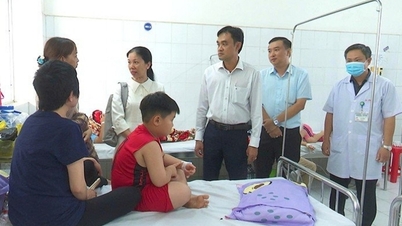
Recently, several suspected cases of poisoning have been recorded in Ca Mau province after people ate horseshoe crabs (actually sea cucumbers), requiring emergency hospitalization with symptoms such as numbness of the tongue, nausea, fatigue, and difficulty breathing.
Medical facilities have also received cases of digestive disorders suspected to be related to the consumption of horseshoe crabs caught in the wild.
 During fishing operations in the coastal areas of Ca Mau , local fishermen often catch horseshoe crabs mixed in with other species.
According to the health authorities, the main cause of poisoning is people confusing horseshoe crabs with sea cucumbers because the two species have quite similar appearances.
Sea cucumbers are a nutritious food enjoyed by many. However, according to experts, sea cucumbers contain tetrodotoxin, an extremely potent neurotoxin capable of causing muscle paralysis and respiratory failure. This toxin is not destroyed by high temperatures, so cooking, grilling, or steaming does not eliminate its toxicity. Currently, there is no specific antidote; treatment for sea cucumber poisoning mainly involves intensive care and respiratory support.
Symptoms of poisoning usually appear after 10-30 minutes with manifestations such as: numbness of the lips and tongue, nausea, abdominal pain, dizziness, weakness in the limbs, and difficulty breathing. In severe cases, it can lead to muscle paralysis, respiratory failure, and death if not treated promptly.
According to the Food Safety Department ( Ministry of Health ), people should absolutely not consume sea cucumbers as food in any form and should not eat horseshoe crabs without clearly distinguishing them from sea cucumbers.
People should not attempt to catch, buy, or process horseshoe crabs on their own without the experience to identify them; they should only consume seafood with a clear origin, supplied by reputable establishments.
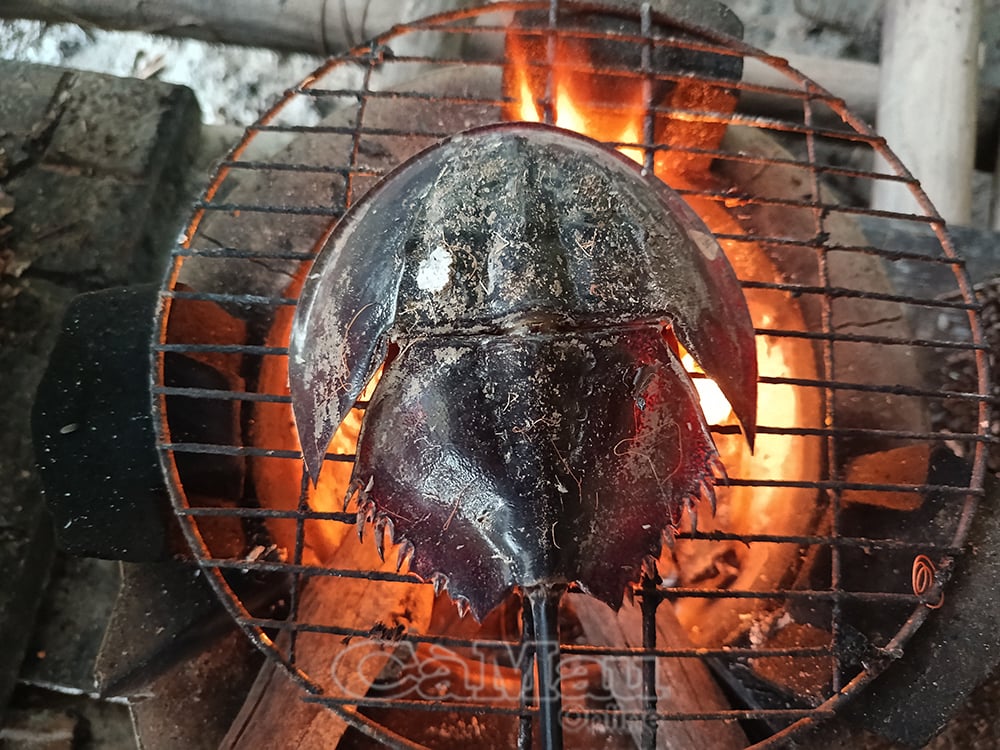 Grilled horseshoe crab is a favorite dish of many locals.
Besides horseshoe crabs and sea cucumbers , people also need to be wary of other foods containing natural toxins such as pufferfish, toads, and exotic mushrooms, as these can cause serious poisoning if used improperly.
Dr. Ho Thanh Dam, Head of the Health Communication and Education Department at the Ca Mau Provincial Center for Disease Control, advises: “When you notice someone showing suspected symptoms of food poisoning after eating, such as numb lips, nausea, dizziness, shortness of breath, numbness in hands and feet, or altered consciousness, you should quickly take them to the nearest medical facility for timely emergency treatment. People should absolutely not self-treat at home or use unproven folk remedies, as this can delay emergency treatment, increase the risk of serious health consequences, and even threaten the patient's life.”
Food poisoning caused by natural toxins is an unpredictable risk, but it is entirely preventable if everyone improves their knowledge and follows the recommendations of the health sector. Being cautious in choosing and using food not only helps protect one's own health but also contributes to ensuring the safety of family and community.
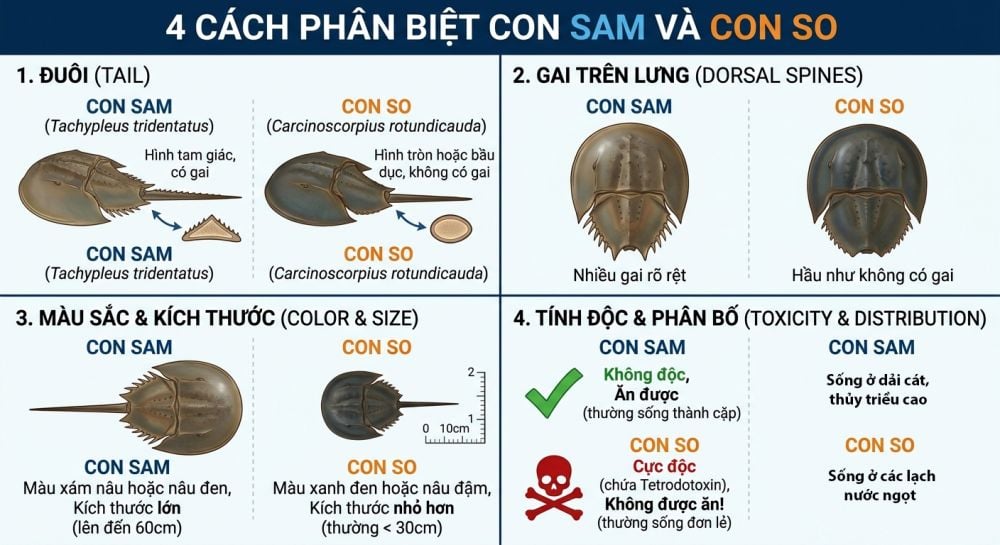
How to distinguish between horseshoe crabs and sea cucumbers: + Horseshoe crabs usually travel in pairs, are larger in size, have a slightly rounded carapace, and a triangular tail. The spines on the edges of the carapace are short and fairly evenly spaced. + Sea cucumbers are usually solitary, smaller in size, with a rounded or oval tail, and lack the distinct edges of horseshoe crabs. The edges of their carapace have more sharp and longer spines. + The color of horseshoe crabs is usually darker, and their body surface is rougher than that of horseshoe crabs. When turned over, the legs and claws of the horseshoe crab are large and strong, while the legs of the sea cucumber are smaller and more slender. |
Minh Anh
Source: https://baocamau.vn/canh-giac-nguy-co-ngo-doc-do-nham-lan-sam-va-so-bien-a129048.html



















































































Comment (0)