

What is more important is how the areas on both sides of the road will change after it is completed. What urban areas will be formed? What businesses will be attracted? What kind of tourists will arrive? How will land prices, commerce, and services fluctuate? And more importantly – how will these new values be managed and exploited to continue serving development? Because reality shows that the greatest value of a road often does not lie in the road itself.
Who gives way, and who benefits?
To build a highway, some households have to be relocated, and families have to change their homes and livelihoods. Some localities have to allocate budgets for many years. Some engineers and workers have toiled in harsh conditions to bring the project to completion. But there are also those who are not subject to land clearance and do not have to make significant additional investments, yet the value of their land and businesses skyrocket simply because a new road is opened.
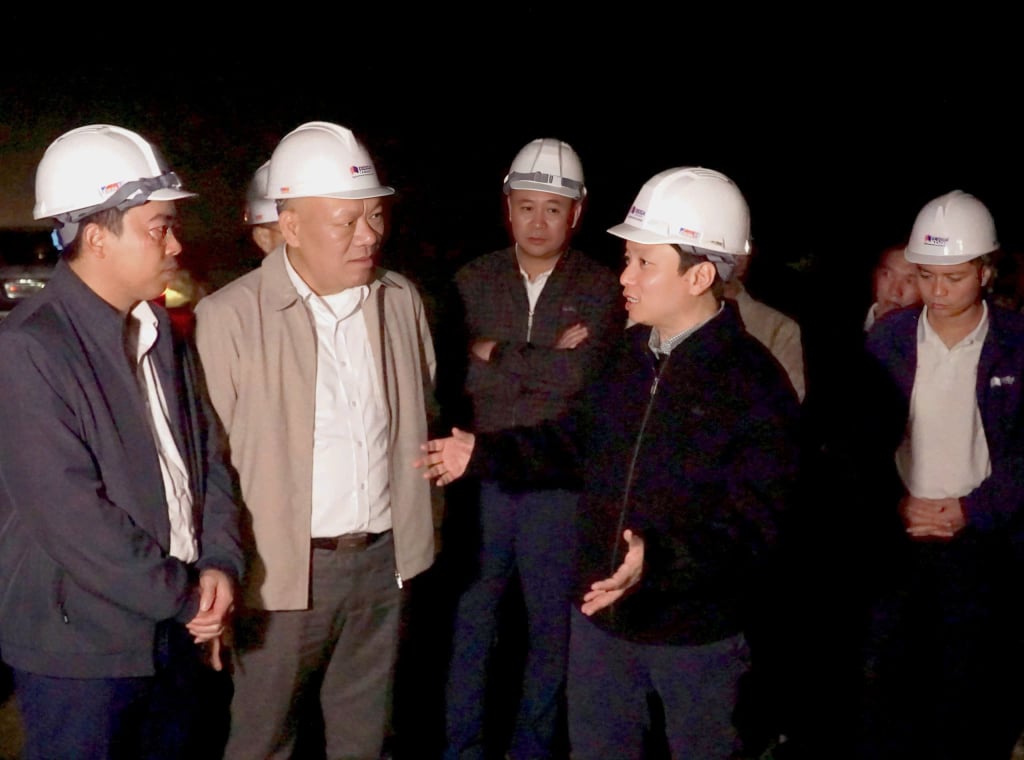
This is the law of development, not an exception. An area that is far from the city center, has difficult transportation, and is not attractive to investors today – when a highway, major interchange, or logistics center appears, the value of that area changes almost immediately.
So where does this added value come from? Is it entirely generated by the efforts and capital of the land users? Or does it include a significant contribution from public investment, planning, government policies, and the contributions of the entire community?
If the majority of added value is generated by infrastructure and public policy, should we explore mechanisms to ensure that a portion of that value returns to serve the common good? This is not a new question. Many countries have been seeking an answer for decades.
Cao Bang doesn't have a metro, but it does have other "stations".
Hanoi is studying mechanisms to exploit the added value from TOD (Transit-Oriented Development) areas – urban development models linked to metro or urban rail lines. When the State invests in transportation infrastructure, the value of land and surrounding businesses increases; many countries have established mechanisms for a portion of that value to be reinvested in infrastructure and urban development. Cao Bang does not have a metro. Applying Hanoi's model directly would not be suitable. But that doesn't mean Cao Bang doesn't have a similar story.
Over the next 10 years, the most powerful driving force for the province's development space will not be the metro station, but rather the strategic infrastructure network that is taking shape: the Dong Dang - Tra Linh expressway, the Bac Kan - Cao Bang expressway, the border gate system, logistics centers, key tourist areas, and new urban areas.
If Hanoi develops with a public transport-oriented approach, Cao Bang could consider developing with a strategic infrastructure-oriented approach. New development hubs will form along the expressway corridor, at major interchanges, international border gates, logistics centers, and key tourist areas. These will be the "development stations" of Cao Bang in the future.
The real game lies at the intersections.
Determining where the route will pass through is just the first step. The more difficult part is identifying which areas will be most significantly transformed after completion. Not all places will benefit equally. The greatest added value is often not found on the road itself, but at highway interchanges, border crossings, logistics centers, key tourist areas, and areas whose planning has been adjusted for urban, commercial, and service development.
These areas are the most crucial for thorough study – because they have the potential to create new development spaces, attract new investment capital, and generate new resources for the province in the future. The challenge is not simply studying a single revenue stream. The larger challenge is identifying the entire value of new development created by strategic infrastructure projects and how to manage that value.
To have good policies, you first need good data.
A common limitation is that research only begins when opportunities arise. By the time land prices increase, investment pours in, and urban development accelerates, management becomes much more difficult. Therefore, the first step is to quantify: how will the two expressways change land values in each area? Which interchanges have the potential to create new urban areas? Which areas could become logistics centers, tourism hubs, and commercial and service centers? Which areas will be the province's new growth poles in the 2030-2045 period? How much new resources could be generated from those areas?
Without concrete data to answer these questions, it is very difficult to develop appropriate policies. By identifying these areas, the province will be more proactive in managing planning, land use, attracting investment, and preparing infrastructure – leading to the formation of new development corridors and growth poles linked to highway networks, border gates, logistics, and tourism.
This isn't about thinking of another source of income.
When people hear the phrase "value-added extraction," many immediately think of a new fee or financial obligation. But that's not the issue at hand.
The first step is to identify where the real added value lies, who benefits, to what extent they benefit, and which portion of that value is primarily generated by infrastructure, planning, and public policies. Only after having data, impact assessments, and a complete legal framework can we discuss appropriate management tools.
Currently, the Provincial People's Committee is focusing on researching, quantifying, and developing policy options. No decision has been made yet regarding a specific revenue source. Any future options, if any, must be carefully assessed for their socio-economic impact, investment environment, and the legitimate rights and interests of citizens and businesses.
The goal is not to create additional burdens, nor to take from one person and give to another. Rather, it is to continue investing in schools, hospitals, roads, and other public works – ensuring that the benefits of public investment are not limited to a single point in time or a specific group of people, but continue to provide resources for future generations and projects.
The greatest value is not on the road surface.
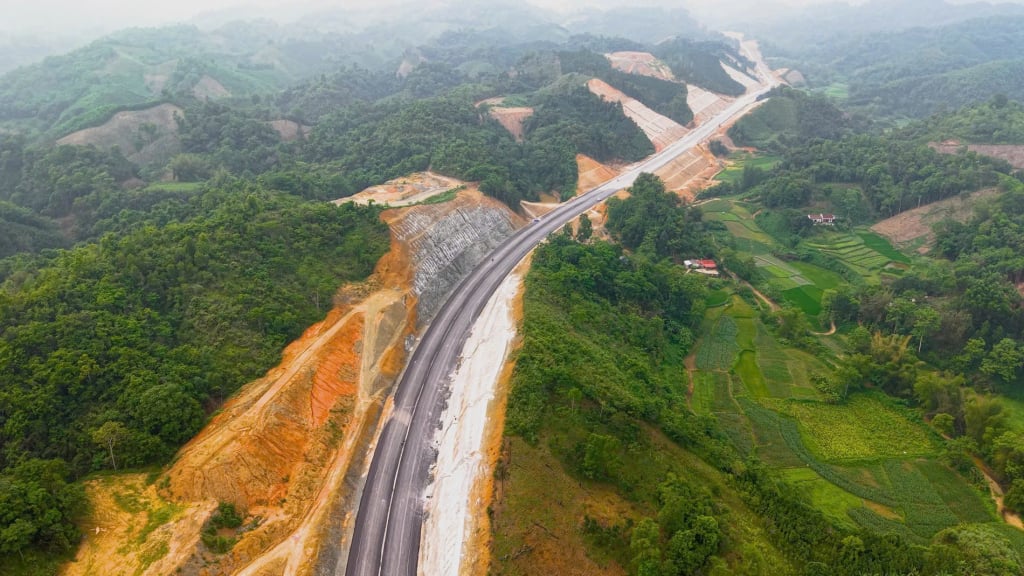
The Dong Dang - Tra Linh expressway will be completed. The Bac Kan - Cao Bang expressway will also be implemented. These are projects of particular importance to the future development of the province.
But for a province still facing many difficulties like Cao Bang, successfully building a large infrastructure project is only the beginning. The more challenging part is managing and effectively utilizing the value that the project creates.
Experience from many localities shows that greater value often emerges after a road is completed: new urban areas along the interchanges, logistics centers, tourist destinations with increased visitor numbers, new businesses, new jobs, and new revenue streams for the locality.
Therefore, the story is not just about how many more kilometers of highway are built. It's also about how much new development space is created from those routes – and how to ensure that the value created by the roads is not wasted, not concentrated in a small group, but continues to be transformed into resources for the province's next stage of development.
Source: https://tuyengiaocaobang.vn/index.php/tin-trong-tinh/cao-toc-di-qua-gia-tri-tang-them-thuoc-ve-ai-2524.html




![[Photo] General Secretary and President To Lam presides over a meeting on preparations for the review of one year of operation of the three-tiered government system.](https://vphoto.vietnam.vn/thumb/1200x675/vietnam/resource/IMAGE/2026/06/02/1780391821195_a1-bnd-4595-9717-jpg.webp)






























































Comment (0)