Nature created both seas and sources.
With you and me together, what more could I ask for?
To say "a low-lying area" might sound cumbersome and rambling, but there's a reason for it. Visiting Cai Xa Cong port in Ha Phong ward, Ha Long city ( Quang Ninh province) during Typhoon Yagi left many thoughts lingering to this day. Thoughts about a profession with a long history, about the fate of seafarers yesterday, today, and tomorrow. Life never stops; after the rain, the sun shines again, mud underfoot but the sun still overhead.
Quang Ninh, especially Ha Long, has many place names beginning with the word "cái". Further research reveals an explanation: "cái" refers to a low-lying area, a place for mooring boats. Perhaps this is why the idiom "strange water, strange place" exists? Cái Xà Cong can be imagined as a shallow bay resembling a curved beam, sheltered by undulating mountains bordering the sea. It serves as an anchorage and unloading point for over two hundred coastal fishing boats and a safe haven during storms. In the past, fishermen caught seafood and sold it to tourist boats in the bay. Those days of hardship and uncertainty are over thanks to the local authorities establishing a settlement for the fishermen.
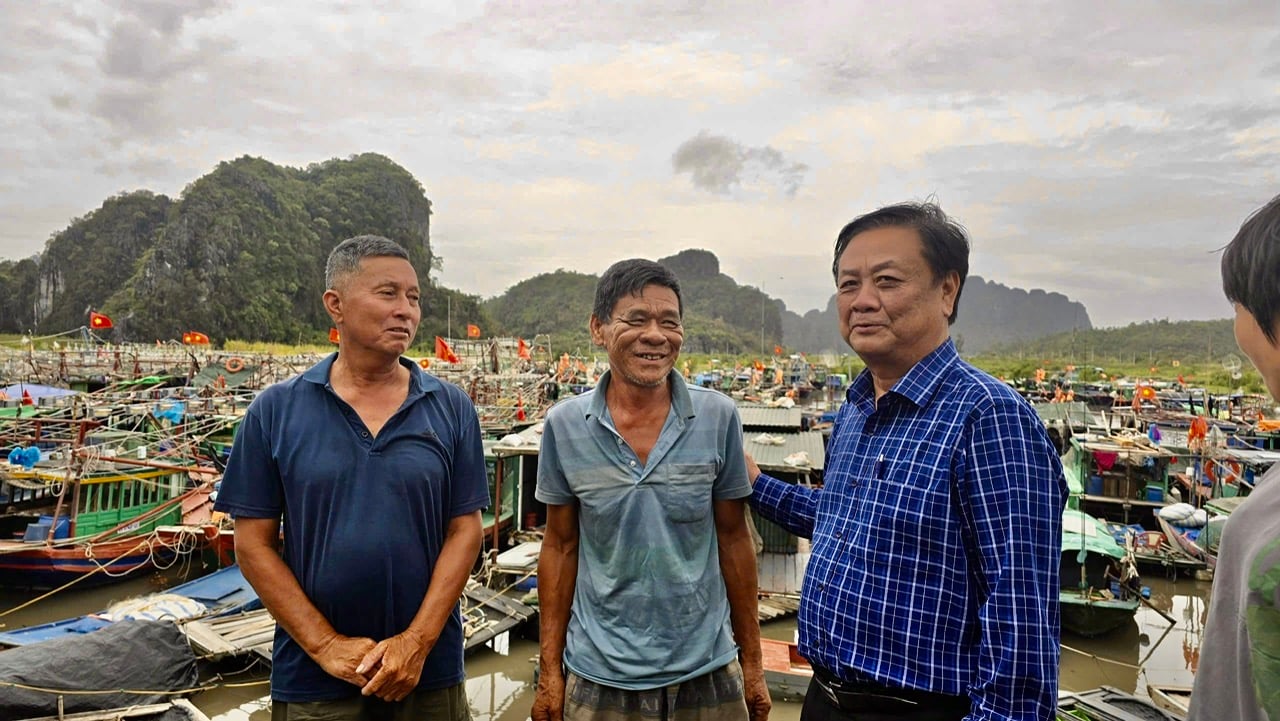
Minister Le Minh Hoan, along with a delegation from the Quang Ninh Department of Agriculture and Rural Development and Ha Long City, inspected the Cai Xa Cong fishing area (Ha Phong ward, Ha Long City) after Typhoon Yagi (Typhoon No. 3). Photo: Cuong Vu.
After the devastating storms caused by Super Typhoon Yagi, thankfully, the people suffered no loss of life or property. The faces of the fishermen remain strong, their smiles still radiating a spirit of generosity and optimism. They believe that the mountain range provided protection, but more importantly, the fishermen had securely tied their boats together, preventing collisions. Using the image of "tied boats" weathering the storm, they believe that the people also need to "tie themselves together," becoming a community of those who depend on the sea for their livelihood, so that they can prosper from it. The people are very happy to have a community institution right here in Cai Xa Cong.
In any era, societal movement is always rapid, dynamic, and multifaceted, making it difficult to manage in a one-way manner through top-down administrative orders, from within the system to the outside world. The administrative apparatus is often "dynamic," constantly shifting, while the community remains stable, perhaps only with one generation succeeding the next. People have more than just food and shelter; they have many other needs: professional activities, social relationships, cultural enjoyment, spiritual life, and integration into the overall development.
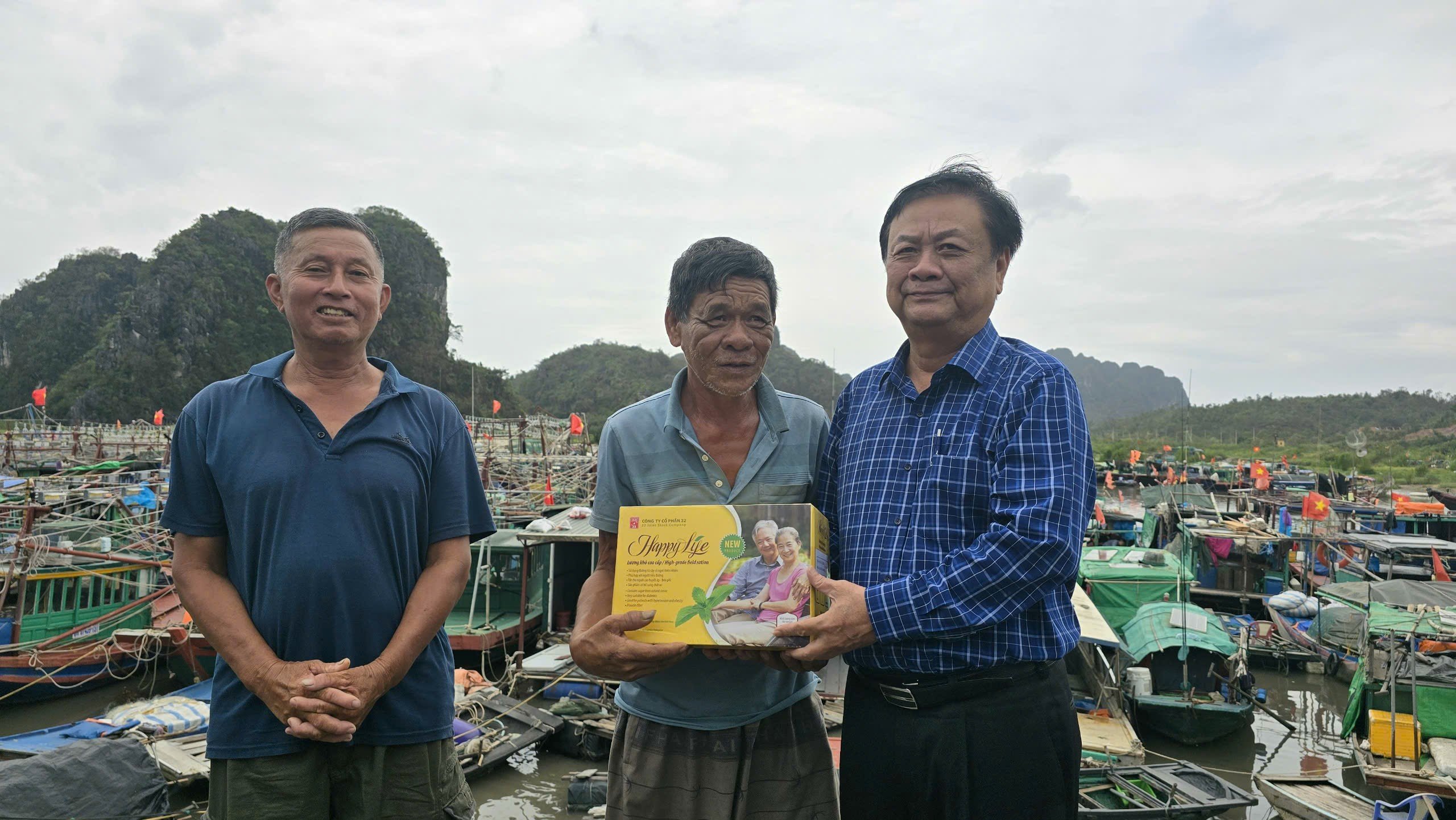
Minister Le Minh Hoan presents gifts to fishermen after Typhoon Yagi (Typhoon No. 3).


Local leaders are advocating for the development of Cai Xa Cong into a multi-functional integrated fishing port. According to the plan, one side will be for boat docking, the other for logistics services, and the other for experiential tourism. Locals are eagerly awaiting the realization of this plan. However, the shallow waterways make it difficult for boats to enter and exit, sometimes requiring them to anchor for extended periods while waiting for higher tide. Furthermore, locals are concerned about the cost per trip and the availability of stable purchasing agents at reasonable prices.
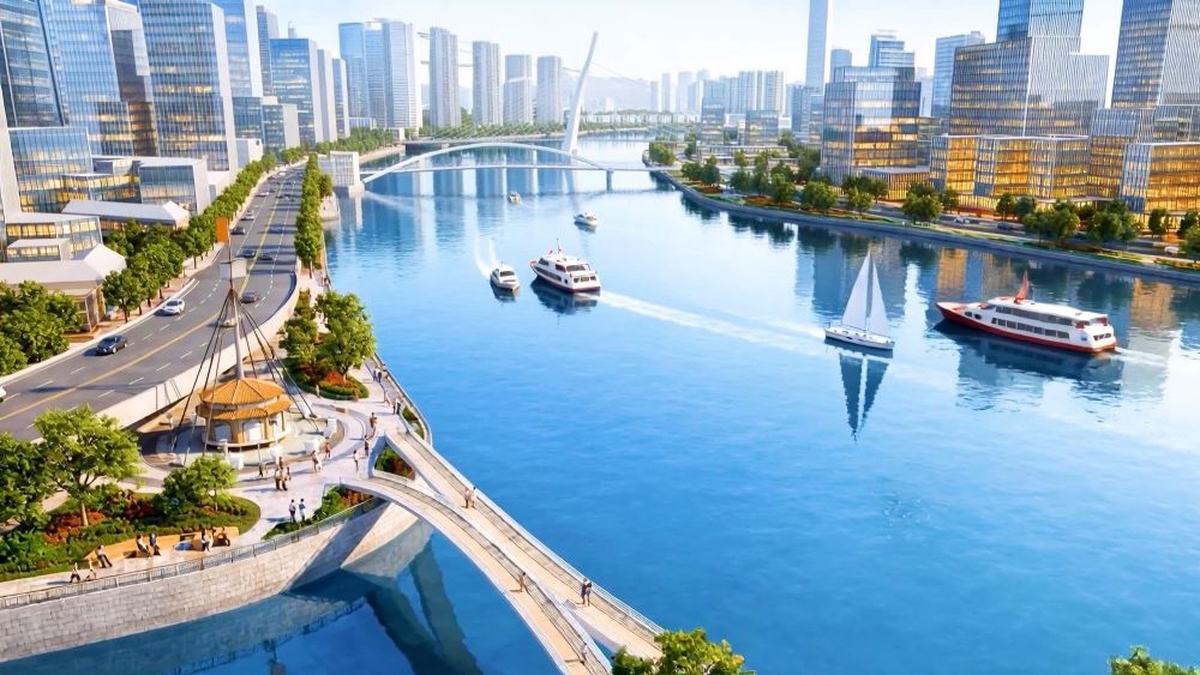
Currently, Cai Xa Cong is not large compared to other ports, only suitable for short-hulled, wooden boats primarily used for near-shore fishing. That's how it is today, but tomorrow it will be a modern port, a dream for generations. Ships will be sturdy and safe from the waves. Infrastructure will be invested in to match the maritime economic strategy. Conveyor belts will replace manual labor. Automated processing and preservation areas will create high added value. Tourists will have the opportunity to experience the life of the sea, the culture of seafarers, and enjoy products caught and processed by the local people.
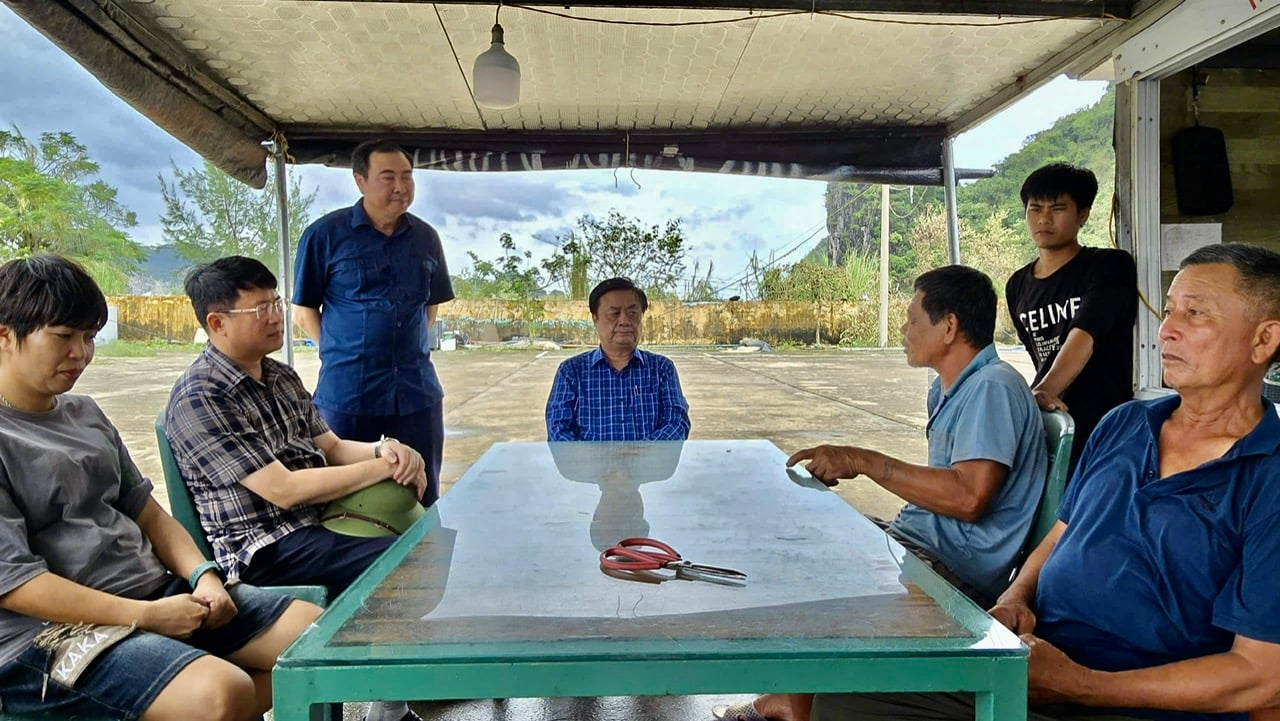
Minister Le Minh Hoan sent his regards and words of encouragement to the fishermen.
Modern port infrastructure alone is not enough; a mindset focused on the importance of "community co-management" is also needed. A strong community facilitates access and engagement between fishermen's unions, fisheries agencies, fisheries inspectors, political organizations, and social organizations. A strong community is essential for protecting fisheries resources, eliminating plastic waste, and creating a cleaner, greener marine environment. A strong community also enables the transition from a traditional to a modern fisheries sector with the participation of fishermen's representatives as key stakeholders. Investing in the modernization of the fisheries sector is necessary, but investing in people and communities will ensure sustainable development.
Every profession is noble because it brings people a better life. Professional activity is not solely for the purpose of earning a living, although that is important. People also desire social recognition and respect, and a sense of belonging among those in the same profession. Each new port needs a community space where people can socialize, learn together, and where leaders can visit and listen to them after each sea voyage. Historical documents about the first steps of our ancestors who pioneered this lowland area are valuable assets, educating future generations to cherish and be proud of the efforts of generations who ventured out to sea.
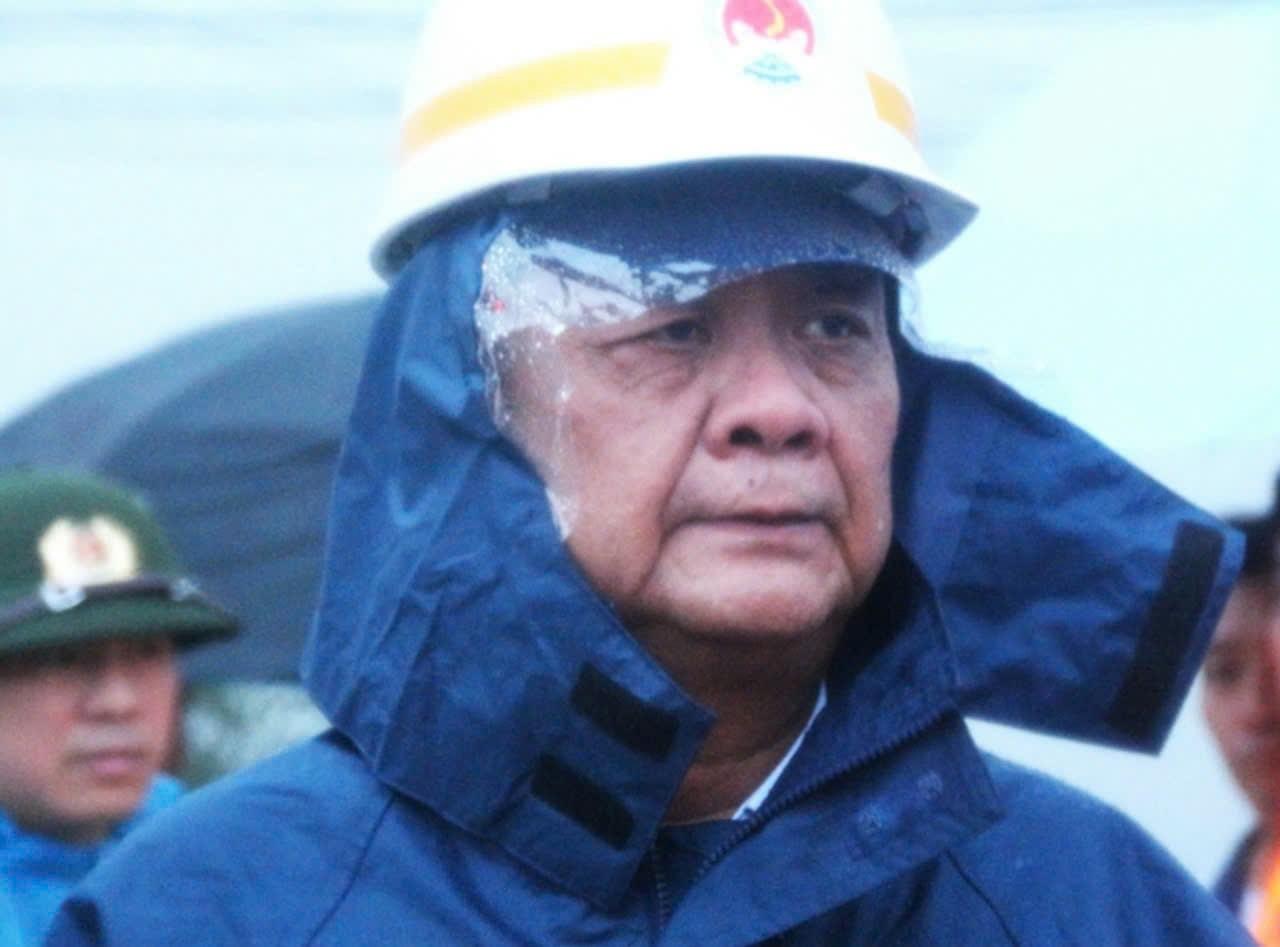
Minister Le Minh Hoan inspects the storm prevention and control efforts for Typhoon Yagi (Typhoon No. 3) in Quang Ninh province.


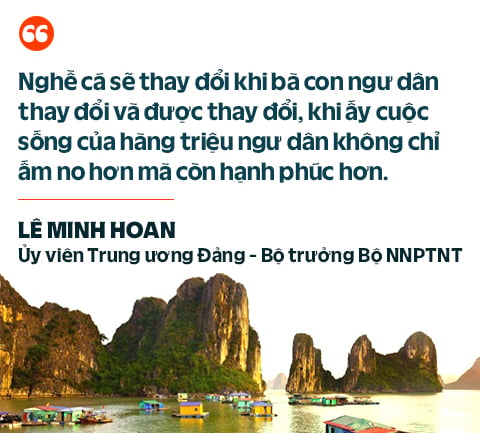
In a changing world, professions, including fishing, must also change. To change, we must learn to enrich our intellect, to discover new things and different ways of doing things. Without learning, we will remain stuck in what we already know and do as we currently do. Absorbing knowledge helps create new value spaces instead of just clinging to existing ones. Mastering skills increases labor productivity and helps us cope with risks and dangers. Cultivating a love for the sea and nature helps fishermen love their profession and dedicate themselves fully to it, even during the most difficult and turbulent times.
The fishing industry cannot forever accept ships struggling against the relentless waves. Fishermen cannot forever remain confined to a backward area in terms of professional skills and knowledge. The fishing industry will change when fishermen change and are empowered to change; then the lives of millions of fishermen will not only be more prosperous but also happier.
Goodbye everyone, I'm leaving now, but I'll always remember the beautiful scenery and the kind, determined people. I hope to have the opportunity to return to Cai Xa Cong to once again fall in love with the sea and the people who have lived their whole lives in harmony with the ocean!
.
Source: https://danviet.vn/cau-chuyen-mot-cho-trung-20240922083004182.htm
![[Image] National conference summarizing one year of operation of the overall organizational model of the political system, the three-tiered government model.](https://vphoto.vietnam.vn/thumb/1200x675/vietnam/resource/IMAGE/2026/07/01/1782882811691_ndo_br_1-jpg.webp)













![[Video] Weather forecast for tonight and tomorrow, July 2nd, 2026: Tropical depression likely to strengthen into a storm; many areas will continue to experience thunderstorms.](https://vphoto.vietnam.vn/thumb/402x226/vietnam/resource/IMAGE/2026/07/01/1782911026600_thumb-dem-png.webp)