

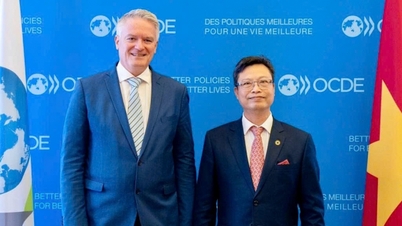
The Organization for Economic Cooperation and Development (OECD) recently announced that the world's wealthiest nations have finally reached their annual target of funding $100 billion for the energy transition by 2022.
In fact, the good news is that funding has even exceeded the target, with a surplus of over $15 billion, according to the OECD. However, these figures are ultimately just a drop in the ocean, as the ultimate goal of mobilizing trillions of dollars into green finance over the next few decades remains more elusive than ever.
Often referred to as climate finance, the amount of money that various forecasting agencies predict the world needs to spend annually to transition from hydrocarbons to alternative energy sources is certainly not a small sum.
In reality, the cost of the transition has steadily increased over the past few years. In other words, by the time the OECD reached its annual climate finance target of $100 billion, it was still not enough to propel the planned transition program. And that figure could continue to rise.
Simon Stielll, Executive Secretary of the United Nations Framework Convention on Climate Change (UNFCCC), stated earlier this year that the world needs to find and invest $2.4 trillion annually in the energy transition by 2030.
"Clearly, to achieve this transition, we need money, and a lot of money, if not more," Stielll said at the time.
What remains unclear is where that money will come from. Furthermore, it has recently emerged that wealthy nations – supposed to shoulder the burden for all the poorer countries unable to afford billions of dollars in solar and electric vehicle subsidies – have been exploiting climate finance mechanisms.
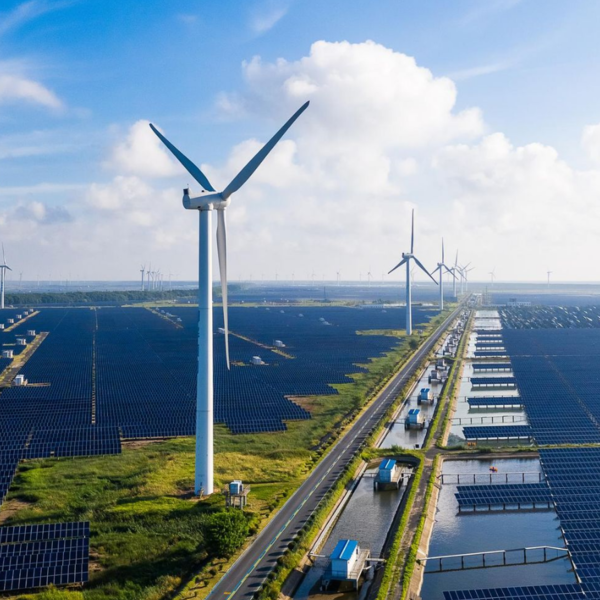
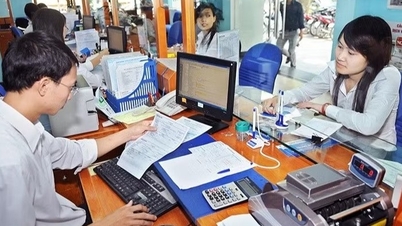
Photo caption
An investigation by the Big Local News program at Stanford University (USA) revealed that OECD G7 members regularly provide “climate finance” to poorer countries in the form of loans rather than grants, with interest rates at market rates instead of the typical discount rates for such loans.
Loans also come with conditions such as: the borrowing country must hire companies from the lending country to carry out the funded project.
The investigation did not generate much buzz. However, while countries are discussing raising climate finance investment targets ahead of the 29th Conference of Parties to the United Nations Framework Convention on Climate Change (COP29) scheduled to take place in Azerbaijan in November, the costs of the transition are also rising.
According to a recent Reuters overview of the current situation, Arab countries have proposed an annual investment target of $1.1 trillion, of which $441 billion would come from developed countries. The proposal for over $1 trillion in annual investment has also received support from India and African nations.
It's perfectly reasonable that the potential beneficiaries of that trillion-dollar annual financing would support the idea. But the parties that would have to contribute to the plan are unwilling to sign anything when they themselves are short of money.
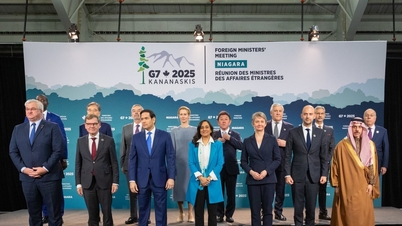
Currently, no G7 nation is free from some degree of financial trouble. From the massive debt of the US and Germany's near-zero GDP growth to Japan's budget deficit, the G7 is facing difficulties.
However, the G7 is expected to bear the majority of the financial burden for climate change. The US and the EU have agreed that they need to mobilize more than $100 trillion annually for the transition to have any chance of happening. "How" remains the trillion-dollar question.
One viable funding channel is private finance. But governments cannot guarantee sufficient returns to attract investors, making them reluctant to participate in the transition process and provide the billions of dollars needed for climate finance.
Electric vehicles are a prime example. The EU has been doing everything it can to support electrification, including tax incentives for buyers, punitive taxes on owners of internal combustion engine vehicles, and heavy spending on chargeable electric vehicle infrastructure.
However, as governments begin to gradually reduce subsidies for electric vehicles, sales are declining. If electric vehicles are not mandated, the EU really has no other option.
Solar and wind power in the US is another example. The amount of installed capacity nationwide is increasing rapidly, but local community opposition to the installation of these facilities is also growing.
In February, USA Today reported on a survey showing that 15% of U.S. counties had halted construction of large-scale solar and wind energy projects. While the article portrayed this trend as negative, the affected communities often had fairly valid reasons for protesting, such as environmental damage or concerns about the reliability of the energy supply.
According to the United Nations, the world needs to spend $2.4 trillion annually to keep the global average temperature from rising more than 1.5 degrees Celsius above pre-industrial levels by 2050.
According to BloombergNEF, the cost of the transition has increased by 19%, equivalent to $34 trillion, compared to previous estimates. How those responsible found this money and how it will be distributed remains an unsolved mystery .
Minh Duc (According to Oil Price)
Source: https://www.nguoiduatin.vn/tai-chinh-cho-chuyen-doi-nang-luong-toan-cau-cau-hoi-nghin-ty-usd-a669140.html


![[Photo] National Assembly Chairman Tran Thanh Man working with the Standing Committee of the National Assembly's Delegation Affairs Committee.](https://vphoto.vietnam.vn/thumb/1200x675/vietnam/resource/IMAGE/2026/05/20/1779294340023_ndo_br_1-1691-jpg.webp)
![[Image] "Journey of Hope" promotes the organ and tissue donation movement in Vietnam.](https://vphoto.vietnam.vn/thumb/1200x675/vietnam/resource/IMAGE/2026/05/20/1779294400833_1-8910-jpg.webp)
![[Photo] General Secretary and President To Lam works with the Party Committee of the Ministry of Health on the work of Vietnamese traditional medicine.](https://vphoto.vietnam.vn/thumb/1200x675/vietnam/resource/IMAGE/2026/05/20/1779294323718_a1-bnd-2978-3319-jpg.webp)




















































































Comment (0)