

The construction of two new bridges across the Gianh River and the Quan Hau Bridge on National Highway 1A in Quang Binh province will alleviate traffic congestion on the two existing bridges, which frequently experience traffic jams when accidents occur.
On January 18th, information from the leaders of the Railway Project Management Board ( Ministry of Transport - Investor) indicated that package XL - CHQL1 - 03, which involves the construction of Gianh Bridge, Quan Hau Bridge, and the approach roads to the bridges in Quang Binh province, is part of the project to upgrade and expand several bridges and tunnels on National Highway 1A. The contractors are currently carrying out the construction to ensure its early commissioning.
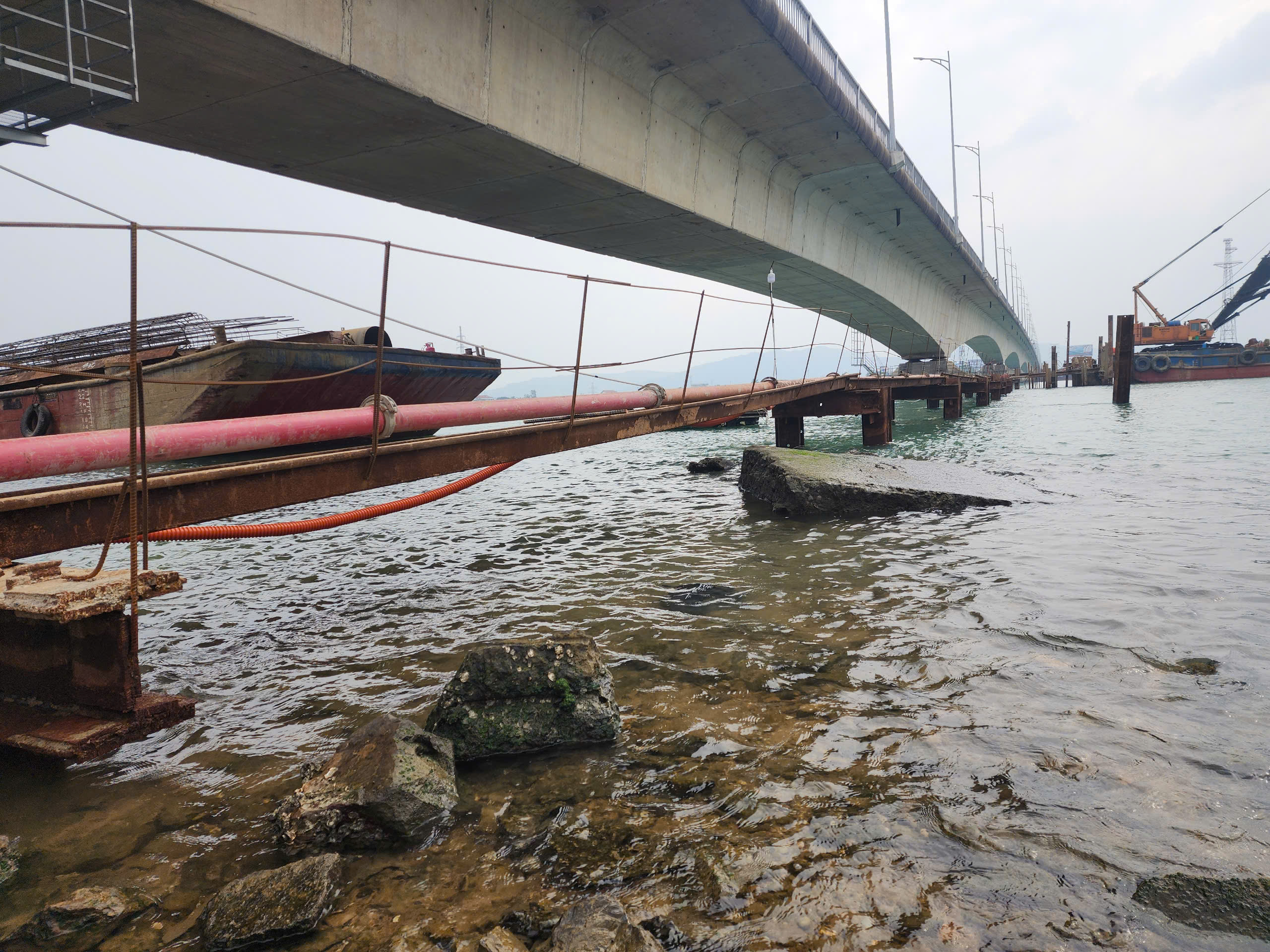
The temporary bridge for the construction of the new Gianh River bridge has been installed. The contractor is now proceeding with the drilling of pier B5 - a cantilevered pier.
Specifically, a new bridge across the Gianh River will be constructed at Km 625+733, along with approach roads, in the areas of Bo Trach district and Ba Don town, Quang Binh province.
The Quan Hau Bridge, spanning the Nhat Le River, is a newly constructed bridge located at Km 671+238, in the section passing through Quan Hau town and Vo Ninh commune, Quang Ninh district.
The two new bridges are designed as permanent structures using reinforced concrete and prestressed reinforced concrete, with a design speed of 80 km/h and a width of 12 meters. The two bridges are valued at approximately 550 billion VND and are being constructed by Dat Phuong Construction Company.
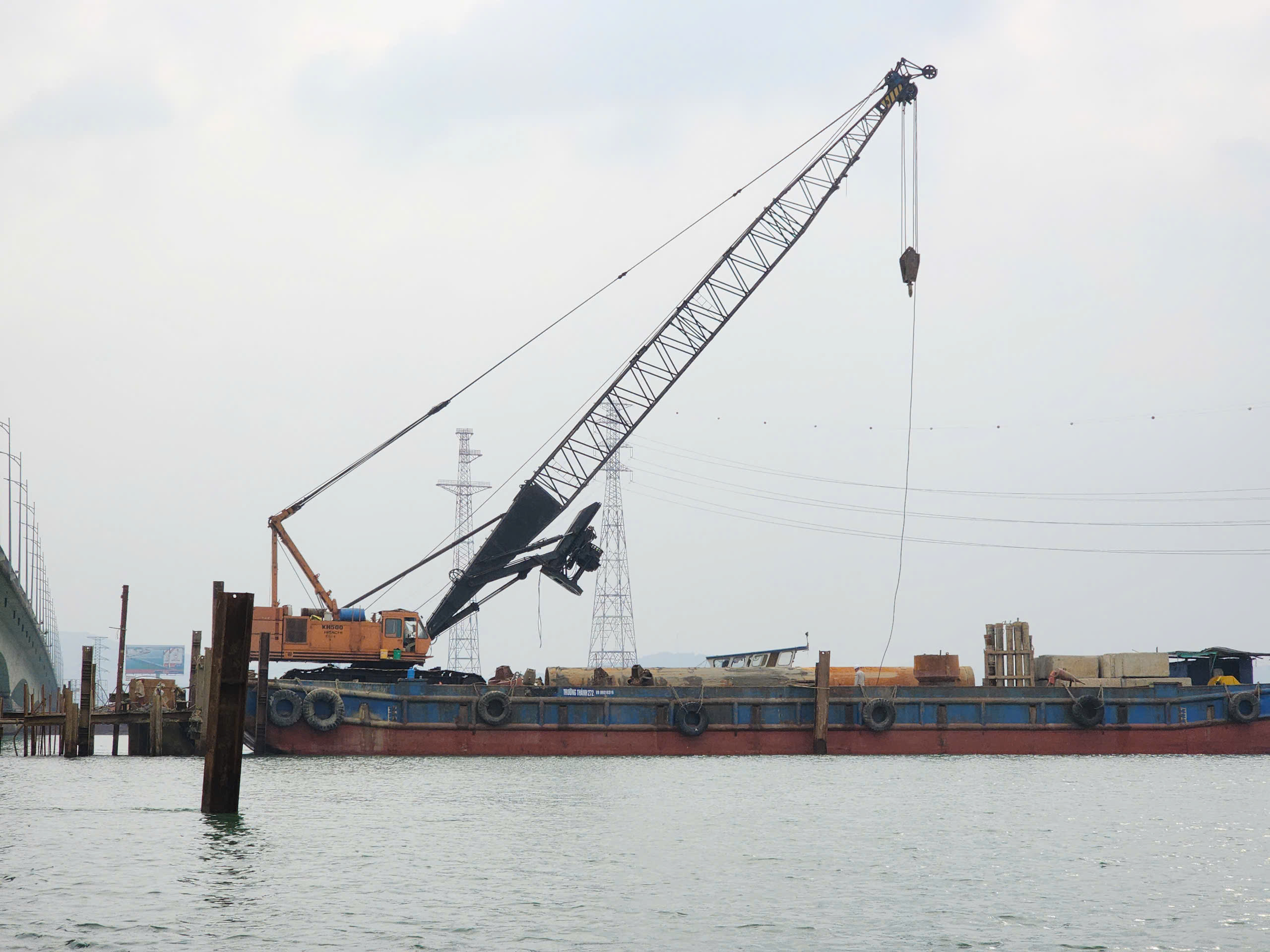
Large barges are used to transport equipment for bridge construction.
According to observations by reporters from Giao Thong Newspaper, at the Gianh River bridge project, despite the freezing winter weather, groups of contractor workers were still diligently working in various areas and positions on barges.
Operating a crane above a barge to drill for bridge piers, Nguyen Tien Hoi (40 years old) said that he and some other workers had recently arrived from the South and had not yet adapted to the cold winter weather here.
"My colleagues and I had to go to the construction site at dawn. The wind blew up from the river, and our hands were so cold we couldn't hold anything. Working during winter was quite difficult, but we gradually adapted," Mr. Hoi said.
On the shore, another group of workers was also busy welding. Their task was to weld iron cylinders to create molds for pouring concrete. Once the cylinders were finished, other teams of workers would carry them down to barges to be taken out to the middle of the river to be used as drill bits.
Engineer Nguyen Thanh Hoa (Dat Phuong Company) reported that there are currently 60 people on the construction site, including engineers and workers, divided into various teams such as: building temporary bridges, constructing bored piles, and working with steel reinforcement...
According to engineer Hoa, the geological conditions at the bottom of the Gianh River for drilling the bridge are not complicated, and the water flow is normal. At this time, the unit has drilled 6 piles 60m deep using D1500 pipes at pier B5 - a cantilevered pier.
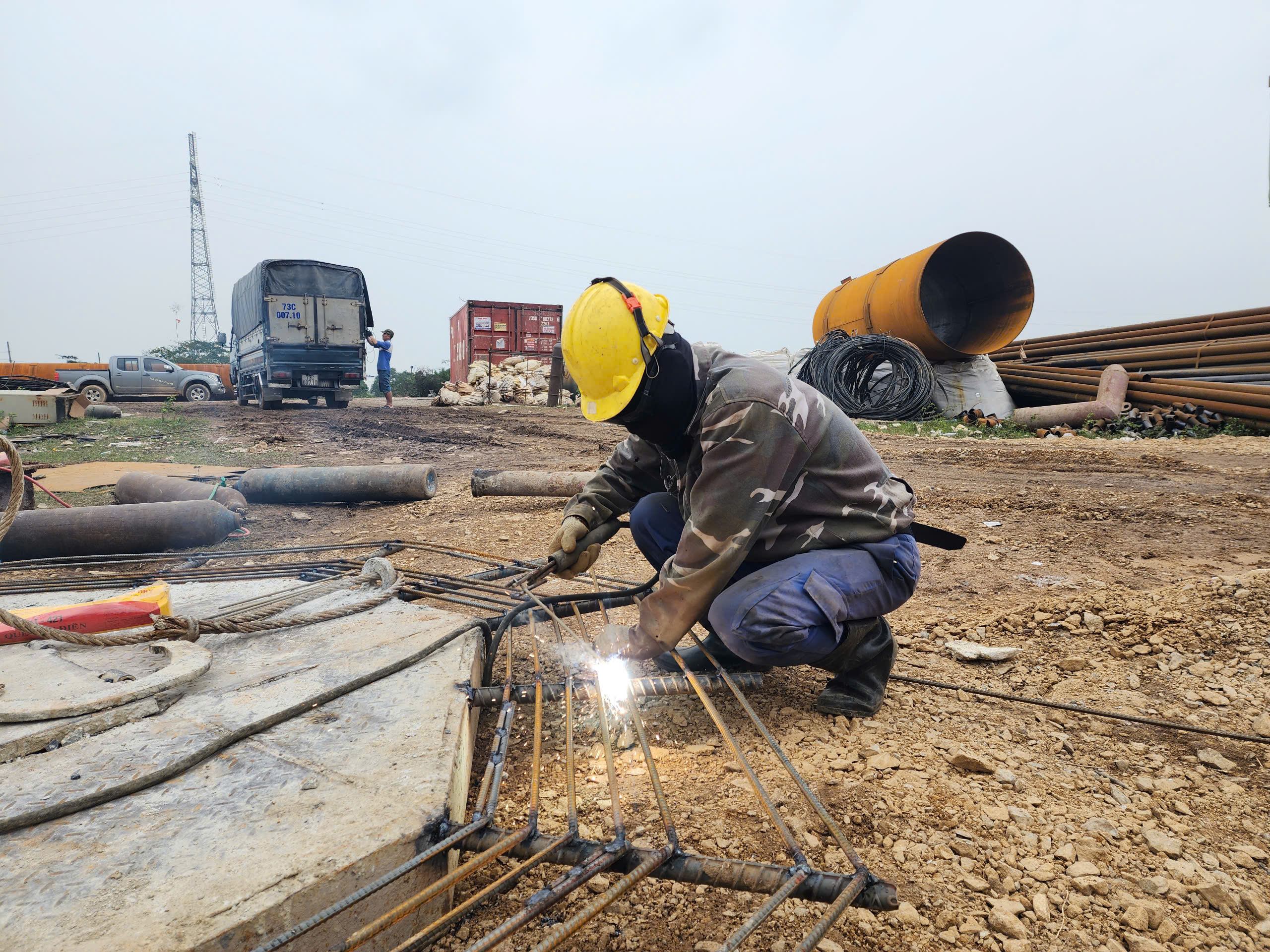
Construction conditions in the Gianh River area are quite cold in winter. Workers are provided with protective clothing to keep warm.
"According to the contract, the bridge is expected to be completed and put into operation by the end of 2025," engineer Hoa informed.
Similarly, at the Quan Hau bridge construction site, the contractor has also drilled 8 piles. The Quan Hau bridge is expected to be put into operation in December 2025.
The project to upgrade and expand several bridges and tunnels on National Highway 1 (Xuong Giang, Gianh, Quan Hau bridges and Deo Ngang tunnel) was approved by the Ministry of Transport in Decision 729/QD-BGTVT dated June 13, 2024. This is a Group B project, with an implementation period of 3 years and a total investment of nearly 2,000 billion VND.
The project's objective is to gradually invest in and complete National Highway 1 according to the plan, ensuring uniformity in scale, maximizing the effectiveness of investment in expanding National Highway 1, resolving bottlenecks on National Highway 1, reducing traffic congestion, enhancing traffic safety, promoting socio-economic development, and ensuring national defense and security.
Source: https://www.baogiaothong.vn/quang-binh-cau-song-gianh-quan-hau-dang-duoc-thi-cong-nhu-the-nao-192250118103441398.htm






























































































Comment (0)