

Barren land yields "sweet fruits".
Mentioning "Pờ Tó Valley" immediately brings to mind a remote, isolated area with arid land. Because of the harsh soil and weather, sugarcane, cassava, and rice – the main crops of Pờ Tó commune – yield low productivity and unstable income, resulting in many difficulties for the people of Pờ Tó.
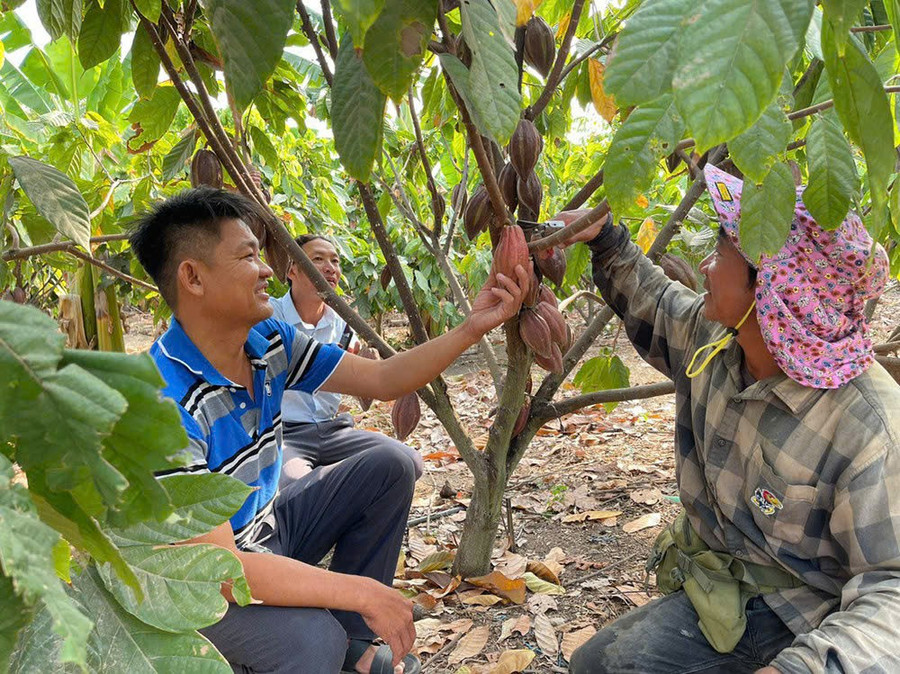
However, on this very land once considered "difficult to cultivate," cocoa plantations have begun to take root, grow, and bear fruit, opening up a new and promising direction for local agriculture .
Since mid-2021, Trong Duc Cocoa Co., Ltd. ( Dong Nai province) has begun implementing a cocoa cultivation model in Po To with an initial area of 18 hectares. Many were skeptical at the time: Could a crop accustomed to humid soils adapt to the sunny and windy climate characteristic of this area? But reality has gradually provided a convincing answer.
According to Mr. Dang Tuong Khanh, General Director of Trong Duc Cocoa Company Limited, the opportunity to bring cocoa trees to Po To originated from field surveys. Po To has vast, relatively flat areas of land, favorable for mechanization; a high temperature difference between day and night; and unique climatic conditions… These seemingly unfavorable factors actually create cocoa beans with a rich flavor, suitable for further processing.
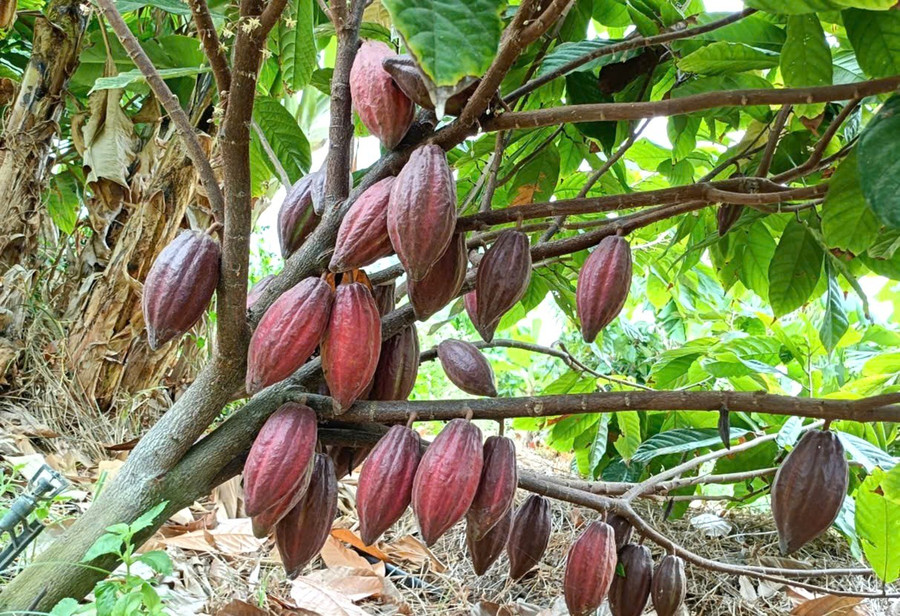
More importantly, this area has a large population of ethnic minorities, whose lives are still fraught with difficulties, and they urgently need a new crop with stable and long-term economic value.
“Currently, the cocoa growing area in Pờ Tó has been expanded to 30 hectares by the company. The average yield reaches 15-20 tons of fresh fruit per hectare. With a purchase price of about 15,000 VND/kg, the revenue reaches over 200 million VND/ha, many times higher than sugarcane or cassava. From ‘barren land,’ cocoa has begun to bear ‘sweet fruit,’ creating confidence for people to boldly change their crop structure,” Mr. Khanh happily said.
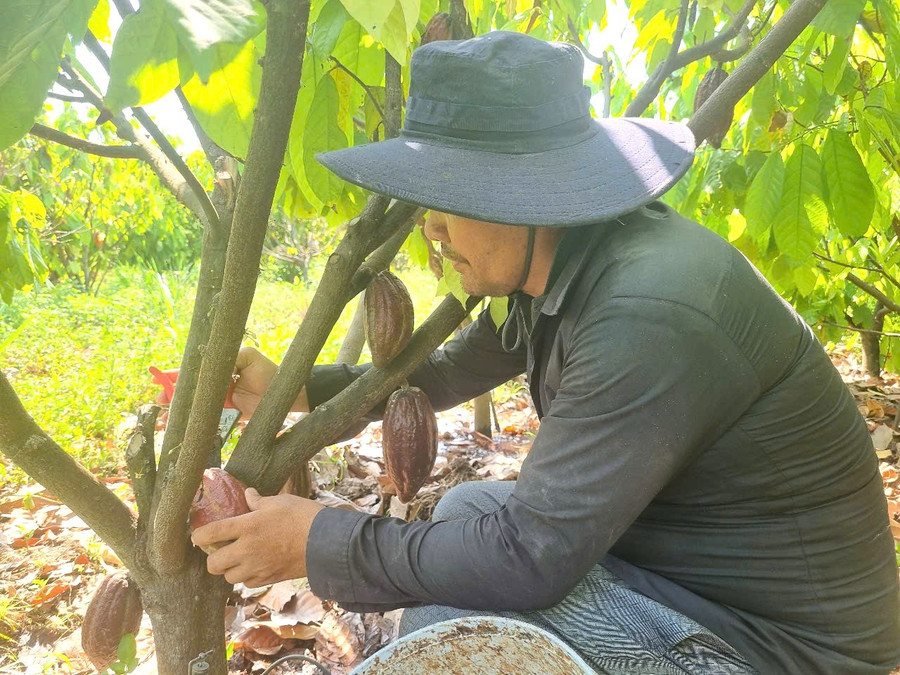
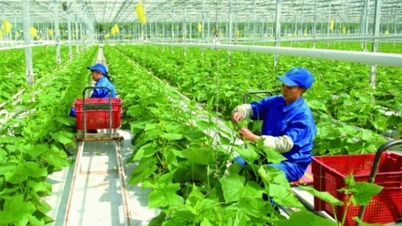
Beyond its economic benefits, the model also aims for sustainable development. Cocoa is intercropped with fruit trees to act as windbreaks, improve soil quality, and generate short-term income. A drip irrigation system, the use of organic fertilizers, and biological pesticides help reduce production costs, protect the environment, and improve product quality.
Mr. Vo Van Quy, Gia Lai Regional Manager of Trong Duc Cocoa Co., Ltd., said: Cocoa is quite "easy to grow," with few pests and diseases, suitable for the soil conditions of Po To in particular and other localities in the region in general. The intercropping model not only protects the trees but also forms a green agricultural ecosystem, adapting well to climate change - an increasingly important factor in agricultural production today.
Expanding sustainable raw material sourcing areas through partnerships.
If the first cocoa plantations were just the beginning, the involvement of international partners is opening up greater prospects for this region.
According to Mr. Minoru Kikkawa, Senior Executive Director of Bourbon Corporation (Japan), Bourbon is a major confectionery manufacturer, with its chocolate ingredients traditionally imported primarily from South America.
However, climate change and global market fluctuations have led to unstable supply from this region and increased costs. This creates an urgent need to diversify and develop new raw material sources with high quality and long-term stability.
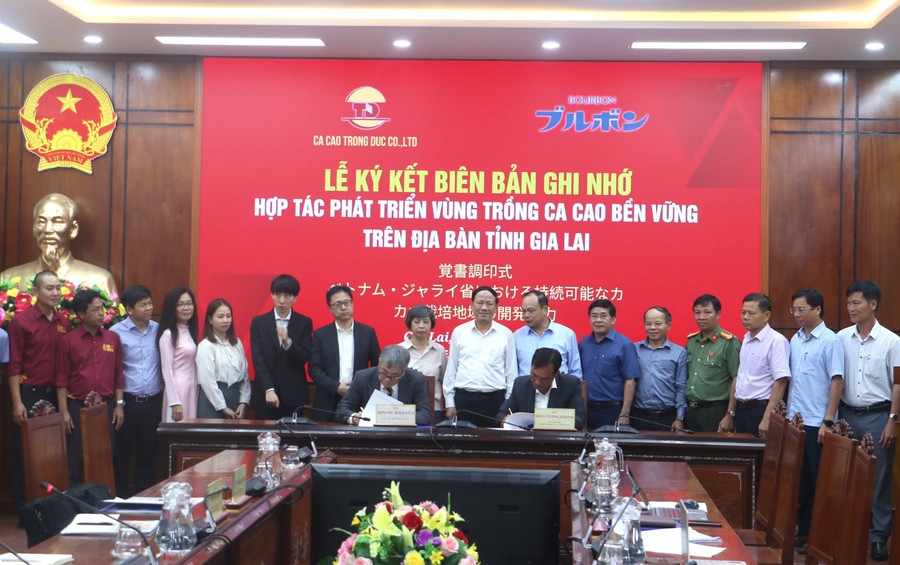
“Through numerous surveys in Vietnam, especially Gia Lai, Bourbon Group highly appreciates the potential for cocoa cultivation in the locality. Suitable soil and climate conditions, along with superior bean quality, are important factors in meeting the standards for deep processing and export,” shared Mr. Minoru Kikkawa.
Based on this, Bourbon has signed a cooperation agreement with Trong Duc Cocoa Company Limited to develop and expand the raw material area in Gia Lai over the next 7 years. Beyond guaranteeing product purchase, Bourbon is committed to working alongside the local community in technology transfer, investment in technology, improving cocoa bean quality, and gradually integrating Gia Lai cocoa deeper into the global supply chain.
Building on the successful 30-hectare pilot project in Pờ Tó, the two businesses proposed expanding the raw material area to approximately 200 hectares in the next phase, forming a concentrated, specialized cultivation zone that links production with processing and stable consumption.
According to the plan, the project will support people in transitioning to sustainable crop cultivation, with approximately 2,050 to 4,100 households participating and over 41,000 seedlings distributed in the initial phase. Participating households will receive training in planting, caring for, and harvesting according to standard procedures; simultaneously, cooperatives will be gradually formed, planting area codes will be established, and digital transformation will be applied in production management, ensuring traceability – a key factor when participating in export markets.
Dang Tuong Khanh, General Director of Trong Duc Cocoa Co., Ltd., affirmed: “With nearly 20 years of experience in developing raw material areas through a farmer-cooperative-enterprise linkage chain, the company identifies the people as the center, the enterprise as the driving force, and the market as the orientation. The cooperation with Bourbon Group not only has commercial significance but also opens up opportunities to build a sustainable, branded cocoa raw material area closely linked to the international market.”
Source: https://baogialai.com.vn/cay-ca-cao-mo-ra-hy-vong-tren-vung-dat-kho-po-to-post580453.html

![[Photo] General Secretary and President To Lam presides over a meeting on preparations for the review of one year of operation of the three-tiered government system.](https://vphoto.vietnam.vn/thumb/1200x675/vietnam/resource/IMAGE/2026/06/02/1780391821195_a1-bnd-4595-9717-jpg.webp)






















































Comment (0)