

However, not everyone knows how to process the MSG plant in a way that removes the toxins it contains.
What is the right way to eat vegetables with MSG?
Vegetables containing MSG must be thoroughly cooked before consumption, otherwise, poisoning can occur. Raw leaves and young stems contain cyanide – a highly toxic group of chemicals that inhibit cells' ability to utilize oxygen. Boiling or stir-frying for at least 15 minutes, cooked at high temperatures for an extended period, is necessary to completely destroy the toxins.
Absolutely do not eat them raw or juice them. Due to their toxic nature, ensure they are cooked for 15 to 20 minutes (older leaves require longer cooking times). Place the washed leaves in boiling water without covering, then remove them, drain, and discard the boiling water.
Absolutely do not cook MSG in aluminum pots as this can cause a chemical reaction, potentially leading to diarrhea and other poisoning symptoms. It is best to use stainless steel, ceramic, or non-stick pots to cook MSG safely.
The herb *Moringa oleifera* has small thorns on its leaf stalks; therefore, wear gloves when picking and washing it to avoid skin irritation.
Basic steps for preparing and detoxifying MSG-containing vegetables.
Wash and chop: Rinse the leaves thoroughly under running water, remove the tough, old stems, and then chop the leaves finely.
Boiling (Detoxification): Place the vegetables in a pot of boiling water and boil continuously for 15 to 20 minutes. You should leave the lid open while boiling to allow toxins to escape more effectively.
Draining the vegetables: Use a sieve to remove the leafy parts of the vegetables and let them drain.
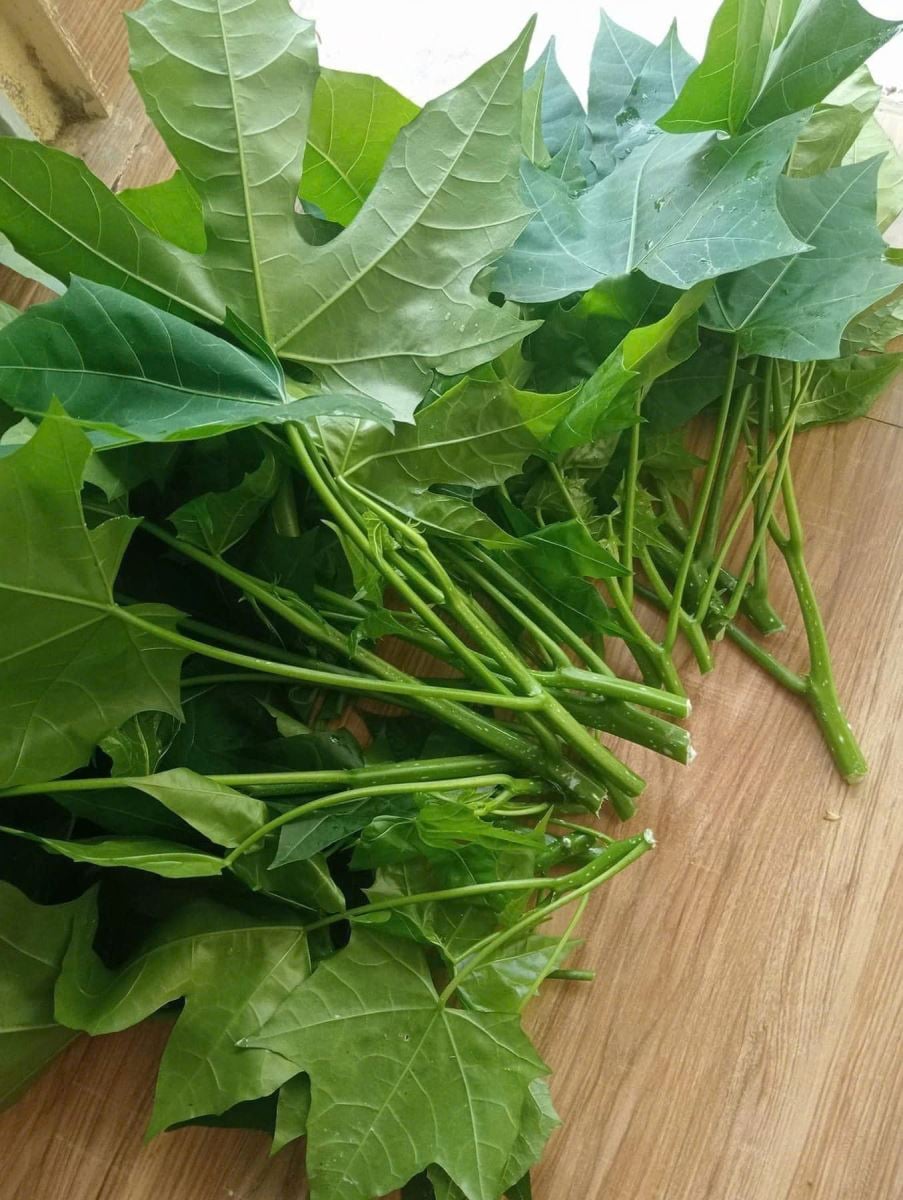
The plant known as "mì" (MSG) has leaves that resemble papaya leaves, and when eaten, it tastes sweet like MSG. It contains many nutrients, especially vitamins.
The water used to boil the Chinese parsley plant is rich in Vitamin C and minerals. You can save it to drink as tea or use it as broth for soups after boiling for the required time. Note that this is the water from the second boiling.
Ways to prepare the MSG plant
Stir-fried MSG leaves with eggs (Traditional style): Sauté finely chopped onions in hot oil until fragrant. Add cooked and finely chopped MSG leaves and stir well. Pour in beaten eggs and cook until the eggs solidify.
Cooking soups and stews: Add blanched parsley leaves to chicken soups, vegetable soups, or stews with pork.
Boil and season: After boiling for 20 minutes, remove the leaves and serve with melted butter, salt, or heated oil.
Sauté garlic and onion: Heat oil or butter in a pan. Add plenty of minced garlic, diced onion, and a few diced tomatoes and stir until fragrant. Add the cooked MSG leaves and stir quickly over high heat for 2 minutes. Season with salt and black pepper.
Making the filling for Tamales (Mexican dish): The Maya often mixed chopped boiled taro leaves with cornmeal to wrap around a filling of egg, tomato sauce, and pumpkin seeds to make the traditional tamales Dzotobichay.
Mayan-style creamy soup: Blend cooked parsley leaves with vegetable broth, onion, and garlic in a blender until smooth. Pour into a saucepan, add milk or fresh cream, and heat. Season with salt and pepper to create a creamy, emerald-green soup.
Stews, curries, or pasta dishes: Because the herb MSG doesn't easily break apart when cooked for a long time, it's ideal for stews, curries, or pasta sauces. It absorbs the broth very well and becomes incredibly flavorful.
Chaya Juice (Pineapple-Lemon Smoothie): Although yam leaves need to be cooked before consumption, in the Yucatán region of Mexico, people still blend a very small amount of fresh yam leaves (about 1-2 leaves) with lemon juice, pineapple, and ice to make a refreshing drink. The acidity of the lemon helps to reduce some of the toxicity; however, this method is not recommended and should be avoided for personal safety.
Source: https://suckhoedoisong.vn/cay-rau-mi-chinh-an-nhu-the-nao-169260524143756439.htm

![[Image] Hanoi's urban life under the challenge of a "scorching hot" environment](https://vphoto.vietnam.vn/thumb/1200x675/vietnam/resource/IMAGE/2026/05/25/1779706979265_nang-nong-t5-2026-minh-duy-7-4636-jpg.webp)



![[Image] Close-up view of the interchange connecting the two expressways and Long Thanh Airport.](https://vphoto.vietnam.vn/thumb/1200x675/vietnam/resource/IMAGE/2026/05/25/1779703378210_ndo_br_z7863716673926-224453a31600126cce10622af6290afd-4549-jpg.webp)
















































































Comment (0)