

City loneliness
Phuong (29 years old) is a woman from Northern Vietnam who moved to the South to build her career. At this age, she has a good job, is always conscious of her appearance, dressing well, and improving herself every day. From the outside, Phuong is the epitome of a modern, independent, and strong woman. But for the past year, her life has revolved around a single path: from home to work and then from work back home.
Sometimes, to escape the monotony and try to broaden her social circle, Phuong enrolled in some weekend classes. But amidst the laughter-filled spaces, Phuong realized her presence only highlighted her loneliness. Absolutely no man appeared to continue the love story she had once dreamed of. Her urban loneliness became most apparent on late Saigon afternoons when it rained, leaving her alone in her empty room, having to do everything by herself.
Watching her friends around her get married and have children one after another, Phuong felt an indescribable longing. She felt like she was falling behind in the race labeled "standard happiness," and often bitterly wondered: Was she simply below average according to societal standards?
The greatest pressure came from the very place called home. Ever since her 24-year-old younger sister got married, phone calls from home had only one topic: "When will it be your turn?" Her grandparents, parents, and even her siblings were impatient, urging her to enter a relationship, thinking she was too picky. Phuong could only swallow her anger: "Honestly, there's nothing to be picky about." This pressure turned into a vague but persistent fear, to the point that she dreaded calling home, dreading having to answer questions that felt like needles piercing the self-esteem of a grown daughter, causing her parents worry. She felt terrible.
"Quick" encounters
While Phuong chose to remain introverted, Linh (28 years old), a woman who is more emotionally driven and family-oriented, tried to open up to find a partner. But it was during this journey that Linh realized another harsh reality of the "marriage in your 30s" market.
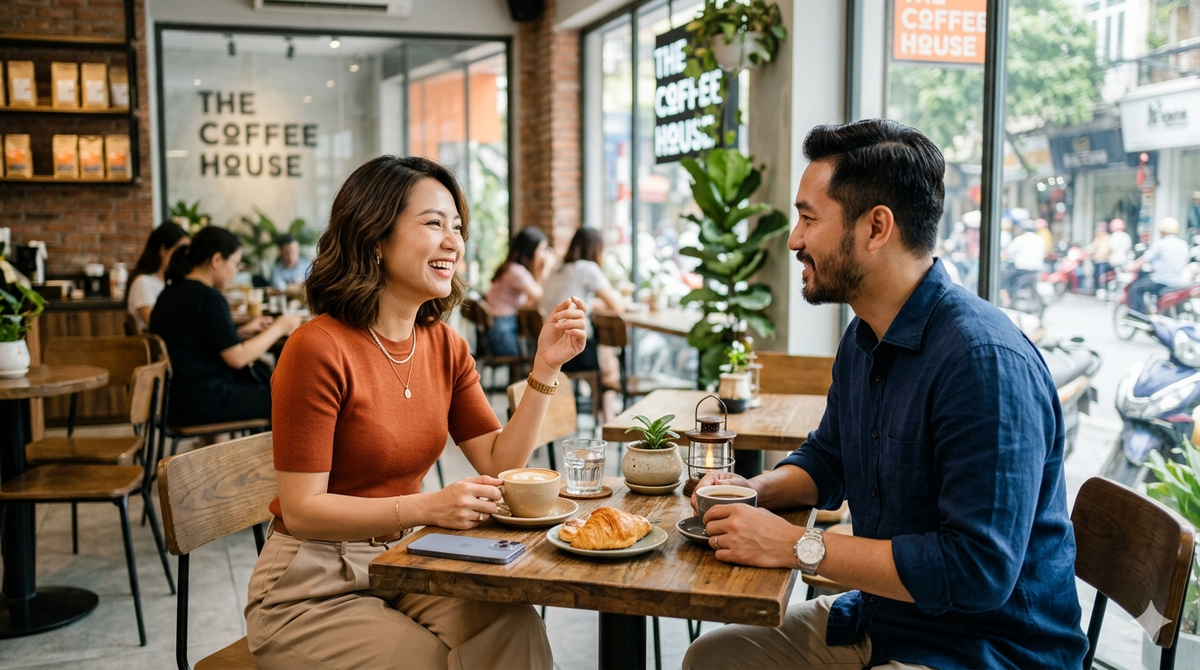
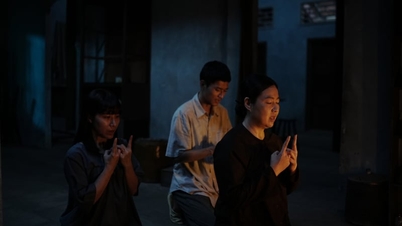
AI illustration
Through an introduction, Linh met an older man. But even during their first few conversations, Linh felt suffocated. There were no discussions about shared interests, no exploration of her inner world ; he rushed straight to the point, eager and impatient, as if he too were being chased by age. This haste didn't stem from love or affection, but from the goal of "getting married to get it over with." As a sensitive person, Linh flatly refused. She'd rather endure loneliness than enter into a marriage that was pre-arranged to appease public opinion.
Linh's anxiety intensified when she observed the lives of those close to her. Her older brother and sister both married according to "social norms"—meaning they married within the legal age. However, their married lives were far from happy; the cracks in their marriages and the weariness they displayed left Linh feeling exhausted and bewildered.
Linh was torn between conflicting emotions: On one hand, she desperately wanted someone to share her life with, a small, warm home to return to. On the other hand, the unhappy experiences of those who came before her filled her with fear. Family pressure, the eagerness of suitors, and the failed relationships of others created a complex web of stress, causing even a strong woman like Linh to worry about her own future.
Both Phuong and Linh are strong, independent, yet sensitive women. They once chose a "let things happen naturally" lifestyle, hoping everything would unfold smoothly and spontaneously. However, facing increasing pressure from societal prejudices, as they approach 30, they inevitably experience moments of uncertainty and anxiety about their future.
Social media today is flooded with trendy advice like "being single is best," "focus on making money and traveling ," or painting a picture of marriage as a daunting prospect for young people to avoid. But for women approaching their 30s, these philosophies are sometimes far removed from reality. They are tired of being alone for so long. Therefore, the desire for a partner, a place to share their lives with, and a desire to relieve their parents of their worries is a perfectly legitimate need, not a sign of weakness or "craziness" as some might judge.
"Even if married life is full of challenges, I still want to experience and face them." This is the heartfelt wish of a 29-year-old woman who wants to enter marriage with maturity and willingness, not because of external pressure.
Approaching 30, many women fear having to live according to someone else's predetermined mold. Happiness doesn't have a one-size-fits-all formula. Marriage, after all, is like a pair of shoes—whether it's too big or too small, warm or unstable, only those involved truly know. Instead of hastily choosing just any place to settle down, patiently improving oneself and waiting for someone who truly understands is a sign of courage. Hopefully, society will stop pressuring women in their 30s, allowing them to walk their own chosen path at their leisure—even if it's a little late, as long as they find peace of mind.
Source: https://phunuvietnam.vn/cham-nguong-30-va-noi-so-mang-ten-hanh-phuc-chuan-muc-23826052121384116.htm
![[Image] Hanoi's urban life under the challenge of a "scorching hot" environment](https://vphoto.vietnam.vn/thumb/1200x675/vietnam/resource/IMAGE/2026/05/25/1779706979265_nang-nong-t5-2026-minh-duy-7-4636-jpg.webp)

![[Image] Close-up view of the interchange connecting the two expressways and Long Thanh Airport.](https://vphoto.vietnam.vn/thumb/1200x675/vietnam/resource/IMAGE/2026/05/25/1779703378210_ndo_br_z7863716673926-224453a31600126cce10622af6290afd-4549-jpg.webp)
















































































Comment (0)