

The European Space Agency (ESA) is pushing ahead with plans to develop its own manned spaceflight capabilities to reduce its dependence on the US and Russia for sending European astronauts into space, amid an increasingly unstable international geopolitical environment.
According to the VNA correspondent in Paris, in an article recently published in the French press, ESA Director General Josef Aschbacher argued that Europe needs to build its own sovereign space capabilities instead of continuing to rely on external partners to send astronauts into orbit.
Established in 1975, the ESA still does not possess its own spacecraft for manned flights. For decades, European astronauts have primarily relied on programs from the United States and Russia.
According to the ESA, since 1983, the US has sent 28 European astronauts into space, including 22 on space shuttle flights. Meanwhile, Russia has also transported 19 European astronauts on Soyuz spacecraft between 1982 and 2019.
However, the conflict in Ukraine since 2022 has brought cooperation between ESA and the Russian space agency Roscosmos to a near standstill. Furthermore, the return of US President Donald Trump to the White House in early 2025 has also increased concerns about the future of transatlantic space cooperation.
In this context, ESA considers building independent space capabilities a new strategic priority. As early as 2022, Mr. Aschbacher established a group of experts to study the feasibility of developing Europe's own manned spaceflight program.
A report published in 2023 called for the ESA to fully develop the capability to send humans into space, including missions toward the Moon.
According to ESA's strategy, announced at the end of 2023, Europe will initially focus on developing cargo ships to the International Space Station (ISS) or future successor stations.
These spacecraft not only transport equipment into orbit but also have the capability to bring cargo back to Earth. ESA expects that after mastering cargo transport technology, Europe can continue to develop versions of the spacecraft that carry people.
In May 2024, ESA selected two companies to develop the initial projects: Thales Alenia Space and The Exploration Company. Thales Alenia Space is a major aerospace company from France and Italy that has participated in the construction of many ISS modules.
Meanwhile, The Exploration Company is a French-German startup developing the Nyx spacecraft with ambitions to build a crewed version within the next 10 years. Both companies received €25 million ($28.3 million) in funding from the ESA to conduct preliminary research, with the goal of making their first flight in 2028.
In parallel, the ESA has also called on businesses to develop rescue tower systems for crewed spacecraft. This is a safety system that allows the crew capsule to be separated from the rocket in the event of a launch accident.
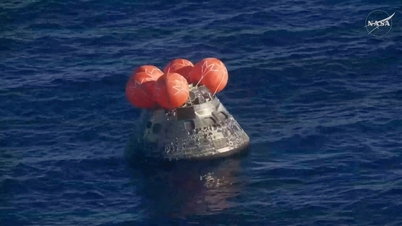
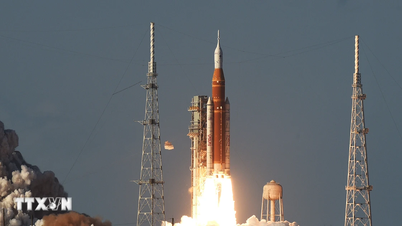
According to ESA technical documents, Europe's future spacecraft could use the Ariane 6 rocket and be similar in size to NASA's Orion spacecraft; however, the cost of this program is estimated to be very high.
A 2021 study conducted by the French company ArianeGroup and the German Aerospace Centre (DLR) estimated that upgrading the Ariane 6 rocket for manned flights could cost around 4.1 billion euros (4.63 billion USD).
On the other hand, the cost of each launch can reach approximately 415 million euros (468 million USD), accounting for up to 40% of ESA's annual budget for robotic and manned space exploration programs.
Source: https://www.vietnamplus.vn/chau-au-thuc-day-ke-hoach-tu-dua-phi-hanh-gia-vao-khong-gian-post1111265.vnp

![[Video] Sunset at Lap An Lagoon – Where the sun sets over the fishing nets](https://vphoto.vietnam.vn/thumb/1200x675/vietnam/resource/IMAGE/2026/05/31/1780192137701_beach-landscape-sea-water-nature-grass-745871-pxhere-com.jpeg)









![[Video] Sunset at Lap An Lagoon – Where the sun sets over the fishing nets](https://vphoto.vietnam.vn/thumb/800x450/vietnam/resource/IMAGE/2026/05/31/1780192137701_beach-landscape-sea-water-nature-grass-745871-pxhere-com.jpeg)




































![[Video] Sunset at Lap An Lagoon – Where the sun sets over the fishing nets](https://vphoto.vietnam.vn/thumb/402x226/vietnam/resource/IMAGE/2026/05/31/1780192137701_beach-landscape-sea-water-nature-grass-745871-pxhere-com.jpeg)


























Comment (0)