

When ironclad discipline crumbles before the "matrix" of sweets and television.
At the beginning of June, Mr. Doan (Dong Da ward, Hanoi ) faced a headache as his first-grade daughter entered her summer vacation. Due to the nature of their busy work schedules, he and his wife sent their daughter to live with her grandparents all day. Mr. Doan, being a strict parent, always set rigorous rules regarding screen time and a healthy diet for his child.
However, after just a few days of leaving his child with the grandparents, he felt completely helpless. As soon as the parents left the house, the living room instantly transformed into a mini-movie theater. To keep the child "well-behaved" and prevent crying, the grandparents readily turned on the TV and gave her a phone to watch all day. And that wasn't all; the refrigerator was always overflowing with pastries and soft drinks, bought indiscriminately by the grandparents out of love for their grandchild. After just a few days of indulgence, the little girl had visibly gained weight. Worried about her obesity and eye problems, Mr. Doan planned to enroll her in drawing and swimming lessons to keep her away from electronic screens. But every time he tried to sternly discipline her, she would run into her grandparents' arms for "allies." The grandparents' unconditional support rendered Mr. Doan's "discipline brake" completely ineffective, plunging the family into exhausting arguments.
While Mr. Doan's story is a battle between television and sweets, at Ms. Le My Han's house (Hanoi), the conflict erupts right at the dinner table during the sweltering summer days. Having meticulously prepared with scientific parenting knowledge, Ms. Han wants to instill independence in her child, teaching her to feed herself, even if she's slow or spills food.
However, the grandparents' overprotective mindset completely disregarded all principles. They were constantly worried about their grandchild being hungry or malnourished, so they insisted on feeding him, spoon-feeding him every single bite. The image of them chasing after him around the house, trying to soothe him with the TV while simultaneously feeding him in the sweltering summer heat filled Hân with both pity and frustration. At the height of the tension, seeing her child crying and struggling to eat, Hân lost her temper and blurted out, "Mom, let me teach him myself. Don't spoil him like this." This was the final straw, leaving the elderly mother silently heartbroken and the family atmosphere suffocating like a pressure cooker. Hân realized that no modern book could teach her how to handle such sensitive conflicts.
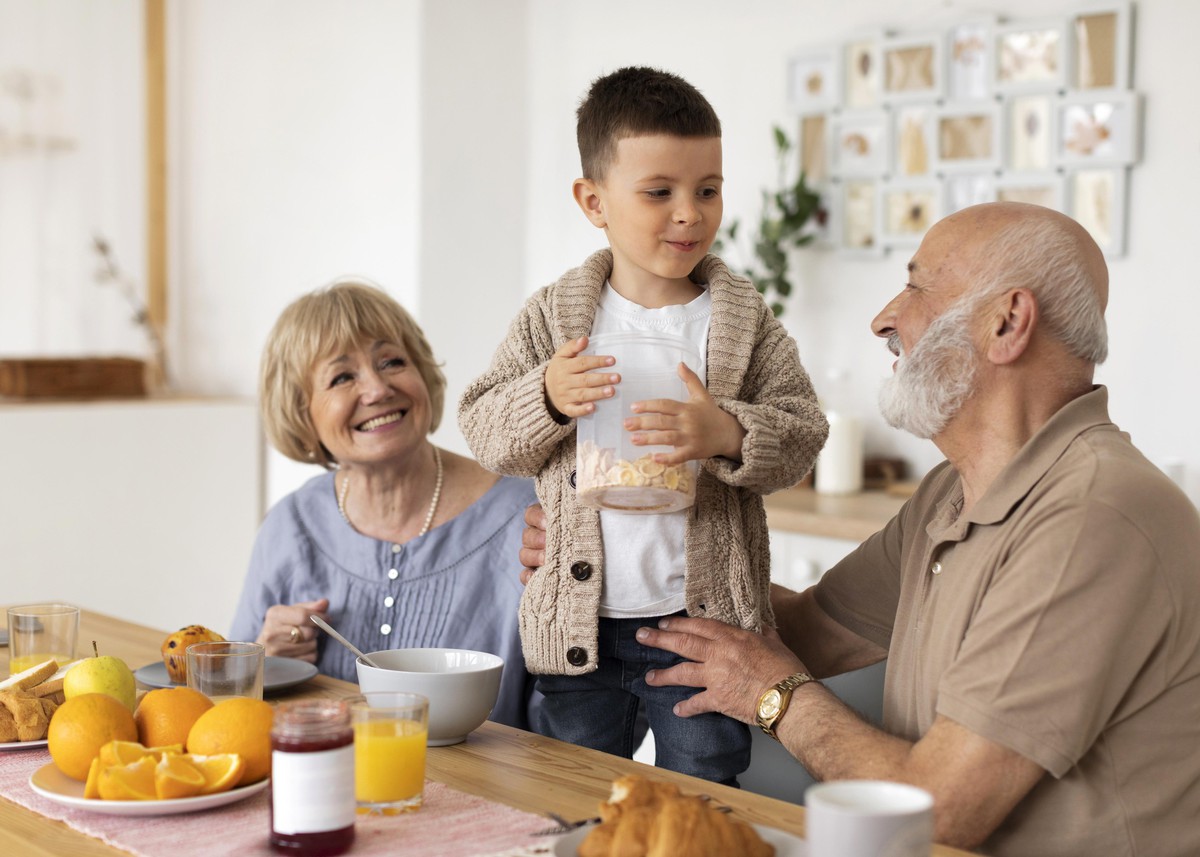
Illustration photo: Freepik
That simmering tension is also the sentiment of Ms. Pham Hai Anh (35 years old, Bac Giang). She is very grateful to her resourceful mother-in-law who manages all the housework and takes care of the grandchildren. However, in the summer, when the children spend more time at home with their grandmother, their biological clock starts to break. The grandmother often secretly lets the children eat candy and snacks excessively and tolerates them watching TV past late hours. As a result, the children go to bed late, are sluggish the next morning, and completely disrupt the scientific schedule that Ms. Hai Anh had painstakingly built. Although she gets annoyed with her husband as well, Ms. Hai Anh has to suppress her feelings, choosing to remain silent and wait until her mother-in-law is in a good mood before gently offering suggestions, accepting the feeling of always being "caught between the two sides."
Finding a way out for both the "driver" and the "passenger"
Speaking from the perspective of the older generation, Mr. Nguyen Huu Son (65 years old, Ngoc Ha, Hanoi) expressed his sadness. After a lifetime of hard work, his joy in old age is only his children and grandchildren. He admitted that he spoiled his grandchildren out of affection, buying them whatever delicious food he saw. When he heard his son's reaction: "Raising them is the children's responsibility, grandparents shouldn't interfere too much," Mr. Son felt deeply hurt, feeling that his kindness had been rejected.
According to psychologist Nguyen Viet Hien, the root of this "underground conflict" lies in the fact that the two generations are using two different "love languages." Grandparents grew up in a time of scarcity, so they compensate with pampering and indulgence based on their experience; while young parents are pressured by scientific knowledge, emphasizing discipline and personal freedom.
To ensure your family car runs smoothly during the summer months, expert Nguyen Viet Hien offers the following advice:
"Parents are the drivers, while grandparents are the passengers. The passengers can remind parents, 'Slow down, the road is bumpy,' but they can't grab the steering wheel. Parents are primarily responsible for their children's upbringing, but they must absolutely respect and be gentle with grandparents."
Instead of dismissing grandparents' experience as "outdated," gentle phrases like, "Thank you, Mom and Dad, let me see if I can apply that," can soothe the wounded pride of old age. Communication based on three principles— sincere listening , non-judgmental exchange , and putting the child's best interests first— is key.
Ultimately, a family is like a football team. Parents and grandparents may have different strategies, but as long as they all aim for the same goal – the holistic, healthy, and happy development of their children – the whole family will know how to "pass the ball" to each other to maintain harmony throughout the long summer.
Source: https://phunuvietnam.vn/bo-me-lo-lang-vi-ong-ba-pha-game-suot-mua-he-238260601220534885.htm
![[Photo] General Secretary and President To Lam presides over a meeting on preparations for the review of one year of operation of the three-tiered government system.](https://vphoto.vietnam.vn/thumb/1200x675/vietnam/resource/IMAGE/2026/06/02/1780391821195_a1-bnd-4595-9717-jpg.webp)
![[Image] Affirming the aspirations and new standards of the Vietnamese real estate market in the new era.](https://vphoto.vietnam.vn/thumb/1200x675/vietnam/resource/IMAGE/2026/06/03/1780441948766_giai-thuong-bat-dong-san-2026-minh-duy-6-7364-jpg.webp)

























































Comment (0)