

 |
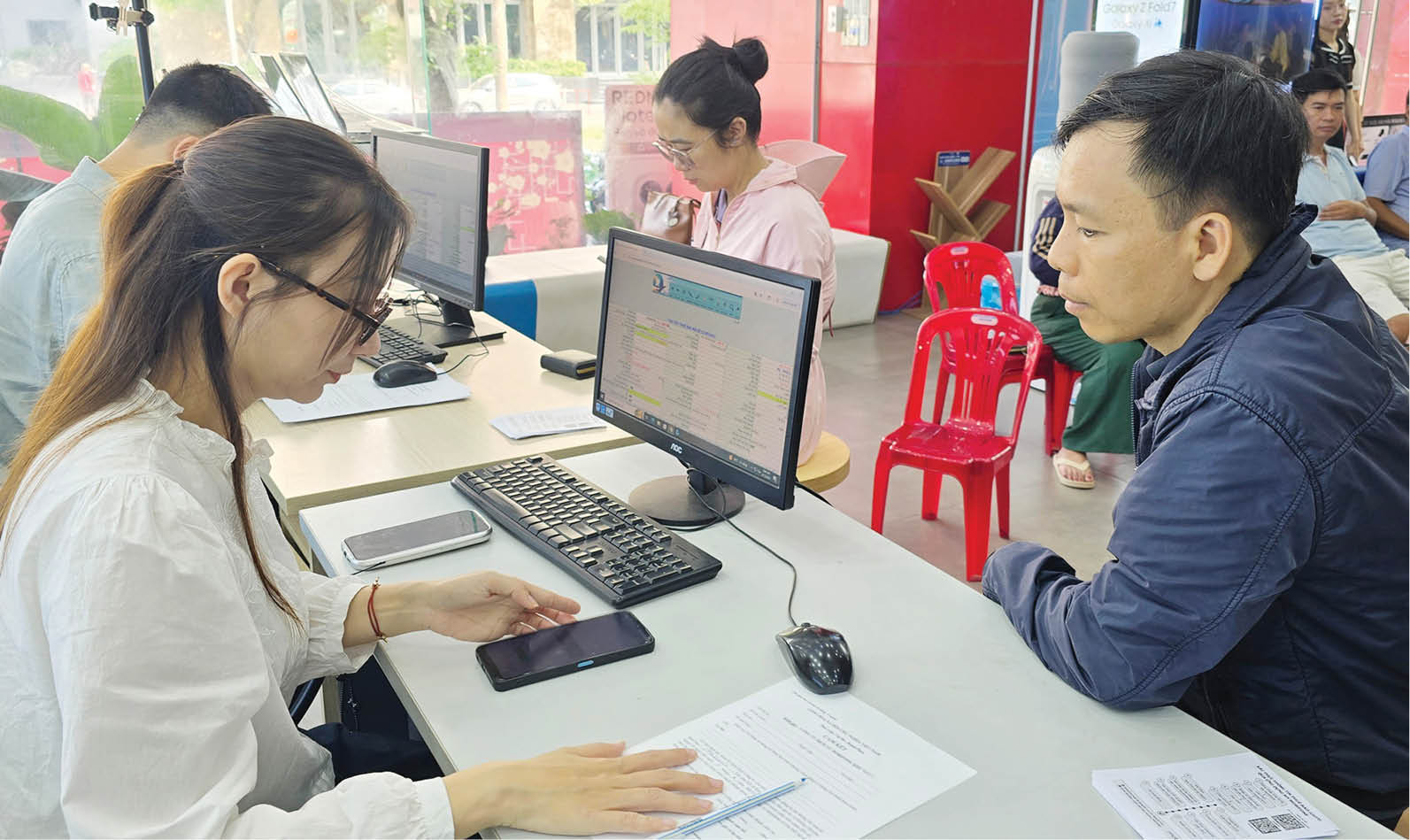
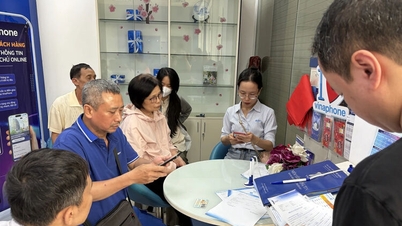
| MobiFone staff have been increased to assist customers in verifying their subscriber information. |
At the service points of mobile network operators in the city center, the scenes of people crowding and waiting are no longer as frequent as before, but whenever there are periods of subscriber blocking, the number of people coming to complete the verification procedures increases dramatically.
Many people only come when their SIM card is locked.
In recent days, Viettel , VinaPhone, and MobiFone transaction offices in Hue have been continuously receiving customers coming to check and verify their subscriber information. The majority of these customers only discovered problems with their SIM cards when they were blocked from making outgoing calls or received unusual reports related to their phone numbers.
Ms. Hoai Huong (Thuan Hoa ward) said she was surprised to receive a call from a stranger who claimed to be a postal worker and asserted that he was using the same phone number as her as a "second SIM card".
“I’ve been using this number for over 15 years, so I was very confused. The other person said it was their number too. I rushed to a VinaPhone branch to check and was informed that the number was registered under the information of two different customers. Then the staff instructed me to verify my ownership through VNeID,” Ms. Huong recounted.
Similarly, Mr. Nguyen Tuan (Phu Xuan ward) said that a few days ago he couldn't make phone calls even though his phone showed a full signal.
“At first, I thought it was a network error. After checking, I found out that my subscription had been blocked for outgoing calls because my information hadn't been verified. I had received a message from the network provider before, but I was busy and didn't respond, so I didn't expect it to be blocked so quickly,” Mr. Tuan said.
It has been observed that many users only truly understand the regulations after their SIM cards have been restricted from service. Meanwhile, many warning messages from network providers are often ignored due to complacency or fear of fraud.
According to current regulations, one-way service suspension can only be implemented after the network provider has sent a verification request but the subscriber has not complied within the specified timeframe.
This is the first step in the process of handling subscribers whose information has not been standardized. If users continue to fail to verify their information, their SIM cards will be blocked for both incoming and outgoing calls, and eventually their numbers will be revoked in accordance with the Telecommunications Law 2023 and Decree 163/2024/ND-CP.
The implementation is expected to help clean up subscriber data, limit the use of SIM cards registered to unauthorized individuals, and reduce the risk of being exploited for fraudulent activities, impersonation, spamming, or other illegal purposes.
Telecommunications companies say the service restoration procedure is quite simple. Users can verify their identity themselves through the network provider's app, via the VNeID app, or go directly to a service center for assistance.
Supporting vulnerable groups
According to Mr. Phan Van Hoai, Deputy Director in charge of MobiFone Hue, out of nearly 200,000 subscribers whose information has been standardized, there are still about 1,300 subscribers whose information has not been fully verified and have been asked to stop their services.
"Of these, more than 1,100 subscribers have completed the update and are using their services normally again. Approximately 200 subscribers are still in the process of re-verification, mainly because customers do not yet have level 2 electronic identification," Mr. Hoai said.
According to Mr. Hoai, as the two-way lockdown on June 15th approaches, the number of people visiting transaction points will increase sharply. Therefore, MobiFone is deploying many mobile support teams to communes and wards to assist vulnerable customer groups.
According to Nguyen Huy Quang, Director of Viettel Hue, the customers who need to update their information are mainly those who previously registered their subscriptions using a 9-digit national identity card.
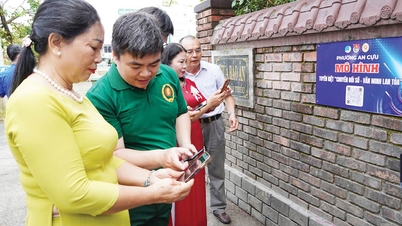
To support the people, Viettel has set up more than 40 verification points in communes and wards; many localities have 2-3 points to reduce the burden. In addition, the company has mobilized more than 200 employees to provide home support to the elderly, people in remote areas, or those who have difficulty traveling.
“After more than a month of implementation (since April 15th), Viettel Hue has updated the service for over 140,000 subscribers. We are still ensuring that customers will not be blocked when the deadline arrives,” Mr. Quang said.
According to Mr. Quang, the network currently has about 30,000 subscribers in the infrequent contact group whose SIM cards are being locked and unlocked, allowing users to proactively check their SIM status and verify it if necessary.
Despite implementing various solutions, network operators report that reaching elderly customers, the poor, and those living in remote areas remains challenging.
"Many people don't answer calls from staff because they're afraid of scams. Some people hang up immediately when they see an unfamiliar number. In many cases, children buy SIM cards for their parents to use, so the actual users are not aware of the regulations," Mr. Quang shared.
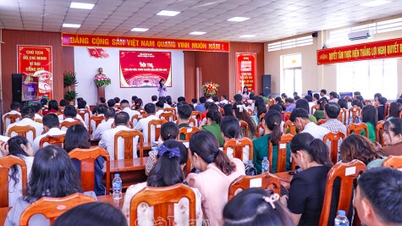
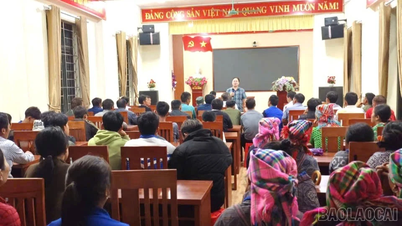
According to Mr. Quang, Viettel employees have to coordinate with village heads and neighborhood group leaders to go to each residential area to disseminate information via loudspeakers and announcements through community Zalo groups. In the mountainous district of Nam Dong, the company even hires people who know the languages of ethnic minorities to support communication efforts.
Currently, people can verify their subscriptions in three ways: self-verification via the VNeID app; self-update on the network provider's official app; or go directly to a store for assistance.
According to the new regulations, each subscriber must provide all four pieces of information: personal identification number, full name, date of birth, and facial biometric data. All data must match the national population database.
If the instructions are not followed or the information is inaccurate, the subscriber's service will be restricted through a process of one-way blocking, two-way blocking, and finally number revocation.
From April 15, 2026, telecommunications companies will begin synchronizing subscriber data with the national population database. This will allow phone number information to be updated on the VNeID application, enabling citizens to proactively check how many subscriptions they own, confirm active numbers, or reject numbers they no longer use.
The data verification and standardization process will continue until at least June 15th. After this date, subscribers who have not completed the verification process may have their services blocked as per regulations.
Mobile network operators advise people to proactively complete the transactions early instead of waiting until the last minute to avoid overloading transaction points and to ensure uninterrupted communication.
Source: https://huengaynay.vn/doi-song/chay-dua-xac-thuc-thue-bao-truoc-gio-g-165922.html





























































































Comment (0)