

With the rise of computers and word processing software, many parents believe that teaching children to write neatly is outdated.
As one of the parents who had their children tutored in beautiful handwriting, Ms. Khieu Thi Lan Anh (37 years old, Nam Tu Liem, Hanoi ) believes that neatly aligned, beautiful, and clear handwriting reflects the formality and carefulness of the writer. Conversely, those with poor handwriting are often careless. Therefore, her son, even though he is only in the third grade, has spent nearly four years practicing beautiful handwriting.
“From kindergarten at age 5, I took my child to handwriting classes. Although the tuition fee wasn't low, averaging 250,000-300,000 VND per session, twice a week, I was very happy to see my child write neatly and beautifully,” said Ms. Lan Anh, adding that children need to practice beautiful handwriting from a young age so that when they reach middle and high school, they can write quickly and be readable. If they don't practice now, their handwriting will be terrible when they grow up, and then it will be too late to regret it.
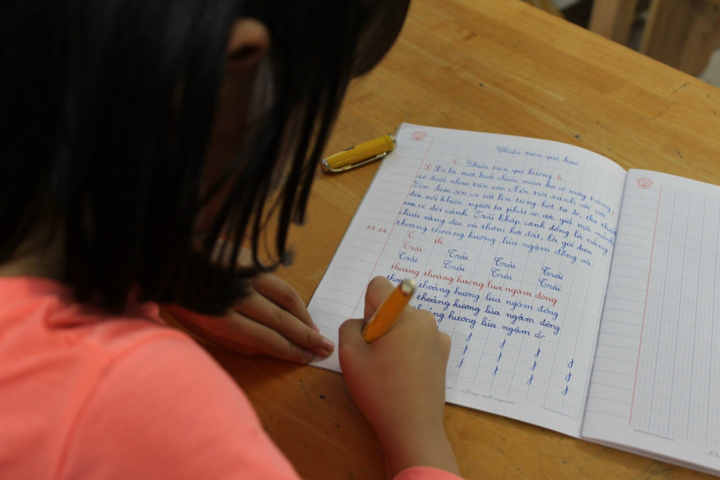
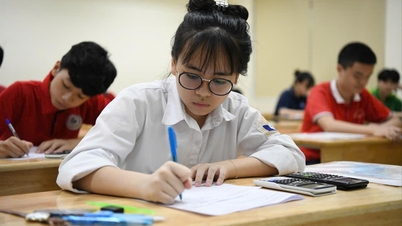
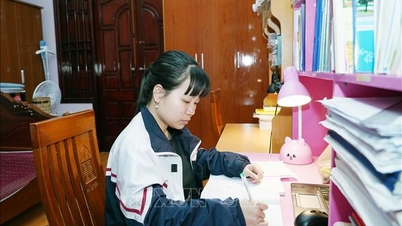
Many parents believe that in the age of Industry 4.0, teaching children to write neatly has become outdated. (Illustrative image)
Being someone who appreciates beautiful handwriting, Ms. Nguyen Thanh Ha (34 years old, Thai Binh ) is proud to see the neat and steady handwriting of her daughter, who is in 5th grade. The parent said that although her daughter's handwriting isn't bad, she always wanted her to have "clean notebooks and beautiful handwriting," so she enrolled her in a tutoring center as soon as she entered 1st grade.
To date, her daughter has completed two basic and advanced handwriting courses, costing nearly 10 million VND in total. “I write not only for myself to see, but also to convey content to others to read. If we liken a page to a face, would you prefer a smudged or a clean face?” , Ms. Ha said.
It's not just Ms. Lan Anh and Ms. Ha; many families nowadays are sending their children to calligraphy training centers at considerable expense. These parents all believe that, regardless of the era, this is very important and helps children develop patience, meticulousness, and carefulness.
Conversely, many people also question the purpose of teaching students to write neatly. According to Ms. Bui Thi Nhan (40 years old, Hoang Mai, Hanoi), practicing beautiful handwriting has little value and does not even determine a child's future success.
"In this era of rapidly developing digital technology , children mainly study and use computers and phones, so what's the point of practicing beautiful handwriting? Instead of wasting time teaching children who don't have a talent for beautiful handwriting, wouldn't it be better to teach them how to read, write correctly, and even type quickly?" , the female parent expressed.
Agreeing with the above viewpoint, parent Duong Thu Phuong (29 years old, Dong Da, Hanoi) believes that the notion of "handwriting reflects character" in today's society is somewhat outdated. Doing math, writing essays, learning to play a musical instrument, even playing soccer or jumping rope all help children develop patience, meticulousness, and concentration, not just practicing beautiful handwriting.
"Nowadays, children have many things to learn, from soft skills to academic knowledge. Therefore, it would be a waste of time to force them to spend hours practicing handwriting every day," Ms. Phuong said, adding that she only requires her children to write clearly, with sufficient strokes, and legible letters.
No one has the right to force children to practice handwriting.
According to Ms. Nguyen Thi Thao Linh, a teacher in Hanoi, in this debate, each parent has their own valid point. However, no one has the right to force children to practice handwriting, not even teachers have the capacity to do so.
"Parents should let children practice beautiful handwriting out of their own enjoyment and interest, not for the sake of achievement. Absolutely do not force or put pressure on children," Ms. Linh emphasized.
The female teacher advised parents not to neglect handwriting practice. Beautiful handwriting isn't necessary, but overall legible, clear, and coherent writing is still essential, both in academics and in life.
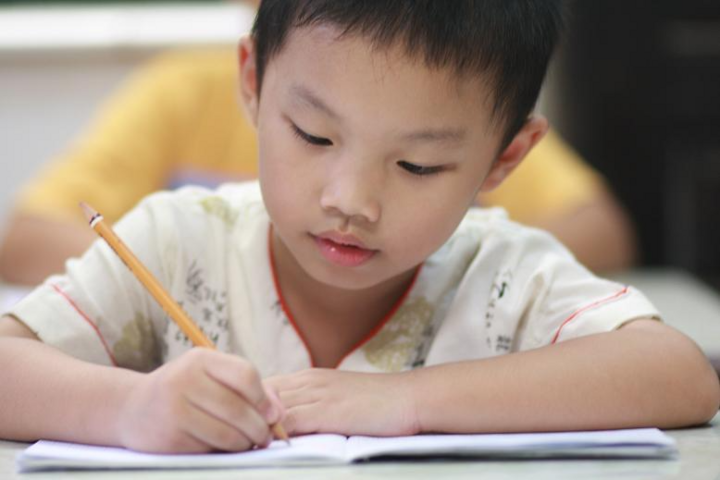
According to experts, no one has the right to force children to practice handwriting. (Illustrative image)
Discussing this issue, Ms. Nguyen Thi Mai Anh, Deputy Director of the Institute of Human Psychology, stated that throughout the history of Vietnam, as well as developed countries such as England, the United States, Russia, and France, writing has always been valued and considered a foundation for preserving the nation's culture.
The saying "handwriting reflects character" is very true when it comes to teaching children to write. Practicing beautiful handwriting offers many benefits that everyone knows, such as cultivating perseverance, carefulness, and meticulousness. Furthermore, focusing on each stroke of the pen not only shows respect for the reader but also contributes to a beautiful cultural aspect of communication through written words.
"We shouldn't use excuses to justify handwriting practice for children and encourage laziness. Science and technology were created to make work more convenient. We shouldn't let their convenience turn people into lazy and dependent individuals," emphasized Ms. Mai Anh.
However, according to Ms. Nguyen Thi Mai Anh, parents should not force their children to practice handwriting to be too beautiful, like "dragons flying and phoenixes dancing," nor should they spend large sums of money on sending their children to tutoring centers day and night for the sake of achievement, causing health and financial problems for both the child and the family.
Parents can support their children in practicing each stroke of handwriting by referring to scientific principles and handwriting standards for each age group published by the Ministry of Education and Training.
Besides the efforts of students in their journey of developing good handwriting and character, parents and teachers should also have an objective, humane, and open-minded view of handwriting, and should not be too strict or rigid, demanding that students write every stroke and line perfectly.
"After training, simply seeing that the children's handwriting is better than before should be considered a success. We shouldn't compare their handwriting to others'. Let the children's handwriting be written with enthusiasm and enjoyment, not just straight, emotionless lines," the expert expressed.
Kim Nhung
Source: https://vtcnews.vn/chi-chuc-trieu-dong-ep-con-di-luyen-chu-dep-co-can-thiet-ar911343.html
![[Photo] Prime Minister Pham Minh Chinh presides over a meeting on private sector economic development.](/_next/image?url=https%3A%2F%2Fvphoto.vietnam.vn%2Fthumb%2F1200x675%2Fvietnam%2Fresource%2FIMAGE%2F2025%2F12%2F20%2F1766237501876_thiet-ke-chua-co-ten-40-png.webp&w=3840&q=75)


![[Photo] Prime Minister Pham Minh Chinh presides over the conference announcing the establishment of the International Finance Centre in Vietnam.](/_next/image?url=https%3A%2F%2Fvphoto.vietnam.vn%2Fthumb%2F1200x675%2Fvietnam%2Fresource%2FIMAGE%2F2025%2F12%2F21%2F1766309817714_ndo_br_dsc-3400-jpg.webp&w=3840&q=75)



















































































Comment (0)