

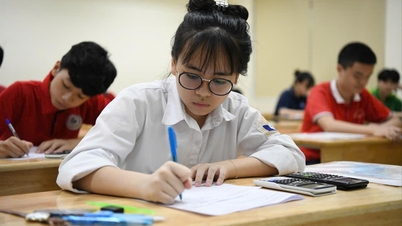
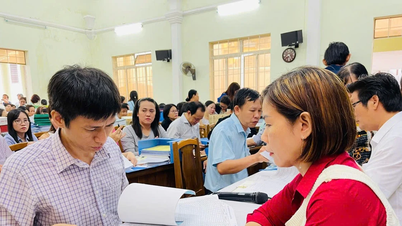
Continuing to uphold the spirit of prioritizing the best interests of students, the proposed revisions received high levels of consensus from teachers and education administrators.
Ensure strict control.
After reviewing the proposed revisions, Ms. Nguyen Thi Giang Huong from Tran Quang Khai High School (Trieu Viet Vuong, Hung Yen ) strongly agrees with three of the proposed changes.
Firstly, allow for greater flexibility in the duration of extracurricular teaching within schools (from a fixed limit of 2 lessons/week/subject to granting the Director of the Department of Education and Training the authority to decide on cases based on the principal's request). This allows for customization according to practical needs and encourages extracurricular teaching as a tool to support the quality of regular class time.
Secondly, strengthen reporting and publicize information about extracurricular tutoring. Teachers providing extracurricular tutoring must report before starting and update their reports whenever there are changes to any of the reported content. This regulation strengthens the management responsibility of the principal; at the same time, it helps parents better monitor their children's learning outside of school.
Thirdly, transfer management responsibilities from the district-level People's Committee to the commune-level People's Committee to align with the Law on Organization of Local Government.
Emphasizing the need for more flexible revisions regarding the duration of extra classes in schools, Mr. Nguyen Van Hoang, Principal of Nguyen Hue High School (Hung Yen), argued that the regulation of 2 lessons/week/subject does not meet the exam preparation needs of graduating students.
Therefore, allowing the Principal to proactively develop review plans tailored to the actual conditions, especially the teaching staff, and submit them to the Director of the Department of Education and Training for approval is reasonable. This regulation facilitates students' review according to a unified plan, under the supervision of the school, instead of having to seek out extra classes outside.
Mr. Nguyen Van Hoang also emphasized the important role of the commune-level People's Committee in managing extracurricular tutoring, especially outside of school. Strengthening management will contribute to ensuring transparency and openness; reduce pressure on students and alleviate the anxiety of many parents that "their children are not receiving extra tutoring" or "they cannot find a reputable center," while also preventing the practice of luring students to private tutoring centers.
Mr. Dinh Tien Hoang, Principal of Nam Can Ethnic Boarding Junior High School (Nam Can commune, Nghe An province ), said: "The majority of students in ethnic boarding schools are children of ethnic minorities, who have low starting points and face difficulties in absorbing knowledge in some subjects."
Therefore, there is a great need for support for weak students, enrichment for gifted students, or enhanced review for final-year classes. The rigid regulation of "no more than 2 lessons/week/subject" sometimes fails to meet practical needs. Revising the regulation to empower the Director of the Department of Education and Training based on the Principal's proposal is very appropriate, creating more flexibility while still ensuring strict control.
"I particularly appreciate the principle of not charging fees, not putting pressure on students, and not distorting educational goals. This is how the State protects students, especially those in disadvantaged areas," Mr. Dinh Tien Hoang commented.
The principal of Nậm Cắn Ethnic Boarding Junior High School also agreed with stricter regulations on extracurricular tutoring. Specifically, requiring teachers participating in extracurricular tutoring to report fully and regularly is necessary.
In mountainous areas, teachers face difficulties in commuting, and opportunities for extracurricular tutoring are virtually nonexistent. However, clear regulations are still the best way to prevent negative practices and improper motives. Requiring tutoring centers to publicly disclose information also helps society to better monitor and ensure greater transparency.
One important amendment is the readjustment of the management role of the People's Committee at the commune level. According to Mr. Dinh Tien Hoang, the commune-level government is closest to the people and understands the situation best. When power is delegated to the commune level, supervision becomes more practical, timely, and effective. This is also a timely amendment to conform with the new Law on Organization of Local Government.
“Schools in disadvantaged areas cannot chase after achievements. We always want students to learn genuinely, understand genuinely, and receive genuine support. The regulations of the Ministry of Education and Training aimed at protecting the right to equal and fair learning across subjects will help teachers and students feel more secure and less pressured,” Mr. Dinh Tien Hoang expressed.
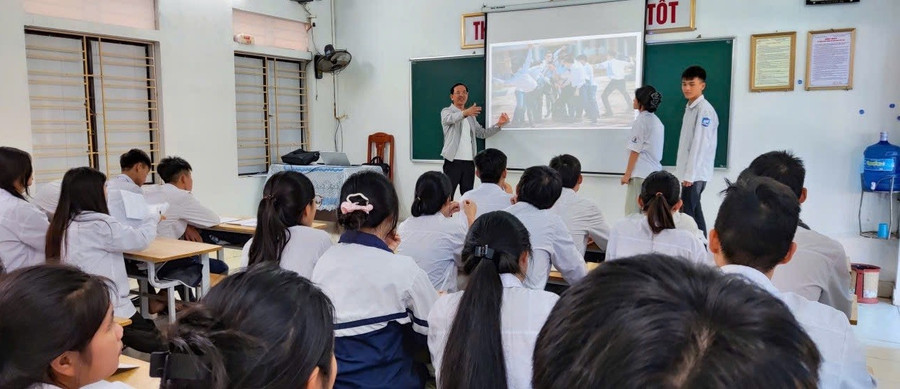
Provide timely guidance and financial support.
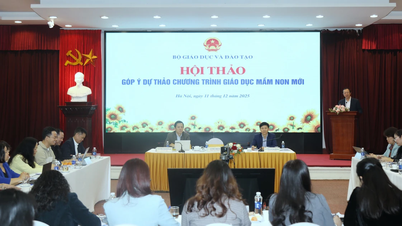
To ensure the effective and quality implementation of extracurricular activities in accordance with regulations, based on the practical experience of Tran Quang Khai High School, Ms. Nguyen Thi Giang Huong wishes to increase the budget and support for extracurricular teaching within the school; and to have specific and timely guidance on the regulations of the Department of Education and Training regarding the determination of the duration of extracurricular teaching for each high school based on the principal's proposal.
According to Mr. Dinh Tien Hoang, if the Ministry/Department of Education and Training allows an increase in extra teaching time, they need to provide clear guidance on the maximum framework so that schools can be proactive but not confused. In particular, a mechanism is needed to support funding for free extra teaching sessions in schools in disadvantaged areas. Currently, teachers are trying their best to tutor weak students, but they face a lot of work pressure. A support mechanism (from the budget or preferential policies) would help teachers feel more secure and maintain quality.
Regarding ethnic boarding schools, Mr. Dinh Tien Hoang hopes to be allowed to organize sessions to enhance learning skills, communication skills, and Vietnamese language proficiency... and that these sessions be counted as student support hours, instead of just as "extra subject-based teaching." Students in mountainous areas need more skills than exam preparation.
Emphasizing the need for increased decentralization but also the need for enhanced guidance on inspection and supervision, especially for small, remote schools with limited management capacity, Mr. Dinh Tien Hoang stated that these amendments reflect a spirit of openness, responsibility, and a focus on developing substantive education.
"From the perspective of someone working in border management, I consider these adjustments to be appropriate, humane, and promising. We hope that the regulations will be finalized and promulgated soon so that schools have a basis to implement them and better support students in the current challenging circumstances," Mr. Dinh Tien Hoang shared.
“The content that the Ministry of Education and Training plans to revise is necessary, timely, and appropriate to the current situation. The current educational context has undergone many changes, especially in disadvantaged areas, mountainous regions, and border areas like Nam Can.”
"The fact that the Ministry of Education and Training is incorporating feedback from schools and updating new regulations shows its decisive approach to managing extracurricular tutoring; aiming for transparency, practicality, and the benefit of students," said Mr. Dinh Tien Hoang, Principal of Nam Can Ethnic Boarding Junior High School.
Source: https://giaoducthoidai.vn/du-kien-sua-doi-quy-dinh-day-them-hoc-them-khang-dinh-tinh-than-vi-hoc-sinh-post759954.html
![[Photo] Prime Minister Pham Minh Chinh holds a phone call with the CEO of Russia's Rosatom Corporation.](/_next/image?url=https%3A%2F%2Fvphoto.vietnam.vn%2Fthumb%2F1200x675%2Fvietnam%2Fresource%2FIMAGE%2F2025%2F12%2F11%2F1765464552365_dsc-5295-jpg.webp&w=3840&q=75)

![[Photo] Closing Ceremony of the 10th Session of the 15th National Assembly](/_next/image?url=https%3A%2F%2Fvphoto.vietnam.vn%2Fthumb%2F1200x675%2Fvietnam%2Fresource%2FIMAGE%2F2025%2F12%2F11%2F1765448959967_image-1437-jpg.webp&w=3840&q=75)





































![[OFFICIAL] MISA GROUP ANNOUNCES ITS PIONEERING BRAND POSITIONING IN BUILDING AGENTIC AI FOR BUSINESSES, HOUSEHOLDS, AND THE GOVERNMENT](https://vphoto.vietnam.vn/thumb/402x226/vietnam/resource/IMAGE/2025/12/11/1765444754256_agentic-ai_postfb-scaled.png)









































Comment (0)