

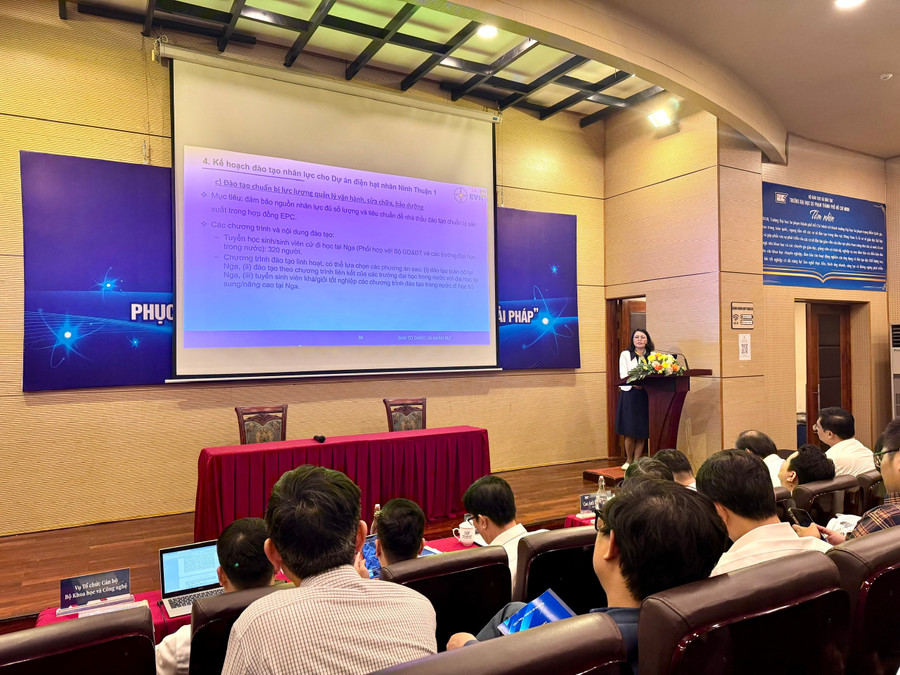
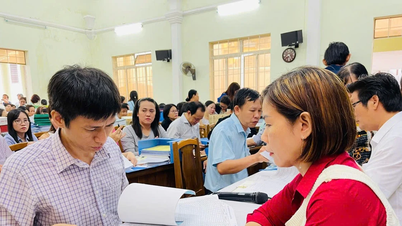
On the afternoon of December 11th, at Ho Chi Minh City University of Education, the Ministry of Education and Training organized a scientific conference titled "Training and Development of Human Resources for Nuclear Power Development: Current Situation and Solutions".
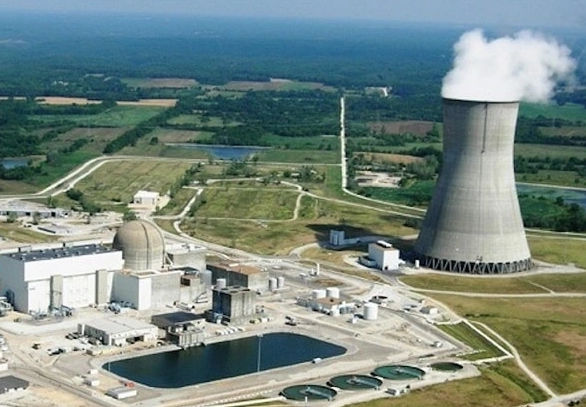
The workshop, chaired by Deputy Minister of Education and Training Nguyen Van Phuc, marks an important preparatory step as Vietnam restarts the Ninh Thuan 1 and 2 Nuclear Power Plant projects; and simultaneously implements Decision 1012/QD-TTg dated May 26, 2025, of the Prime Minister approving the "Scheme for Training and Developing Human Resources to Serve the Development of Nuclear Power until 2035".
The event brought together representatives from the Ministry of Science and Technology, the Ministry of Finance , the Ministry of Industry and Trade, Vietnam Electricity Group (EVN), Vietnam National Energy and Industry Group (PVN), and 11 key training institutions.
Implementing the tasks of training nuclear power personnel in a coordinated manner.
In his remarks, Deputy Minister of Education and Training Nguyen Van Phuc emphasized the urgent need to train high-quality human resources to serve the goal of sustainable energy development and the Net Zero 2050 commitment roadmap.
According to the Deputy Minister, immediately after Decision 1012 was issued, the Ministry of Education and Training actively implemented the tasks. The Ministry of Education and Training developed a comprehensive plan for implementing the project, sent guidance documents to ministries and agencies, two corporations, and 11 training institutions to clearly assign tasks.
Simultaneously, the Ministry of Education and Training established a Project Steering Committee with the participation of the Ministry of Science and Technology, the Ministry of Industry and Trade, and other relevant units, to ensure inter-sectoral coordination throughout the implementation process.
An important task is to draft a decree to replace Government Decree No. 124/2013/ND-CP, on preferential policies for university lecturers and management staff participating in training human resources for nuclear power.
"The draft decree has been submitted to the Ministry of Justice for review and is expected to be presented to the Government soon. This is a very important decree for implementing the policy of supporting lecturers and students," Deputy Minister Phuc emphasized.
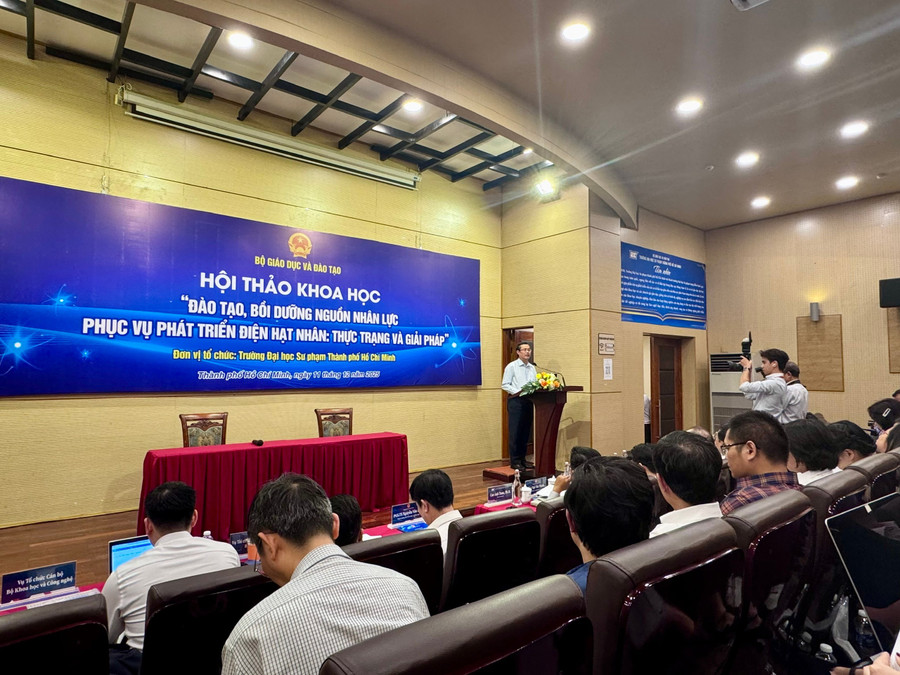
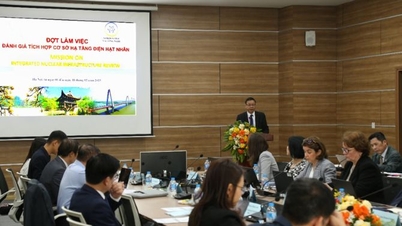
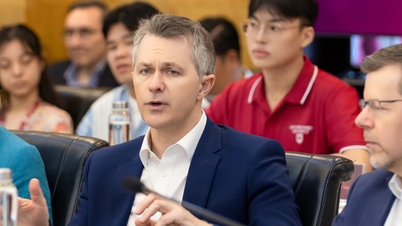
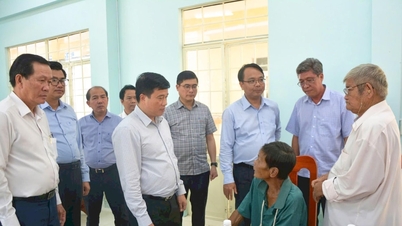
Overview of the workshop. Photo: Thuy Linh.
Regarding international cooperation, the Ministry of Education and Training has worked with EVN to prepare for sending students to train in the Russian Federation and several other partner countries.
The Ninh Thuan 1 project is a collaborative program with Russia, so the requirement to train students in Russia is of crucial importance.
In addition, the Ministry of Education and Training directed 11 relevant training institutions to update and standardize nuclear power training programs; and at the same time, coordinate with Rosatom (Russia) and universities of the Russian Federation to exchange information on training plans.
The Ministry of Education and Training is also coordinating with the Ministry of Science and Technology and other relevant units to survey the infrastructure serving training and prepare the conditions for establishing a system of nuclear laboratories in all three regions of the country.
Dr. Vu Thanh Binh, Deputy Director of the Department of Science, Technology and Information (Ministry of Education and Training), said that the draft of the new decree has two major changes: the living allowance is calculated based on the regional minimum wage, and scholarships for students are paid by the two investor corporations and apply to students who commit to working at the factory after graduation. This is a new point compared to before and has been reviewed by the Ministry of Justice.
Regarding investment in laboratories, Mr. Binh stated that the Ministry of Education and Training has sent documents to 11 training institutions to propose investment projects to support human resource training.
Due to the high cost of investing in nuclear laboratories, the Ministry of Education and Training will coordinate with the two National Universities, the Ministry of Industry and Trade, and the University of Electrical Engineering to review and select a list of key projects, aiming towards a model of shared laboratories among universities.
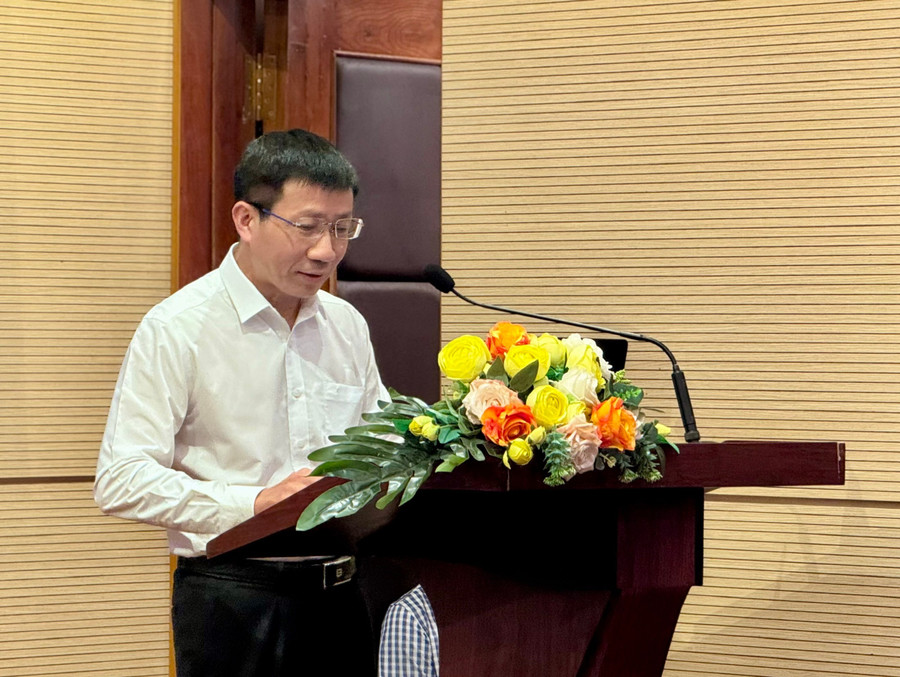
Dr. Binh emphasized that this not only serves the nuclear power sector but also meets the goal of training 25,000-35,000 atomic energy engineers as stipulated in Resolution 70 of the Politburo.
Regarding training programs, the Ministry of Education and Training has requested EVN, PVN, and international partners to provide the latest training programs for schools to update.
In addition, the Ministry of Education and Training has assigned the University of Technology (Vietnam National University Ho Chi Minh City) to lead the development of a standard curriculum for nuclear power engineering, a minimum set of standards for other universities to use as a basis for developing their own programs.
Dr. Binh believes that preparing the teaching staff is a very important task, because training a lecturer with a doctoral degree in this field takes 4-5 years if they are sent abroad.
The Ministry of Education and Training hopes that schools will proactively utilize existing resources, especially the team of researchers and lecturers at the Vietnam Atomic Energy Institute. The Institute is also ready to cooperate and send experts to participate in teaching with the schools.
"In addition, the Ministry of Education and Training will coordinate with the Ministry of Science and Technology to send lecturers and experts for short-term training abroad (approximately 6 months) to prepare for training third and fourth-year nuclear power engineering students."
"If the first cohort is enrolled in 2026, students will still be studying general subjects in their first year, so there will still be time to perfect the faculty," said Dr. Binh.
Joint training efforts for the nuclear project.
At the workshop, Ms. Phan Thi Hong Hanh, Deputy Head of the Human Resources Department of Vietnam Electricity Group (EVN), presented the plan for preparing human resources for the Ninh Thuan 1 Nuclear Power Project.
Since this is the first nuclear power plant in Vietnam, EVN stated that it lacks practical experience and is therefore temporarily using data provided by Russia to develop a training plan.
These parameters will be reviewed and adjusted after the contract is signed with the contractor, ensuring they are consistent with EVN's organizational model while still meeting the plant's safety, stability, and reliability requirements.
According to Ms. Hanh, EVN's training plan is divided into three main groups.
The first group of training focuses on the management and advisory staff involved in the project, concentrating on general knowledge based on IAEA documents, legal systems, international practices, and study tours to nuclear power plants around the world.
The second group focuses on intensive training for the Project Management Board, revolving around 19 infrastructure-related topics for nuclear power plant construction, as well as courses in nuclear engineering, technology, and project management.
The third group is the operational, repair, and maintenance workforce. This is the largest group of personnel.
Simultaneously, the production preparation workforce will receive Russian language training for 3 months to 1 year, and participate in practical training at thermal power plants and repair units in the country to familiarize themselves with the operating environment and accumulate experience in repairing and maintaining equipment.
Concluding the workshop, Deputy Minister Nguyen Van Phuc acknowledged the proposals from the units, emphasizing the need to provide detailed training requirements: quantity, professions, domestic and international demand, and the timeline for workforce development.
This serves as the basis for the Ministry of Education and Training to assign tasks to training institutions according to the capabilities and conditions of each unit.
The Deputy Minister requested EVN and PVN to direct their two affiliated colleges to urgently develop training plans; and to coordinate with the Ministry of Science and Technology to determine the short-term training needs for nuclear power management personnel.
At the same time, review the training program, teaching staff, facilities, especially the shared laboratory system.
"Nuclear power is a long-term endeavor. Vietnam has committed to net-zero emissions by 2050, and to fulfill that commitment, nuclear energy plays a crucial role," Deputy Minister Nguyen Van Phuc affirmed.
EVN plans to recruit 320 students for training in Russia under three flexible options: full-time training for 5-6 years; a 2+2 or 2+3 joint program between Vietnamese and Russian universities; or recruiting high-achieving graduates from domestic universities for an additional 2-3 years of study.
EVN also sets specific admission criteria for each group of students, ranging from high school students with excellent grades in Math, Physics, and Chemistry to engineering students with good or excellent academic performance.
Source: https://giaoducthoidai.vn/tang-toc-dao-tao-nhan-luc-dien-hat-nhan-cho-hai-nha-may-ninh-thuan-1-va-2-post760134.html
![[Photo] Prime Minister Pham Minh Chinh holds a phone call with the CEO of Russia's Rosatom Corporation.](/_next/image?url=https%3A%2F%2Fvphoto.vietnam.vn%2Fthumb%2F1200x675%2Fvietnam%2Fresource%2FIMAGE%2F2025%2F12%2F11%2F1765464552365_dsc-5295-jpg.webp&w=3840&q=75)

![[Photo] Closing Ceremony of the 10th Session of the 15th National Assembly](/_next/image?url=https%3A%2F%2Fvphoto.vietnam.vn%2Fthumb%2F1200x675%2Fvietnam%2Fresource%2FIMAGE%2F2025%2F12%2F11%2F1765448959967_image-1437-jpg.webp&w=3840&q=75)








































![[OFFICIAL] MISA GROUP ANNOUNCES ITS PIONEERING BRAND POSITIONING IN BUILDING AGENTIC AI FOR BUSINESSES, HOUSEHOLDS, AND THE GOVERNMENT](https://vphoto.vietnam.vn/thumb/402x226/vietnam/resource/IMAGE/2025/12/11/1765444754256_agentic-ai_postfb-scaled.png)






































Comment (0)