

Ensuring scientific accuracy, consistency, and continuity.
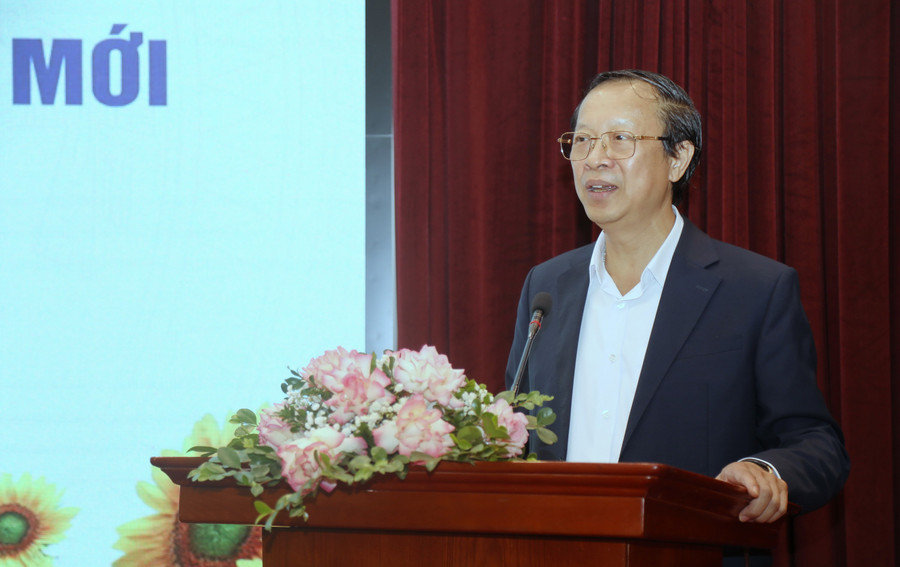
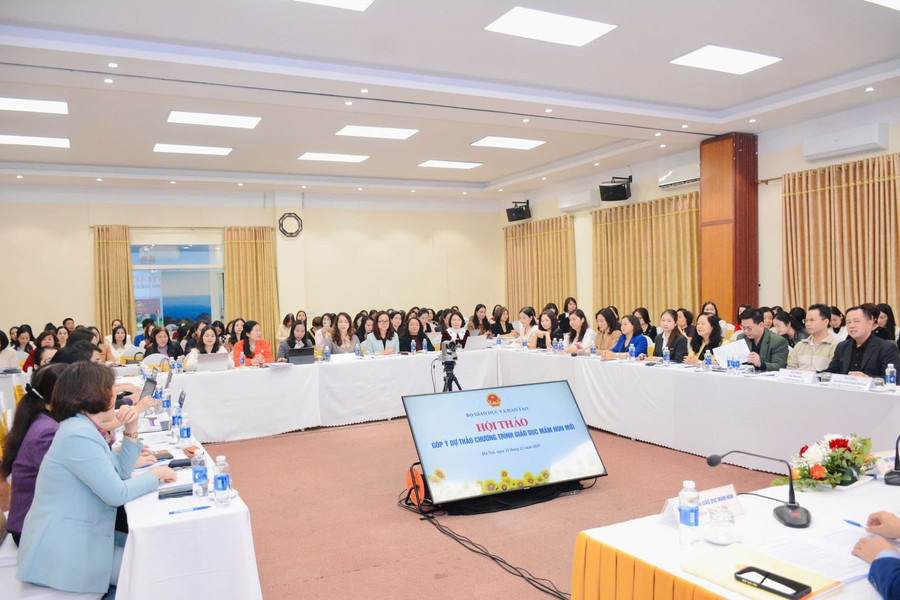
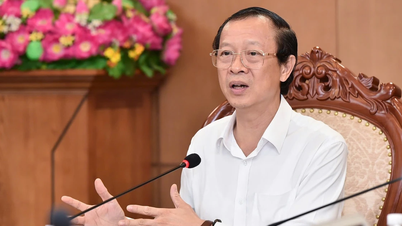
Permanent Deputy Minister of Education and Training Pham Ngoc Thuong chaired the workshop. Attendees included representatives from units under the Ministry of Education and Training, provincial Departments of Education and Training, educational institutions, experts, and scientists.
In his opening remarks at the workshop, Deputy Minister Pham Ngoc Thuong emphasized: In the current context, improving the quality of preschool education is extremely urgent, due to the requirement for continuity between different levels of education, preschool with primary and secondary education, primary and secondary education with university education, and continuing education with vocational education.
Resolution No. 71-NQ/TW dated August 22, 2025, of the Politburo on breakthroughs in education and training development states: Early childhood and general education are the foundation for shaping personality and developing the qualities and abilities of learners. Therefore, it is necessary to clarify and point out the advantages of the draft new early childhood education program in contributing to the formation of personality and the development of the qualities and abilities of learners.
"The drafting committee, research team, experts, scientists, and preschool teachers should get straight to the point in their research and provide feedback to finalize the program, so that it can be piloted and officially promulgated starting in the 2026-2027 school year," the Deputy Minister suggested.
Reporting at the conference, Professor Dr. Le Anh Vinh - Director of the Vietnam Institute of Educational Sciences, Head of the Program Drafting Board - stated that the Early Childhood Education Program was issued by the Minister in 2009 and has been revised and supplemented twice since then.
To date, the Early Childhood Education Program has been implemented in 100% of early childhood education facilities nationwide. The quality of nurturing, caring for, and educating preschool children has improved; children are given attention for comprehensive development in physical, emotional, intellectual, and aesthetic aspects, forming the initial elements of personality, preparing children to be ready for first grade, and laying the foundation for lifelong learning.
However, in practice, there are still difficulties and shortcomings in the implementation of the program; the quality of nurturing, caring for, and educating children is uneven, and the percentage of children achieving the expected results at the end of each age group has not been set.
In the context of globalization, education nationwide is undergoing fundamental and comprehensive changes to promote human rights and civil rights in accordance with the spirit of the 2013 Constitution, contributing to the training of high-quality human resources and the holistic development of children in an individualized manner. Therefore, prioritizing early childhood education, the crucial early stage of life for each individual's development, is a correct and necessary understanding.
The requirement is that the Early Childhood Education Program needs to be reviewed, evaluated, and reformed throughout the entire system to meet the demands of the times, to be aligned with the 2018 General Education Program, to leverage its strengths, optimize opportunities, and create conditions to support the individual development of each child; and to gradually help teachers reduce pressure and improve the quality of childcare and education.
The guiding principles and policies of the Party and the State on reforming early childhood education in general, and reforming the early childhood education curriculum in particular, are among the major concerns in accordance with the spirit of the 2013 Constitution; Resolution 29 on fundamental and comprehensive reform of education and training, which emphasizes the formation and development of qualities and competencies for learners.
In particular, the Education Law sets new requirements for the Preschool Education Program: It must specify the learning objectives for each age group, be consistent with the primary education program, be unified nationwide, and be implemented flexibly, in accordance with the specific conditions of the locality and preschool education institution.
Dedicated to contributing ideas to improve the Draft
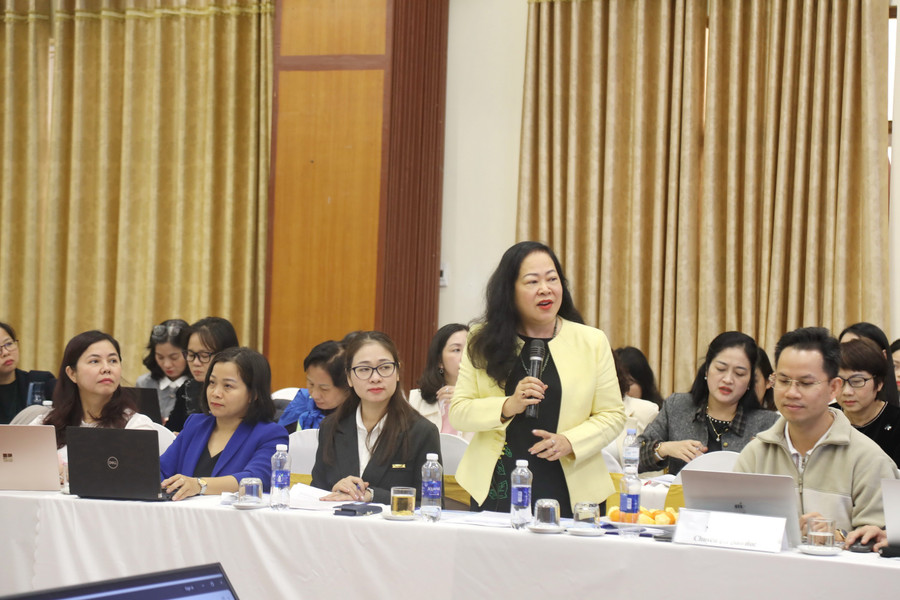
Speaking at the conference, Ms. Vuong Huong Giang, Deputy Director of the Hanoi Department of Education and Training, commented that the draft clearly demonstrates innovative thinking, a modern approach, a child-centered approach, and a focus on developing qualities and competencies, in line with the fundamental and comprehensive educational reform in the current period. However, the draft needs to focus on its scientific basis, its suitability to the developmental characteristics of children, and its feasibility in implementation.
“The project emphasizes learning through play and experience, respecting the active role of children. However, teachers need to maintain a design, guidance, and environment-creating role, and make purposeful choices; it should not be understood as completely transferring the decision-making power over learning content to children. For preschools, there needs to be more emphasis on forms of direct emotional interaction, appropriate to the psychological characteristics of this age group…” - Ms. Giang stated.
Ms. Le Thuy My Chau, Deputy Director of the Ho Chi Minh City Department of Education and Training, shared: Completing the draft of the new preschool education program is an urgent requirement to comply with the 2019 Education Law, Resolution No. 71-NQ/TW, the Law on Teachers, and the current socio-economic situation.
The draft curriculum reflects a system of scientific viewpoints, aligning with global development trends. Specifically, the program focuses on the principle of holistic, child-centered education, ensuring children develop according to their age characteristics and aligning with their social competencies.
To gather feedback on the draft, the Ho Chi Minh City Department of Education and Training held discussions and organized conferences at various locations. Through these conferences, teachers and administrators highly appreciated the new preschool education program. The current program and the new program share similar educational philosophies and the motto "learning through play, playing through learning," but differ in terms of target audience and program structure.
"The new program sets out the required learning outcomes for preschool and kindergarten children, which is a major change. The structure of the new program consists of five parts, and we highly appreciate some of its content, such as educational philosophy, educational principles, and program implementation conditions," said Ms. Le Thuy My Chau.
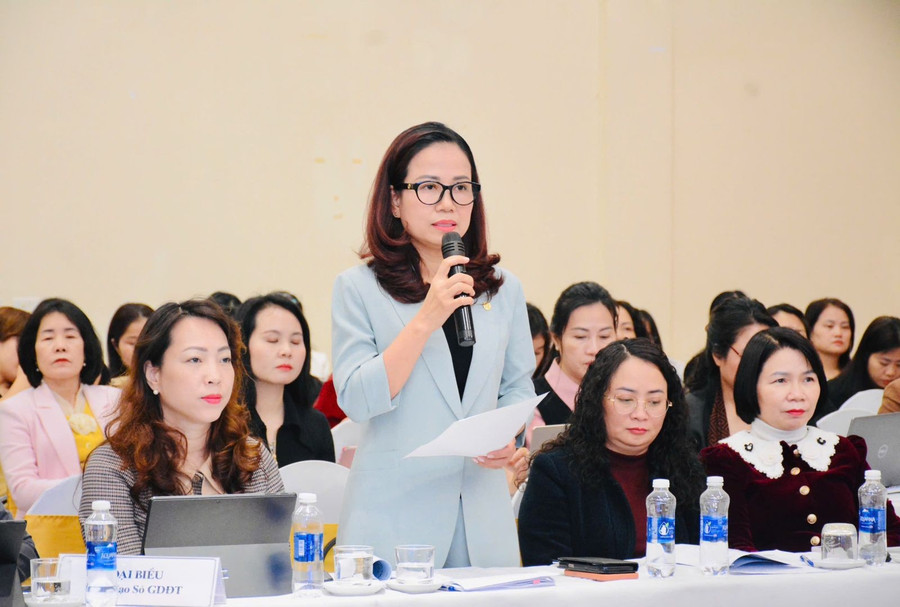
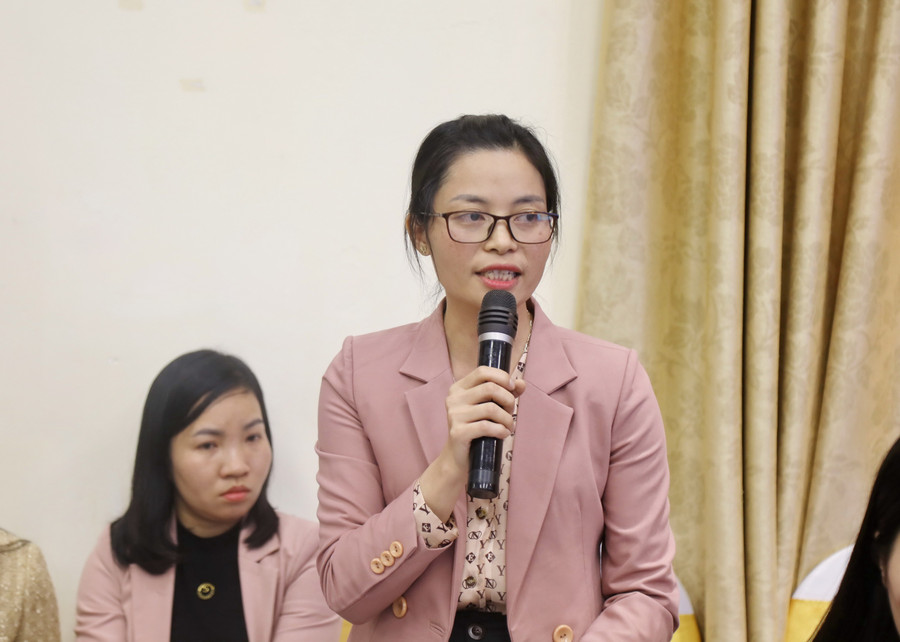
Representatives from the Thanh Hoa Department of Education and Training stated that the new preschool education program has many advantages, aligns with the Education Law, focuses on competency-based learning, and is consistent with modern educational perspectives. While Thanh Hoa is not a pilot location, it has conducted trials over the years and found the program to be very effective. The Department has also compiled a 45-page report containing detailed research findings and submitted it to the Ministry of Education and Training.
Ms. Hoang Thi Ha, a teacher at Lien Co Kindergarten in Thai Nguyen province, shared: "Through three years of pilot teaching, we have observed that the program is implemented in an open-ended manner. Students are encouraged to develop their abilities and learn through experiential learning, with educational goals and content closely linked to the cultural realities of the region."
“Teachers spend less time preparing materials and toys for children to participate in activities, thus reducing costs. The open-ended nature of the program content doesn't put pressure on children when they haven't achieved the expected results. This revised draft, compared to the previous one, helps us see each goal and the results achievable at each age level,” Ms. Ha said.
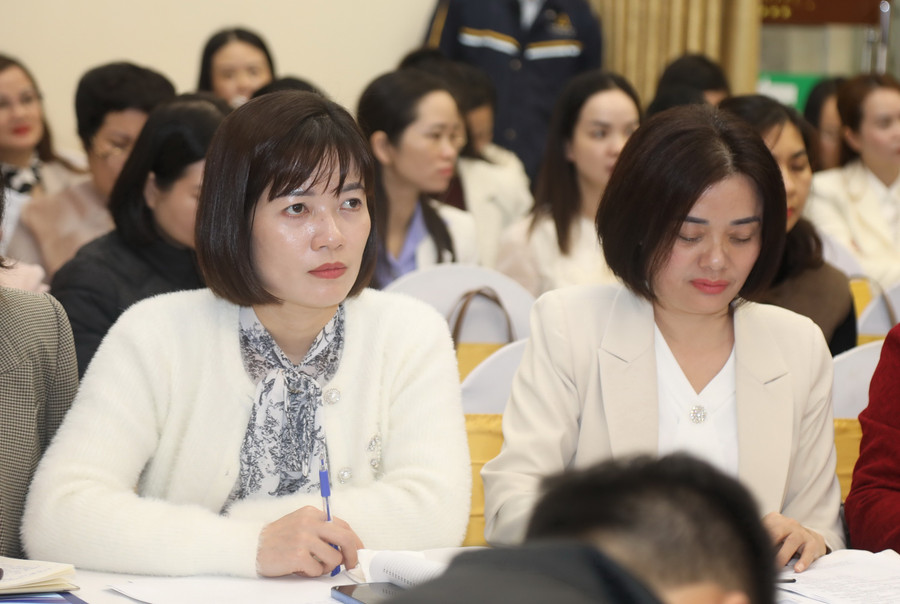
At the workshop, experts and scientists who are members of the Steering Committee for the development of the new preschool education program answered questions from administrators and teachers; clarified the purpose and guiding principles of program development; and affirmed the scientific basis for the program's promulgation.
Concluding the workshop, Deputy Minister Pham Ngoc Thuong expressed his sincere gratitude for the responsible and dedicated contributions from experts, scientists, Departments of Education and Training, and educational institutions regarding the draft of the new Preschool Education Program. This is a valuable source of information that will help refine the program during this crucial stage.
Highly appreciating the efforts of the Drafting Committee, Deputy Minister Pham Ngoc Thuong said that the new early childhood education program has correctly identified some shortcomings of the current program, proposed many contents suitable to the new context, resolved bottlenecks, increased the effectiveness of childcare and education, contributed to the formation of qualities and abilities from the early years of life, and aimed towards the goal of universal preschool education for children aged 3-5 by 2030.
Source: https://giaoducthoidai.vn/gop-y-hoan-thien-du-thao-chuong-trinh-giao-duc-mam-non-moi-post760160.html


![[Photo] Prime Minister Pham Minh Chinh holds a phone call with the CEO of Russia's Rosatom Corporation.](/_next/image?url=https%3A%2F%2Fvphoto.vietnam.vn%2Fthumb%2F1200x675%2Fvietnam%2Fresource%2FIMAGE%2F2025%2F12%2F11%2F1765464552365_dsc-5295-jpg.webp&w=3840&q=75)


![[Photo] Closing Ceremony of the 10th Session of the 15th National Assembly](/_next/image?url=https%3A%2F%2Fvphoto.vietnam.vn%2Fthumb%2F1200x675%2Fvietnam%2Fresource%2FIMAGE%2F2025%2F12%2F11%2F1765448959967_image-1437-jpg.webp&w=3840&q=75)





























![[OFFICIAL] MISA GROUP ANNOUNCES ITS PIONEERING BRAND POSITIONING IN BUILDING AGENTIC AI FOR BUSINESSES, HOUSEHOLDS, AND THE GOVERNMENT](https://vphoto.vietnam.vn/thumb/402x226/vietnam/resource/IMAGE/2025/12/11/1765444754256_agentic-ai_postfb-scaled.png)









































Comment (0)