

The foundation of maritime trade is no longer defined by freedom of navigation, but by the escalating cost of travel. The crisis in the Strait of Hormuz is the clearest evidence of the fracturing of the global trade architecture, as oil tanker traffic plummeted from around 170 vessels per day to just 10 to 25. This reality marks the end of a decades-long era where the logic of Indo-Pacific trade was based on the efficiency of single drivers.
The disruption at the straits has forced global trade to shift through diverse corridors.
Regulators and multinational corporations are witnessing a fundamental shift. Instead of focusing on protecting "bottlenecks," a 20th-century obsession, modern strategy is moving toward diversifying shipping lanes. The current strategic goal is to build sufficient redundancy in supply networks to ensure that no single blockade can cripple the national economy .
Major changes
For much of the 21st century, the Cape of Good Hope was considered merely a backup option for extreme weather or other exceptional circumstances. However, it has now become a primary route. Major shipping companies including Maersk, MSC, and CMA CGM no longer view diversion as temporary but have adopted long-term schedules focused on the Cape of Good Hope.
The actual figures illustrate the scale of this shift. By the end of April, shipping volumes around the Cape of Good Hope reached a record 24 million tonnes of total tonnage. Conversely, traffic through the Suez Canal remained 57% lower than its peak levels. The choice of a route around Africa extended voyages between Asia and Europe by 10 to 14 days and increased fuel consumption by approximately 30%.
These fluctuations have had a rapid impact on Vietnam. In just the past two months, Vietnamese shipping companies have adjusted freight rates upwards by 20% to 30%. Major international shipping lines that operate to and from Vietnam have also implemented emergency surcharges of up to $400 per 40-foot container for many long-haul routes, such as the Vietnam-US route.
This is not merely a symbolic decoupling from Middle Eastern corridors, but a structural shift towards risk mitigation, where businesses are forced to subsidize predictability by spending on system resources such as time and fuel. This change is becoming a fixed item on businesses' balance sheets, signaling that the era of "efficiency at all costs" in shipping has been replaced by a demand for "recovery at all costs."
An unusual variable in the new maritime map is the way coastal states are leveraging their geographical location along key corridors as a source of economic and geopolitical influence. Indonesia's proposals for transit fees in the Malacca Strait, although later withdrawn in April, emerged amid a backdrop of record-breaking vessel traffic exceeding 94,000 in 2024. This represents a shift toward a "toll-gate state" model.
For years, the Strait of Malacca has been treated as a free global utility. However, the costs of patrolling the waterway and the environmental impact of increased traffic are being used to justify transit taxes. This is the monetization of bottlenecks, clearly demonstrated by the emergence of sovereign fees in the Persian Gulf.
Another pillar of this transformation is the emergence of “sovereign knots” in the Southern Hemisphere. A massive amount of capital is being reallocated to secondary and primary logistics centers in Africa and Latin America, outside the friction zones of traditional powers.
The DP World Brazil-Africa logistics corridor is a prime example. This project connects the port of Santos in Brazil with terminals in Angola, Mozambique, and South Africa. The system includes three port terminals, 52 warehouses, and over 4,250 transport vehicles within an integrated logistics network. Projects like this are not just commercial ventures; they are “sovereignty shields” designed to maintain the flow of trade between emerging markets while keeping them away from disputed waters in the Northern Hemisphere. This creates a South-South trade loop that is immune to geopolitical fluctuations in the North Atlantic or the Red Sea.
From maritime power to port power
In a world under lockdown, the advantage is shifting to agile middle powers that can offer neutral logistics options. Indonesia and Oman are utilizing alternative straits and bypass pipelines to turn potential bottlenecks into strategic assets.
The success of Saudi Arabia's East-West pipeline to Yanbu is a prime example. The pipeline, restored to full capacity of approximately 7 million barrels per day in April, demonstrates that the most resilient nations are those capable of transporting oil overland when sea lanes are closed. This multimodal pivot, combining rail, pipeline, and sea transport, is the new gold standard for national security. The ability to maintain diplomatic balance allows middle powers to act as connective tissues when traditional arteries are severed.
This reality represents a future where globalization, far from dissolving, becomes more complex, costly, and redundant. The "just-in-time" model, based on completely open seas, is being replaced by "just-in-time" infrastructure. The world is shifting to a "fortress logistics" state, where the value of a port is no longer determined by its depth or throughput, but by its political stability. This is a shift in focus from maritime power to port power.
By 2026, port power will be defined by its ability to reduce reliance on traditional bottlenecks. As conflict continues, the race for alternative routes will only accelerate. This creates a new global map where recovery, not just speed, is the ultimate currency of trade. The “great exodus” from old routes has begun, and the geography of the 21st century is being redrawn across every port. In a world of lockdowns, true security lies in possessing an alternative route.
Business Forum Newspaper
Source: https://vimc.co/chien-strategy-logistics-ky-nguyen-hau-eo-bien/
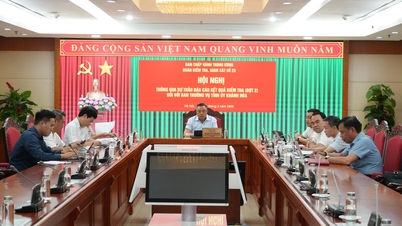
![[Photo] General Secretary and President To Lam presides over the meeting to approve the draft report on the results of the second inspection by the Politburo of the Standing Committee of the Hanoi City Party Committee.](https://vphoto.vietnam.vn/thumb/1200x675/vietnam/resource/IMAGE/2026/05/26/1779789811432_a2-bnd-4430-9620-jpg.webp)































































Comment (0)