"Empty your wallet" at shopping and entertainment complexes.
Returning from a 5-day, 4-night trip to Japan, Hai Anh (from Ho Chi Minh City) calculated her "losses" to be over 80 million VND, more than half of which vanished in a flash after just one shopping spree in Tokyo. Hai Anh's tour included three shopping destinations: Ginza and Shibuya in Tokyo, the Factory Outlet in Fukushima, and the famous Aeon Mall. Ginza, in particular, is known as one of the most luxurious shopping districts with top-tier fashion brands such as Chanel, Dior, Gucci, and Louis Vuitton…
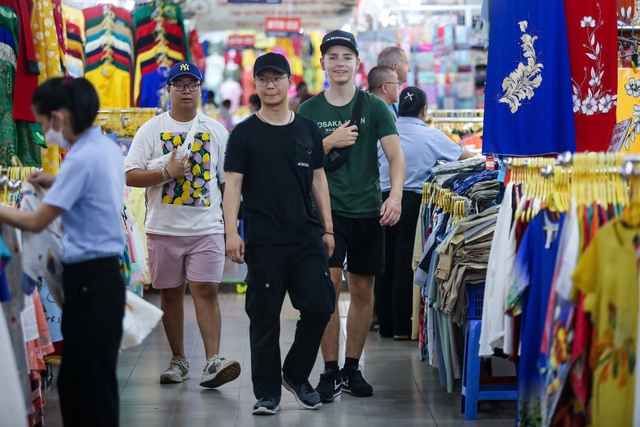
Vietnam needs specific policies to overcome the paradox of high visitor numbers but low spending.
Photo: Nhat Thinh
Tuan Thanh, a tour guide with 18 years of experience leading tours in Japan, said: "Previously, Vietnamese people came to Ginza mainly to look around because the area is full of luxury goods. Even Japanese people strolling here are elegant and beautifully dressed. But in the last few years, every tour group I lead wants to go to Ginza to shop. 'Vietnamese tourists are increasingly willing to spend and prefer designer brands,' Tuan Thanh said."
Ginza is also one of the most beautiful places to see the city lights in Tokyo. After the shops close and shoppers return, the district transforms into a vibrant nightlife area filled with dazzling lights, high-end bars, and nightclubs. "Getting lost in Ginza from afternoon until evening is equivalent to three months' worth of hard-earned salary back home," Hai Anh quipped.
However, the "ting ting" notification of the Visa card deduction didn't seem enough to dampen the shopping enthusiasm of the Vietnamese tour group. As soon as the bus stopped at the vast Factory Outlet complex, spanning thousands of hectares near the highway on the Tokyo-Fukushima route, the entire group rushed out to shop, as the itinerary only allowed for two hours. Coach, Nike, Adidas, Puma… hundreds of clothing, shoe, and handbag brands with discounts of up to 70-80% captivated the "shopping enthusiasts." Everyone was carrying bags of various sizes, excitedly pointing out which shops and stalls had the biggest discounts.
A similar situation occurred at Aeon Mall. Mr. Thanh's group even requested to shorten their sightseeing program, changing their schedule from 2 to 4 hours at Aeon Mall to have enough time to "snatch up" authentic Japanese goods.

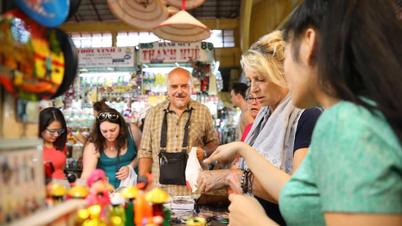
Tourists not only want to visit destinations but also desire diverse experiences and attractive shopping services.
Photo: Nhat Thinh
"Every segment offers plenty of shopping opportunities for tourists. The goods are high quality, and you can get a tax refund on the spot just by showing your passport. No wonder everyone loves it. Wandering around, eating, and shopping is the current trend for tourists, instead of just focusing on sightseeing spots like before," shared tour guide Tuan Thanh.
A "mixed-use" outlet mall – a national-scale complex combining shopping, entertainment, culture, and dining – similar to Japan's Ginza district, is a model that Ms. Le Hong Thuy Tien, General Director of the Inter Pacific Group (IPPG), has been nurturing for many years. Ms. Thuy Tien asserts that Vietnam can build unique shopping areas because tourists don't just focus on designer goods; they are also willing to spend money to bring home a "piece of local culture." Therefore, conditions should be created to allow businesses to build multi-functional shopping complexes with specific requirements. For example, strict regulations on the percentage of high-quality Vietnamese goods sold there. Vietnam, with its 34 provinces and cities containing tens of thousands of unique cultural stories, is a "gold mine" to exploit for this model. When that happens, Vietnamese goods will stand on par with luxury brands worldwide .
We need preferential policies for tourism trade.
While acknowledging Vietnam's potential to become a "shopping paradise," Ms. Le Hong Thuy Tien believes that current policies still have many shortcomings.
Firstly, the current VAT refund system for international tourists is too cumbersome and uncompetitive. To encourage tourist spending, it is urgent to digitize and synchronize the three-party system: businesses - tax authorities - customs based on an electronic invoice platform. Simultaneously, VAT refunds should be allowed at the point of sale for certain eligible product categories to stimulate continuous tourist shopping. In parallel, a model of duty-free shopping with digital technology (electronic traceability, limit management) should be boldly reopened at border economic zones, free trade zones, and free trade zones for both international and Vietnamese tourists.
Along with that, professional planning of tourism retail is needed to eliminate the unsightly image. The government needs to issue investment criteria and minimum infrastructure requirements to professionally re-plan retail outlets, bringing high-quality Vietnamese goods with attractive designs to serve tourists in the most luxurious way. IPPG leaders expressed their desire for the Government to make this a national strategy, assigning specific KPIs to ministries and agencies: each year, several hundred to several thousand unique Vietnamese brands must be introduced into tourism retail channels in a professional manner.

High-end shopping and entertainment complexes will drain the wallets of tourists.
Photo: SG
According to Ms. Thuy Tien, the most important factors in building successful outlet models are securing clean land and favorable policies. The nature of outlets is selling discounted designer goods year-round, resulting in very thin profit margins. If land prices are too high and overhead costs are exorbitant, Vietnamese businesses will not be able to survive. In that case, outlets will become the exclusive playground of foreign brands. In particular, the 50% discount ceiling needs to be urgently removed because if year-round discounts are subject to a strict ceiling, the outlet model will violate the law even before its inception.
"When an international tourist comes to Vietnam and buys a Vietnamese product to take back home, that's exporting on the spot. This form of export brings extremely high added value because it doesn't incur logistics costs, exchange rate risks, or intermediary costs. Therefore, tourism-related businesses need access to preferential capital sources and supportive credit lines like traditional export businesses," Ms. Thuy Tien proposed.
From the perspective of tourism businesses, Dr. Thai Doan Hong, General Director of Ho Chi Minh City Trade Union Tourism Joint Stock Company, also suggested that the Government should have more open mechanisms to attract investment in duty-free shopping centers, factory outlets, night markets, and the night economy. At the same time, tax authorities need to get involved to develop more attractive tax refund and tax exemption policies for international tourists shopping in Vietnam.
In particular, these shopping centers must be directly connected to tourism businesses. This will allow all international tour groups visiting Vietnam to be included in this shopping system, creating a stable source of customers and stimulating spending.
When the government provides preferential land policies, businesses will make commitments in return with clear KPIs: the percentage of Vietnamese goods, preferential rental rates for artisans, on-site export revenue, and job creation for workers. We are committed to working alongside the government to transform the "Shopping in Vietnam" campaign from a slogan into a reason why tourists from all over the world willingly open their wallets in Vietnam.
Ms. Le Hong Thuy Tien , General Director of Inter Pacific Group (IPPG)
Each market has different consumer psychology, so Vietnam needs to conduct separate research on each customer group to develop suitable products, from Southeast Asian to European tourists. Most importantly, it is necessary to build a strong product brand and a sufficiently strong marketing campaign so that when international tourists think of Vietnam, they immediately think of specific items they must buy to take home.
Dr. Thai Doan Hong , General Director of Ho Chi Minh City Trade Union Tourism Joint Stock Company
Source: https://thanhnien.vn/dua-viet-nam-tro-thanh-diem-den-mua-sam-185260526223416351.htm



![[Photo] General Secretary and President To Lam presides over the meeting to approve the draft report on the results of the second inspection by the Politburo of the Standing Committee of the Hanoi City Party Committee.](https://vphoto.vietnam.vn/thumb/1200x675/vietnam/resource/IMAGE/2026/05/26/1779789811432_a2-bnd-4430-9620-jpg.webp)






















































Comment (0)