
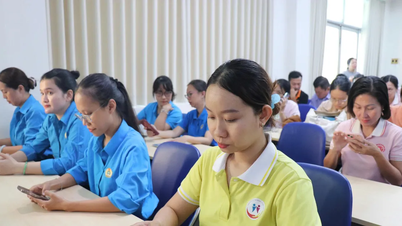
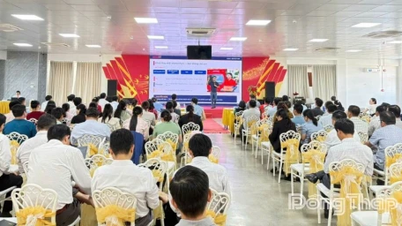
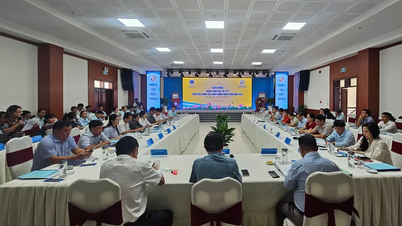
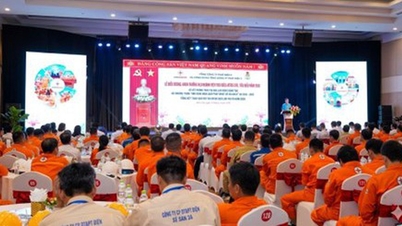
A view of the workshop/seminar "Accompanying businesses to improve occupational safety and health in the shrimp and rice value chains of the Mekong Delta".
This was the content discussed by delegates at the workshop/seminar "Accompanying businesses to improve occupational safety and health in the shrimp and rice value chain of the Mekong Delta" organized by the Department of Internal Affairs of Can Tho City in coordination with the Vietnam Federation of Commerce and Industry - Ho Chi Minh City Branch, in response to the Action Month on Occupational Safety and Health and Workers' Month 2026.
Proactively control workplace safety risks.
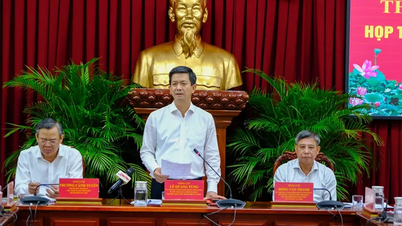
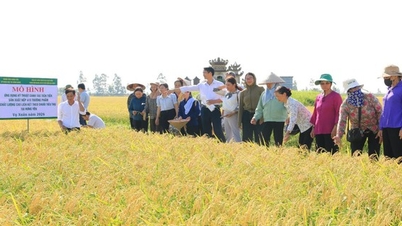
According to Mr. Nguyen Khanh Long, Deputy Director of the Employment Department, Ministry of Interior , in the new context, occupational safety and health should not only focus on preventing labor accidents and occupational diseases, but also be considered in relation to the quality of human resources, labor productivity, and sustainable development. For the Mekong Delta, this is even more significant as it is a key agricultural and fisheries production region; rice cultivation alone covers more than 2.4 million hectares, producing approximately 24-25 million tons, accounting for about 55% of the country's total production and over 90% of rice exports.

Mr. Nguyen Khanh Long, Deputy Director of the Employment Department, Ministry of Interior, provided information on policy orientations and state management of occupational safety and health in the new context.
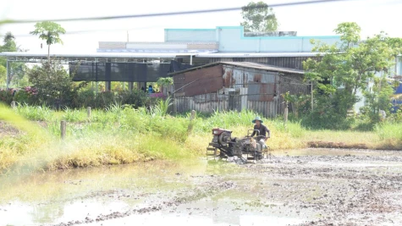
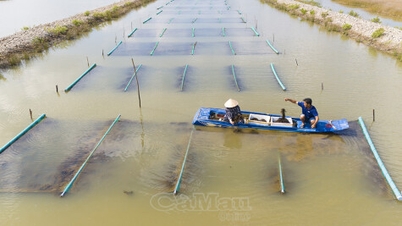
Based on practical experience in production, Mr. Long believes that occupational safety and health (OSH) should be implemented proactively, focusing on prevention, identification, and control of risks at each stage. For the rice production chain, attention should be paid to risks from agricultural chemicals, machinery, dust, noise, respiratory diseases, and seasonal and informal labor. For the shrimp production chain, consideration should be given to factors related to electrical safety in ponds, chemicals, biological factors, processing plants, and refrigeration systems.
According to Mr. Long, in household-scale agricultural production, workers may be exposed to many risk factors; among them, a portion of the workforce may not have received adequate training or used appropriate personal protective equipment. Therefore, localities need to continue to focus on integrating occupational safety and health (OSH) content into the development of agriculture and fisheries; building and replicating models that effectively implement OSH practices suitable to actual conditions. For businesses, OSH should be considered one of the factors contributing to enhancing competitiveness, linked to improving working conditions, increasing labor productivity, and sustainable development. In the context of streamlining the administrative apparatus and implementing a two-tiered local government model, OSH management at the grassroots level also presents new requirements for implementation; some tasks at the grassroots level require the commune level to be more professional in coordination, handling, and implementation.
Partnering with businesses for a safe working environment.
From the perspective of supporting businesses, Ms. Bui Thi Ninh, Deputy Director of the Vietnam Federation of Commerce and Industry - Ho Chi Minh City Branch, stated that occupational safety and health is a shared responsibility of businesses, state management agencies, and workers. In the context of international standards increasingly focusing on working conditions and social responsibility in the supply chain, businesses need to raise awareness, improve working conditions, and build a safety culture in production. The Vietnam Federation of Commerce and Industry - Ho Chi Minh City Branch hopes to continue coordinating with localities in supporting businesses to improve working conditions and enhance the effectiveness of occupational safety and health work.

Speakers exchanged views at the thematic discussion session on promoting occupational safety and health in the shrimp and rice value chains of the Mekong Delta.
In Can Tho City, Mr. Nguyen Ngoc Phuoc, Head of the Labor and Employment Department of the Can Tho City Department of Internal Affairs, said that in recent times, the Department has strengthened guidance, inspection, training, and promoted digital transformation in occupational safety and health communication. The application of technology, including AI, to support the creation of instructional videos on safe equipment operation, the use of personal protective equipment, and the prevention of occupational diseases has made the communication content more visual and accessible.
The Department also coordinates occupational safety and health training for non-contract workers, production households, and cooperatives in the agricultural chain, especially those directly operating machinery and equipment; thereby raising awareness and skills in risk prevention, reducing labor accidents, and gradually forming a safety culture in production.
Based on his business experience, Mr. Nguyen Khoa Nhan, Deputy Director of Co Chien Seafood Joint Stock Company, believes that adhering to occupational safety and health regulations and fulfilling social responsibility contributes to building trust with customers and partners. At the company, occupational safety and health practices are implemented regularly, integrated into each stage of production. Annually, the company organizes occupational safety and health training, guides workers on safe machinery operation, and maintains regular health check-ups for its employees.
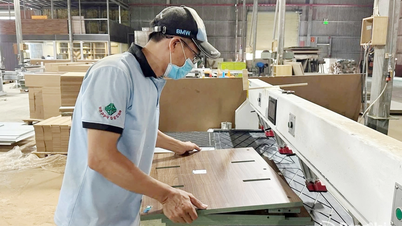
At the workshop, experts noted that in shrimp and rice processing, workers may face many risks: cold and humid environments, organic dust, noise, chemicals, repetitive work postures, etc. Therefore, businesses need to improve working conditions, arrange suitable labor, organize regular health check-ups, detect occupational diseases early, and monitor the use of personal protective equipment.

Delegates pose for a commemorative photo at the workshop/seminar.
Opinions expressed at the workshop showed that ensuring occupational safety and health is not only a requirement in production and business but also a crucial task in implementing the Party's guidelines and the State's policies and laws on caring for and protecting the health and lives of workers. When occupational safety and health are given attention from factories to raw material areas, from enterprises to cooperatives and production households, the shrimp and rice value chains in the Mekong Delta will have a stronger foundation for stable, sustainable development, harmonizing economic efficiency and social responsibility.
Text and photos: KIEN QUOC
Source: https://baocantho.com.vn/an-toan-lao-dong-nen-tang-phat-trien-ben-vung-chuoi-tom-lua-a205557.html



![[Photo] General Secretary and President To Lam presides over the meeting to approve the draft report on the results of the second inspection by the Politburo of the Standing Committee of the Hanoi City Party Committee.](https://vphoto.vietnam.vn/thumb/1200x675/vietnam/resource/IMAGE/2026/05/26/1779789811432_a2-bnd-4430-9620-jpg.webp)







































































Comment (0)