


Tra Vinh Wax Coconut Museum.
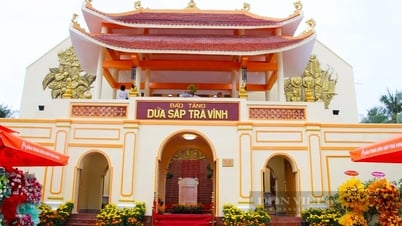
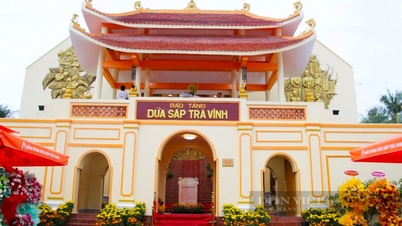
The Tra Vinh Wax Coconut Museum, inaugurated at the end of 2024 in Tam Ngai commune, is the first non-governmental museum in the former Tra Vinh province, and now in Vinh Long province, and the first museum dedicated to wax coconuts in Vietnam. At the end of 2025, the Tra Vinh Wax Coconut Museum will be recognized as a "Typical Tourist Destination of the Mekong Delta" by the Mekong Delta Tourism Association.

A panoramic view of the Tra Vinh Wax Coconut Museum from an upper floor.

The museum's design drawings were created by the late artist Ly Let.
The Tra Vinh Wax Coconut Museum, invested in and built by Cau Ke Wax Coconut Processing Company Limited (VICOSAP) with a total capital of over 20 billion VND and an area of nearly 1,500 m² , has a unique and distinctive architecture with one ground floor and two upper floors, reflecting the cultural exchange of the local ethnic communities. The museum displays over 400 images and artifacts, telling the story of local agricultural culture and the history of the wax coconut in Cau Ke.

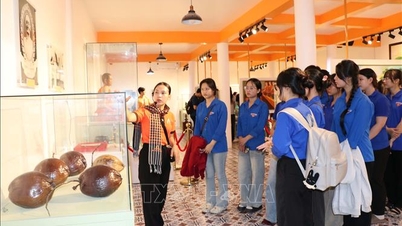
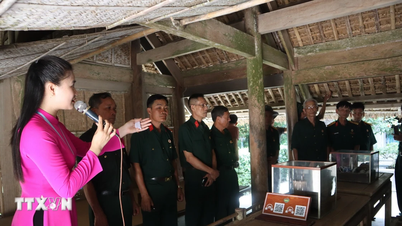
Staff from the Tra Vinh Wax Coconut Museum introduce the history of wax coconuts and how to identify them in front of the shrine of Venerable Thach So.


The museum entrance features two prominent stone statues depicting a young man and woman, each representing a different way to identify a waxy coconut: flicking or shaking the coconut.
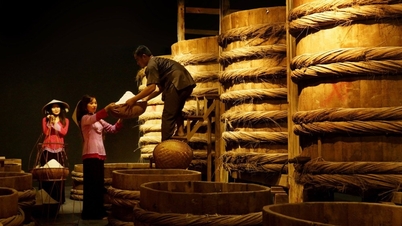
The museum also features numerous hand-painted pictures, relief sculptures, architectural sculptures, etc., reflecting the cultural exchange among local ethnic groups, with the main inspiration being the image of the wax coconut. These designs, created by the late artisan Ly Let, are currently displayed as artifacts at the museum.

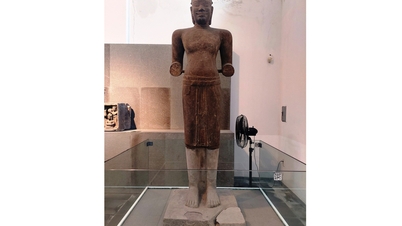
The statue of Venerable Thach So at the museum holds half a coconut in his hand.

The first half of a wax coconut tree, dating back over a century, is now proudly displayed at the Tra Vinh Wax Coconut Museum.
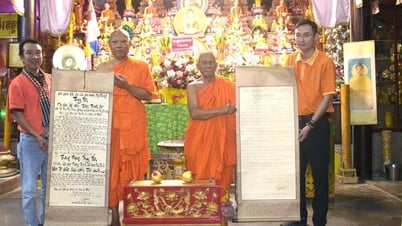
The museum also houses a shrine, wax statues, and artifacts of Venerable Thach So, who is posthumously honored as the "Founder of Wax Coconuts in Tra Vinh." According to the museum, in 1924, after the passing of his predecessor, Venerable Thach So inherited the monastic robes and assumed the position of the fourth abbot of Botumsakor Pagoda (Cho Pagoda). He wholeheartedly led the monastic community, cultivating Buddhism and fostering its close connection with the nation. Notably, he brought two rare wax coconuts from abroad to plant at Cho Pagoda, marking the beginning of the history of wax coconut cultivation in Vietnam. To this day, wax coconuts have become a renowned specialty, bringing honor to Cau Ke and contributing to the local economy , culture, and tourism development.

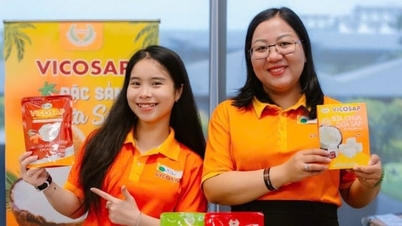
The museum also displays many products made from waxy coconut, such as cakes, candies, and drinks, for visitors to experience and purchase.
The first waxy coconut tree planted in the grounds of Cho Pagoda, grown from a waxy coconut brought back by Venerable Thach So, is still preserved. Half of the tree is placed in the shrine dedicated to Venerable Thach So at the pagoda, and the other half is displayed at the Tra Vinh Waxy Coconut Museum.
Treasures of the blessed land
 ]
]
Recreating the inside of a waxy coconut after it has been cut in half.
According to information from the Tra Vinh Wax Coconut Museum, wax coconut, also known as solid-flesh coconut, is a unique type of coconut found only in the Cau Ke region. Not only is it famous for its thick, soft, waxy flesh, but wax coconut is also a crop that yields high economic value. However, to successfully cultivate and produce high-quality wax coconuts, farmers need to strictly adhere to technical procedures from seed selection to care and harvesting.
Waxy coconut varieties are usually selected from mother trees that have already produced waxy coconuts of the required standard. Due to the unstable genetic characteristics (only about 20-30% of the fruits on a tree are waxy coconuts), selection must be based on mother trees that have been certified as having a high percentage of waxy coconuts.
Coconut seedlings are usually propagated from mature, germinated coconuts, so that the seedlings are about 30-50cm tall, have 3-5 true leaves, and a strong root system.
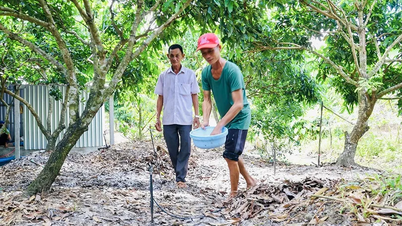
Waxy coconuts thrive in sandy loam soil, alluvial soil along rivers, or well-drained soil. Seedlings are planted at the beginning of the rainy season (approximately May to July).

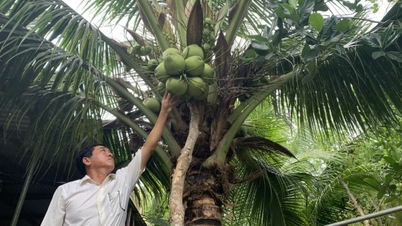
Vast fields of green coconut trees as seen from the Tra Vinh Coconut Museum.
Waxy coconut trees begin bearing fruit after 4-5 years of planting, depending on care and soil conditions. A bunch of coconuts usually has 10-15 fruits, but only about 20-30% of them are waxy. Identifying waxy coconuts cannot be done visually; experience is required. Generally, there are two ways to identify waxy coconuts: shaking the coconut and flicking it.
DANG HUYNH
Source: https://baocantho.com.vn/noi-ke-chuyen-lich-su-dua-sap-a205592.html
![[Photo] General Secretary and President To Lam presides over the meeting to approve the draft report on the results of the second inspection by the Politburo of the Standing Committee of the Hanoi City Party Committee.](https://vphoto.vietnam.vn/thumb/1200x675/vietnam/resource/IMAGE/2026/05/26/1779789811432_a2-bnd-4430-9620-jpg.webp)



















































Comment (0)