

Paying tribute to the person who brought waxy coconuts to Vietnam.
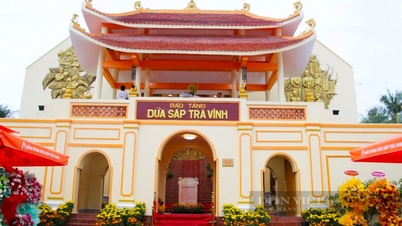
Located in Tam Ngai commune, Vinh Long province, the wax coconut museum was inaugurated on December 13, 2024, after nearly two years of construction, with a total investment of over 20 billion VND. The building was constructed on an area of nearly 1,500 square meters, consisting of one ground floor and two upper floors.
This place vividly recreates the story of the wax coconut tree, from its first appearance to its intertwined journey with the lives of the local people. The exhibition space celebrates the unique cultural exchange between the three communities of Kinh, Khmer, and Hoa, the residents who have together created the distinctive culture of this land.
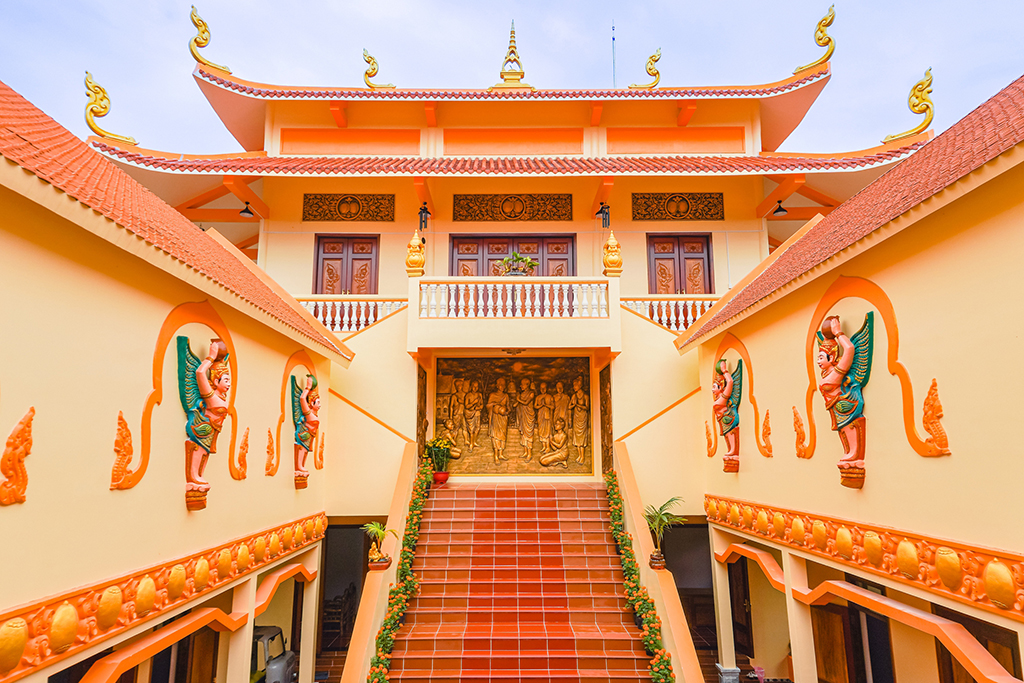
The wax coconut museum, invested in and built by Mr. Tran Duy Linh, is the first private museum in Vinh Long. PHOTO: DUY TAN
A highlight not to be missed in the museum is the memorial area dedicated to Venerable Thach So, who was instrumental in bringing the waxy coconut variety to Vietnam in 1924. A lifelike wax statue and a 100-year-old original waxy coconut tree, preserved within the museum grounds, are precious artifacts that remind us of the origins and spread of the waxy coconut tree.
Many hand-painted pictures by People's Artist Ly Lech also contribute to enriching the exhibition space, depicting the historical journey of the wax coconut tree, associated with glimpses of the simple yet distinctive life of the people of Vinh Long.
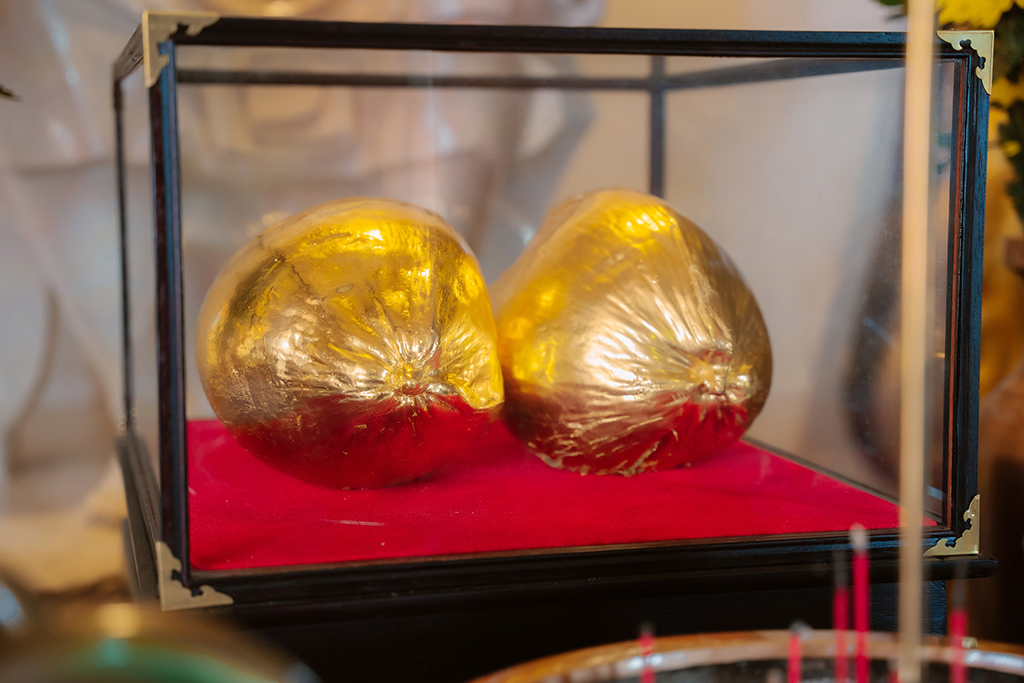
Two gold-plated wax coconuts are on display at the museum. PHOTO: DUY TAN
A journey to discover heritage.
Few people know that the museum's creation involved a long, quiet but determined journey by Mr. Linh, the founder of Cau Ke Wax Coconut Processing Company Limited. He spent many years traveling around, approaching local people, monks, elders, and botanical experts to trace the history of wax coconuts.
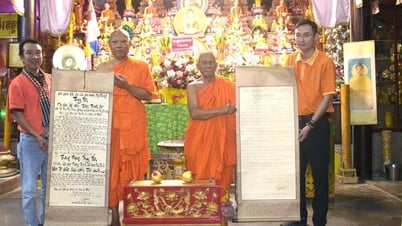
He visited Botumsakor Pagoda (formerly Cho Pagoda in Cau Ke District, Tra Vinh Province ), where the first wax coconut tree, planted by Venerable Thach So, is preserved. Through the stories of the abbots, the tale of the first two wax coconut seedlings brought from Cambodia to Vietnam gradually unfolded. The original 100-year-old wax coconut tree is still preserved within the pagoda grounds, and many other wax coconut trees, propagated from the first tree, are thriving and bearing fruit year-round.
According to Mr. Linh, these are original wax coconut trees (without any scientific intervention ) that produce the best quality wax, which were brought back and planted by local people, and today they have become the main source of livelihood for most of the local residents.
Not stopping there, Linh continued to collect artifacts, images, farming tools, and folk tales related to wax coconuts to reconstruct a part of the community's memory. This is not only a personal effort but also an act of heritage preservation, protecting things that are at risk of disappearing.
"I've traveled extensively throughout Vinh Long, from rural villages to coconut-growing areas, in search of items associated with the wax coconut tree and the traditions of this region. I hope to revive forgotten aspects of history," Linh said.
The path to realizing the museum was far from smooth. A shortage of scientific documentation, lost artifacts, financial difficulties, and a lack of experience in the museum and tourism sectors were the obstacles that Linh and his colleagues had to overcome.
However, with passion and perseverance, he gradually overcame the challenges. Many households donated artifacts and coconut farming tools to the museum. In addition, Buddhist dignitaries, elderly people enthusiastically supported him with documentation, and the local government always stood by him, helping him fulfill his dream of preserving cultural values and spreading the value of waxy coconuts to the community both domestically and internationally.
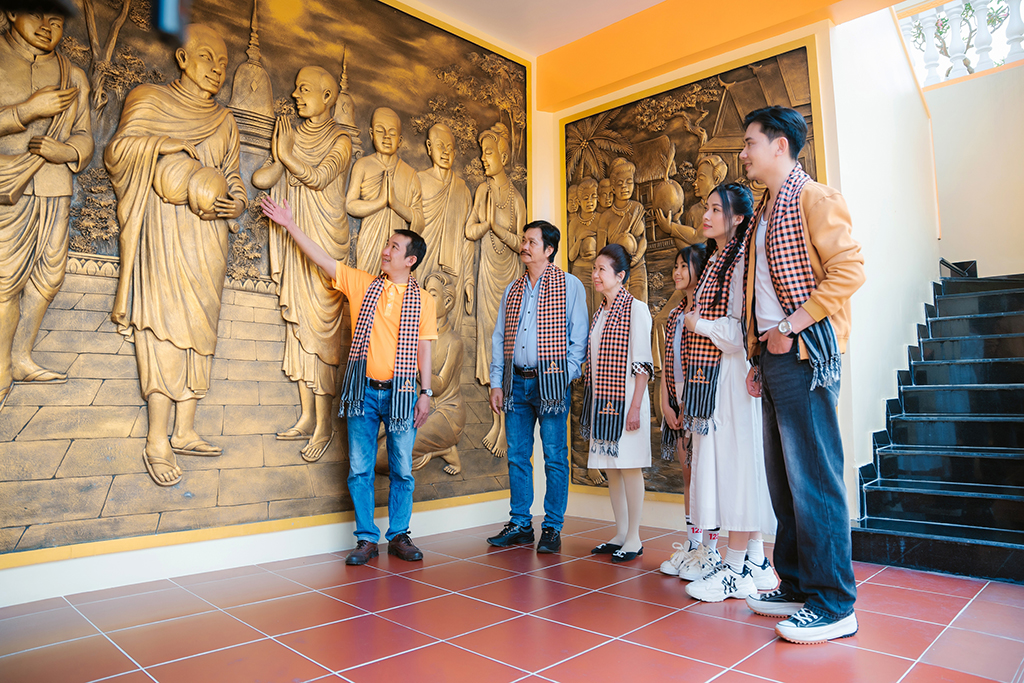
These images recreate the story of the wax coconut tree, from its first appearance to its journey of integration into the lives of the local people. PHOTO: DUY TAN
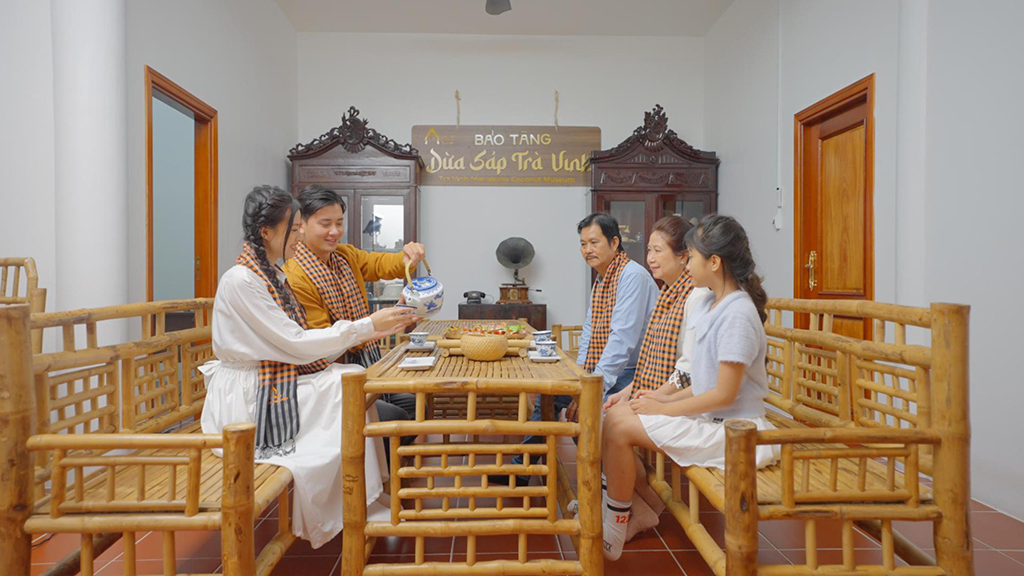
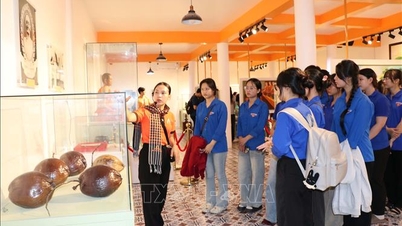
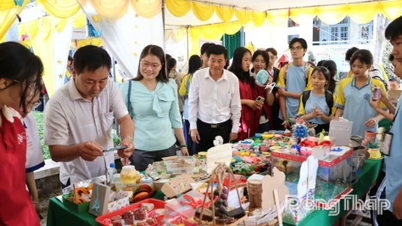
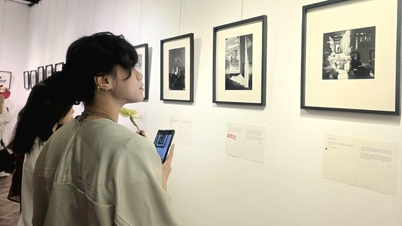
Visitors at the wax coconut museum. PHOTO: DUY TAN
Developing tourism in conjunction with conservation.
The Waxy Coconut Museum is not only a cultural landmark but also opens up a new direction in developing tourism linked to heritage preservation. According to Mr. Linh, the goal is not simply profit, but to create sustainable value for the community, preserve the rare waxy coconut variety, raise cultural awareness, and boost the local economy.
In the future, Mr. Linh will promote experiential tourism products, train a team of professional tour guides, and connect with domestic and international partners to bring the image of his hometown's wax coconuts to a wider audience.
In addition, Mr. Linh is also the editor of the book "Macapuno Wax Coconut - 100 Years of Aspiration ," honoring the contributions of the person who first brought the wax coconut tree to be planted in this region. The 100-year history of the wax coconut tree is encapsulated in 220 pages, comprising 4 chapters that depict the historical flow, the aspirations for livelihood change of the people, businesses, and local government.
Source: https://thanhnien.vn/chang-trai-dau-tu-hon-20-ti-dong-xay-bao-tang-dua-sap-185250721182249413.htm






























































Comment (0)