Establishing raw material areas to support processing
The Department of Agriculture and Environment of Lam Dong province has recently developed a plan for the development of fruit and vegetable processing for the period 2026-2030, with the aim of increasing the value of agricultural products through deep processing, expanding production linkages, and developing consumer markets.

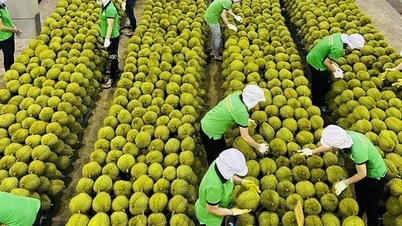
Workers pack dragon fruit at a processing facility in Lam Dong . Photo: Pham Hoai.
According to the plan, Lam Dong province aims to develop fruit and vegetable processing into an important agricultural processing industry, linking raw material areas, processing industries, and consumer markets.
By 2030, the growth rate of added value in the fruit and vegetable processing industry will reach 8-10% per year. The proportion of processed fruits and vegetables will reach approximately 30% of total production. Post-harvest losses will decrease by an average of over 1% per year.
Furthermore, over 70% of facilities for preliminary processing, processing, and preservation of fruits and vegetables for domestic consumption and export have achieved advanced production standards and technologies. The percentage of facilities applying quality and food safety management systems such as HACCP, ISO 22000, or equivalent is over 70%. The plan also aims to develop 10-15 integrated production, processing, and consumption chains for fruits and vegetables. The export value of processed fruit and vegetable products is projected to increase by an average of 10% annually.
Fruit and vegetable processing has been identified as a crucial step in restructuring the agricultural sector, shifting from exporting raw materials to processed products with high added value.

High-tech vegetable production in Lam Dong is being oriented towards development linked to processing and product consumption. Photo: Nhat Tien.
Some priority products for deep processing include durian, dragon fruit, avocado, and high-tech vegetables. In addition, Lam Dong province also aims to expand processing for bananas, mangoes, and passion fruit to meet market demand.
To support processing, the province will review and develop concentrated production areas linked to processing facilities. High-tech vegetable production will continue to focus on Da Lat, Duc Trong, and Don Duong. Fruit tree cultivation will be oriented towards development in Bao Loc, Di Linh, and the former Dak Nong area. Dragon fruit and vegetables will be concentrated in the former Binh Thuan area.
Raw material areas are organized on a large scale, ensuring stability and meeting requirements for yield, quality, and food safety. Simultaneously, the application of VietGAP, GlobalGAP, organic production, and the development of traceability systems, planting area codes, and packaging facilities are promoted to serve both domestic and export markets.

High-tech strawberry farming model in Lam Dong. Photo: Nhat Tien.
Regarding priority tasks, during the 2026-2028 period, the province will survey, assess, and orient concentrated vegetable and fruit production areas in accordance with land use planning and the advantages of each locality. The goal is to have at least 70% of the raw material area applying VietGAP, GlobalGAP, or equivalent standards.
Prioritize deep processing and market expansion.
Along with developing raw material areas, Lam Dong province aims to attract businesses to invest in the processing of fruits and vegetables in a modern, in-depth manner, and linked to expanding consumer markets.
Priority product categories include frozen fruits and vegetables, dried fruits and vegetables, fruit juices, processed fruit and vegetable products, and fruit and vegetable extracts. Technologies such as rapid freezing, freeze-drying, freeze-drying, puree processing, and concentrated juice production are identified as priority areas for the future.
According to the plan, the province will review and allocate land in industrial zones, clusters, and concentrated production areas to attract investment in large-scale industrial processing plants. Projects applying modern and environmentally friendly technologies will be prioritized for investment.

Pre-processing and sorting vegetables contribute to improving the quality of raw materials for fruit and vegetable processing in Lam Dong. Photo: Nhat Tien.
Another aspect included in the plan is the development of logistics and post-harvest preservation systems, with a focus on establishing cold storage facilities, preliminary processing and packaging facilities, and agricultural logistics centers linked to raw material areas and processing plants.
During the period 2026-2030, the province aims to establish 10-20 processing, cold storage, and packaging facilities in the raw material areas. The application of post-harvest preservation technology is expected to contribute to reducing losses and improving product quality.
In market development, we will strengthen trade promotion activities, connect supply and demand, and expand the distribution system for processed fruit and vegetable products in major cities and modern retail systems.

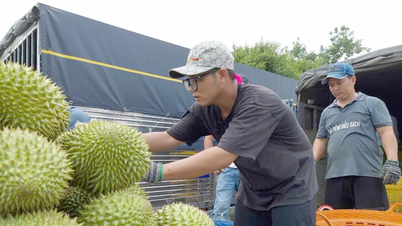
Durian from Lam Dong is being traced to meet the requirements of the export market. Photo: Nhat Tien.
For exports, the plan focuses on key markets such as China, the EU, the US, Japan, and South Korea. Processed fruit and vegetable products are required to meet phytosanitary regulations, food safety standards, traceability requirements, and technical standards of each market.
Lam Dong province is orienting itself towards promoting the application of science and technology and digital transformation throughout the entire chain of fruit and vegetable production, preservation, processing, and consumption. Technologies such as IoT and blockchain will be applied in traceability, supply chain management, and product quality control.
Source: https://nongnghiepmoitruong.vn/lam-dong-dat-muc-tieu-30-san-luong-rau-qua-duoc-che-bien-d810447.html


![[Photo] Standing Committee member of the Party Central Committee Tran Cam Tu working with the Central Inspection Committee](https://vphoto.vietnam.vn/thumb/1200x675/vietnam/resource/IMAGE/2026/05/28/1779969579668_ndo_br_bnd-2495-jpg.webp)
































































Comment (0)