

Thai businesses are investing in many important sectors in Vietnam.
Many large Thai investment groups were present in Vietnam very early on and have continuously expanded their investments amidst the strong growth of bilateral trade.
At a working meeting with Quang Ninh provincial leaders last week, along with Marubeni Corporation (Japan), Amata Corporation of Thailand announced plans to expand investment in Uong Bi Industrial Park and the West Song Khoai Industrial Park. Amata is currently the investor in the infrastructure project of Song Khoai Industrial Park – one of the key industrial parks in the locality – attracting 25 secondary investment projects from foreign investors. This expansion of investment by investors from Thailand aims to create more room to welcome large-scale projects in high-tech, manufacturing, and supporting industries. This is also an important step to increase Quang Ninh's attractiveness to international investors and promote high-quality FDI flows.
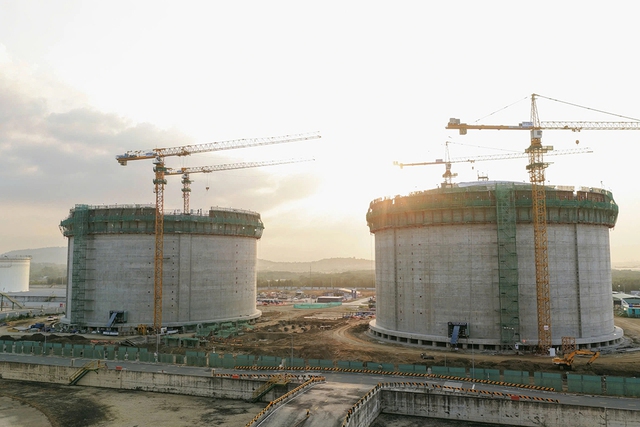
The Long Son oil refinery (Ho Chi Minh City) is a major highlight in Vietnam-Thailand investment cooperation.
PHOTO: SGC
Amata is one of Thailand's major investors in Vietnam, alongside big names like Central Retail, SCG, CP Group, WHA, Bangkok Bank, etc., focusing primarily on processing and manufacturing industries; retail; industrial real estate; and logistics. Thailand is currently one of Vietnam's leading partners in the ASEAN region. Data from the Foreign Investment Agency ( Ministry of Finance ) shows that in 2025, Thai investment in Vietnam increased by more than 19% compared to the previous year, with 43 projects and a total registered capital of over US$1.15 billion. As of the end of April this year, Thai investors were implementing 804 projects with a total registered capital of over US$15.4 billion, making them the 8th largest foreign investor in Vietnam.
Speaking to Thanh Nien newspaper , a representative of Central Retail Group affirmed that Vietnam is a core growth pillar for the group and that the company always approaches the Vietnamese market from a long-term investment perspective. "The company's strong commitment to the Vietnamese market is clearly demonstrated by its plan to continue investing approximately 45-47 billion baht (about 1.4 billion USD). The aim is to expand operations, reaffirm long-term ties, create tens of thousands of jobs, and build a vast retail network. We always consider Vietnam one of our most important markets and continue to maintain confidence in the country's macroeconomic foundation and consumer growth," the Central Retail representative stated. According to this investor, the attractiveness of the Vietnamese retail market stems from several factors, such as stable growth and significant potential for retail infrastructure development. Modern retail in Vietnam currently accounts for only about 13%, while in Thailand it has reached 55%.
"We don't see this as a weakness, but rather as enormous growth potential. Surveys show that in many provinces and cities, people's incomes are increasing, but modern shopping options are not yet available, and that's an opportunity for us to expand. Besides that, a very important factor is that Vietnam is increasingly consolidating its position as an important manufacturing hub in the region with its ability to connect to diverse supply chains. This opens the door for us to bring Vietnamese goods not only to domestic consumers but also to Central Retail's extensive retail network," a representative of the group said.
As an early Thai investor in Vietnam, Mr. Kulachet Dharachandra, Country Director of SCG Group, affirmed that for over three decades, Vietnam has always been a strategic investment destination for the group. Besides the scale of investment, SCG stated that it focuses on technology transfer, green governance, and collaboration with local partners to enhance industrial capacity, working together towards the goal of net-zero emissions. By 2025, SCG had contributed over US$31.5 million (approximately VND 788.8 billion) to the state budget, demonstrating its long-term commitment to Vietnam.
Mr. Kulachet Dharachandra said: "In the energy sector, we are investing $500 million to upgrade the Long Son Petrochemical Complex (Ho Chi Minh City) through an integrated ethanol feedstock project. This project enhances operational flexibility, strengthens long-term competitiveness, and promotes low-carbon production processes." Long Son is currently Vietnam's first fully integrated petrochemical complex, with a $5.4 billion investment from SCG, specializing in the production of essential raw materials for plastics. In addition, domestic suppliers account for a significant proportion of the supply chain at SCG's member companies. In many operational areas, SCG Vietnam collaborates with approximately 5,000 local first-tier suppliers or partners, accounting for 70-80% of its total suppliers.

The Long Son oil refinery, owned by a Thai investor in Vietnam.
PHOTO: SCG
In the context of Vietnam's developing digital economy, SCG has signed a memorandum of understanding with FPT Group to accelerate its digital transformation roadmap and enhance intelligent management systems across all its operations in Vietnam. SCG's member companies are actively applying AI, automation, robotics, and the Internet of Things (IoT) to improve operational efficiency, product quality, and production flexibility. Examples include the application of AI at SCGP (a SCG member company) to optimize productivity; the Auto truck system at Song Gianh Cement Company; and the application of robotics and IoT at Binh Minh Plastics and PRIME Group…
Associate Professor Nguyen Thuong Lang (Institute of International Trade and Economics, National Economics University) assessed that, thanks to similarities in culture and goods, combined with a large population and young workforce, Vietnam has a great advantage in attracting investment capital from Thailand, especially in areas where Vietnam needs investment and Thailand has extensive experience. For example, green energy, petrochemicals, retail… "Trade between Vietnam and Thailand began very early, before Vietnam expanded its relations and joined ASEAN. Even before the Doi Moi (Renovation) period, Thai goods were already entering Vietnam, from Thai sandals, sugar, Thai knitwear, to later Thai Dream motorcycles… All were well-received by Vietnamese consumers and were considered decent, good, durable, and beautiful products. These initial positive impressions laid the foundation for attracting Thai investors to Vietnam very early after the Doi Moi period and to invest in sectors where Vietnam did not yet have a presence," Associate Professor Dr. Nguyen Thuong Lang analyzed, adding that this is a two-way economic relationship. Currently, Vietnam also has nearly 20 active investment projects in Thailand, mainly concentrated in processing, manufacturing, real estate, wholesale, and retail.
The largest trading partner in the ASEAN bloc.
Not only is Thailand a significant foreign investor, it is currently Vietnam's largest trading partner in ASEAN, with its scale continuously increasing over the past several years. By 2025, bilateral trade is projected to reach US$22.1 billion, nearly 2.5 times higher than when the two countries established their Strategic Partnership in 2013. This upward trend continued in the first four months of this year, with total bilateral exports and imports reaching US$8.6 billion, a 23.9% increase compared to the same period last year.
Dr. Tran Quang Thang, Director of the Institute of Economics and Management in Ho Chi Minh City, commented: Looking at the trade structure between Vietnam and Thailand, we can see a mutual complementarity in production structure, industrial level, and the role of each country in the regional supply chain. This trend will be clearly evident in the 2025-2026 period when the trade structure shifts in a positive direction and the competitiveness of Vietnamese goods improves. Specifically, Vietnam exports to Thailand goods such as telephones, components, machinery, iron and steel, and agricultural products – these are areas where Vietnam has advantages in labor, assembly industry, and tropical agriculture. Conversely, we import from Thailand products including complete automobiles, household electrical appliances, electronic components, and machinery – which are sectors where Thailand has a more developed manufacturing industry, especially automobiles and household electronics. Many Vietnamese goods exported to Thailand (telephones, components, computers) are part of the regional production chain.
Conversely, Vietnam imports components and machinery from Thailand to serve its reprocessing operations, demonstrating the interconnectedness of production within the ASEAN bloc. This also proves that the two countries are increasing their interdependence in production by expanding industrial cooperation, aiming for a sustainable regional supply chain. Therefore, the opportunity for Vietnamese goods to sell to the Thai market remains significant thanks to the 0% export tax. "According to the Ministry of Industry and Trade, in 2026, Vietnam's exports to Thailand will increase more strongly than imports, showing that the competitiveness of Vietnamese goods is improving and the trade deficit is gradually decreasing. This reflects the progress in the quality of Vietnamese products and their ability to penetrate the Thai market," shared Dr. Tran Quang Thang.
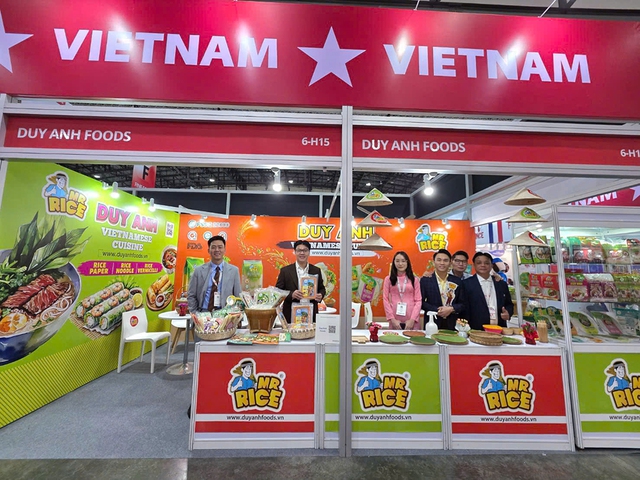
Vietnamese processed food products will participate in THAIFEX 2026 - a food and beverage trade fair from May 26-30 in Thailand.
PHOTO: DUY ANH FOOD
Sharing the same viewpoint, Dr. Nguyen Viet Hung, former Head of the Department of Party Building and Ho Chi Minh Thought at the Ho Chi Minh City Academy of Cadres, analyzed: Vietnam and Thailand are both important members of ASEAN and have long-standing bilateral relations. Over the past decade, relations between the two countries have developed positively in many areas, from economics and trade, culture and education to security and defense. Therefore, it is understandable that Thailand has become Vietnam's largest trading partner in ASEAN. Thailand has strengths in the industrial sector and applies many new achievements in science and technology. For example, Thailand has developed agricultural processing technology and a strong tourism industry. Meanwhile, Vietnam is a large consumer market with strengths in seafood products… At the same time, Vietnam has strengths in logistics with deep-water ports along the central coast and the southwestern coastal region of the Gulf of Thailand. Through this cooperation, Thai goods can more easily access international markets via sea and rail transport routes. This is also why Vietnam attracts significant investment from Thai businesses. Therefore, the complementary advantages between the two countries are opening up many new avenues for cooperation.
Opening a new chapter in comprehensive cooperation and economic and trade development.
Associate Professor Nguyen Thuong Lang believes that after 50 years of establishing diplomatic relations, Vietnam and Thailand in the next 50 years must certainly aim for a phase of deeper and closer cooperation, complementing each other rather than direct competition. "Many Thai consumer goods imported into Vietnam are delicious and inexpensive, from guavas and tangerines to fish... Conversely, Vietnam exports dragon fruit, lychees, and coffee to Thailand, which are also very well received. Even electronic goods like Samsung phones, manufactured in Vietnam, are sold in large quantities to Thailand. Both sides have the advantage of geographical location, traveling by land along the East-West corridor, with the idea of 'having a Thai breakfast, a Lao lunch, and a beach day in Da Nang'. This shows that, besides cultural similarities and consumer goods, the two countries have very favorable geography. With stable economic and political relations, in the coming period, the two countries will elevate their relationship, opening a new chapter, strengthening it further, making it more substantive and deeper, increasing benefits and stability," Associate Professor Dr. Nguyen Thuong Lang stated.
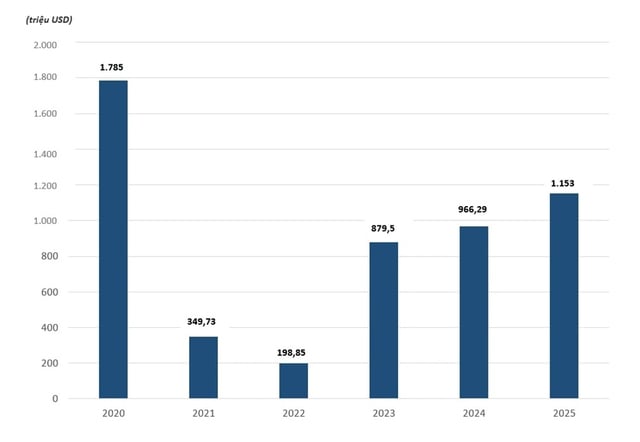
Thai FDI in Vietnam during the period 2020-2025
SOURCE: FOREIGN INVESTMENT DEPARTMENT - MINISTRY OF FINANCE
Professor Tran Quang Thang also stated that, in the context of the continued strong development of the Vietnam-Thailand Comprehensive Strategic Partnership, investment cooperation between businesses of the two countries is emerging as an important highlight. This visit by General Secretary and President To Lam will create strong political momentum, strengthen the confidence of the business community, and open up new areas of cooperation in potential fields such as supporting industries, renewable energy, digital economy, high-tech agriculture, and logistics. This is an opportunity for the two countries to promote supply chain linkages, develop large-scale production and processing projects, and create conditions for Vietnamese goods to penetrate deeper into Thailand's distribution system.
"Taking advantage of these opportunities will not only elevate bilateral investment cooperation but also make a significant contribution to the goal of reducing the trade deficit, enhancing competitiveness, and promoting sustainable development of Vietnam in the region. It is projected that by 2030, bilateral investment will develop in a more in-depth, high-tech, and sustainable direction, making a positive contribution to the growth and integration of both economies," predicted Dr. Tran Quang Thang.
Vietnam-Thailand relations will develop even more strongly.
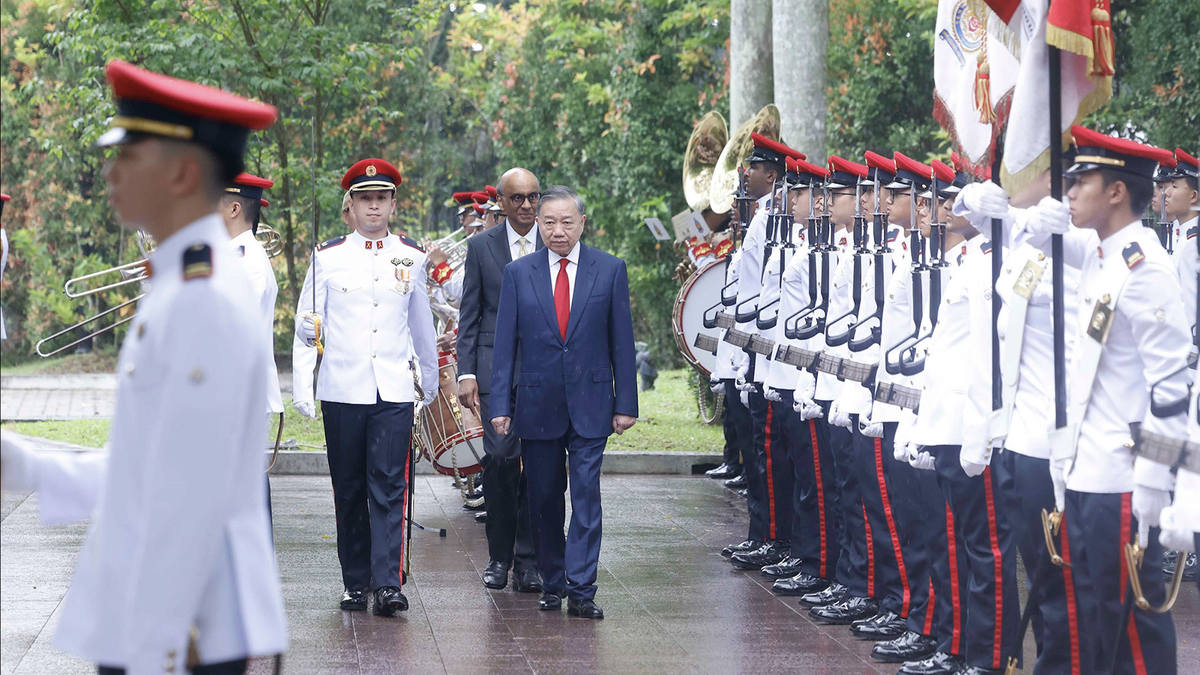
General Secretary and President To Lam's official visit to Thailand is highly significant as it commemorates the 50th anniversary of diplomatic relations between the two countries, affirming the long-standing relationship between them. Along with many shared viewpoints, cooperation in the new context will lead to stronger development of bilateral relations. It can be said that the visit opens a new chapter in comprehensive cooperation with renewed trust in all fields. Especially political trust, creating a foundation for strengthening economic development cooperation and connecting the interests of both sides. The Vietnam-Thailand relationship develops not only in terms of bilateral interests but also promotes stronger intra-ASEAN relations.
Dr. Nguyen Viet Hung , former Head of the Department of Party Building and Ho Chi Minh Thought, Ho Chi Minh City Academy of Cadres.
Expanding relationships across multiple fields.
According to the Ministry of Foreign Affairs, the comprehensive strategic partnership between the two countries is developing positively. In addition to cooperation in trade, investment, defense, and security, both sides are promoting the signing of a new labor recruitment agreement (signed in 2015) to create a mechanism for Vietnamese unskilled workers to be recruited to work in Thailand. Simultaneously, cooperation in tourism, culture, and people-to-people exchanges is developing well. By 2025, more than 660,300 Vietnamese tourists are expected to visit Thailand (ranking 17th) and nearly 458,000 Thai tourists to visit Vietnam (ranking 11th). Thailand is also promoting the "Six Countries, One Destination" tourism cooperation initiative, while currently 20 provinces and cities in Vietnam have signed cooperation and sister city agreements with Thai localities…
Source: https://thanhnien.vn/mo-ra-chuong-moi-cho-hop-tac-viet-nam-thai-lan-185260526222752063.htm
![[Image] Pleasant weather helps students enter the 10th grade entrance exam with confidence.](https://vphoto.vietnam.vn/thumb/1200x675/vietnam/resource/IMAGE/2026/05/29/1780034401612_ngay-1-thi-lop-10-minh-duy-8-5009-jpg.webp)


![[Photo] Ba Lang An Lighthouse - the "eye of the sea" amidst the "rock museum" of Quang Ngai province.](https://vphoto.vietnam.vn/thumb/1200x675/vietnam/resource/IMAGE/2026/05/29/1780038698840_anh-man-hinh-2026-05-29-luc-14-10-42.png)

























































Comment (0)