


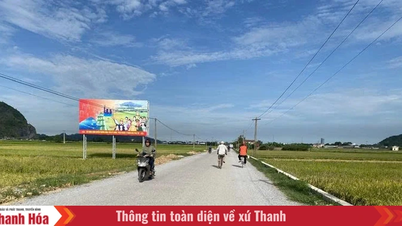
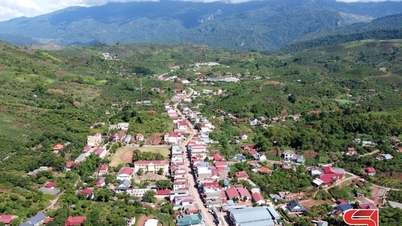
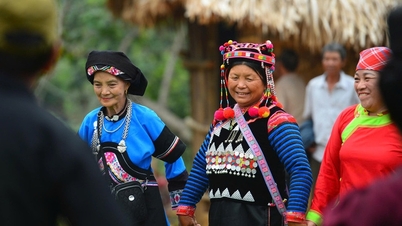
Chieng Son is a border commune inhabited by seven ethnic groups. Following the merger, and building upon its achievement of advanced new rural development standards in 2022, with significant investment in essential infrastructure, the commune's Party committee and government have identified the strengths of each area to select suitable crops and livestock based on soil conditions. They have also intensified propaganda, mobilization, and guidance to encourage people to apply production techniques, particularly in implementing new models. Simultaneously, the commune has directed specialized agencies to coordinate with relevant units, providing seedlings, organizing training, and transferring scientific and technical knowledge to the people; guiding households on methods of planting, caring for, and controlling pests and diseases. Furthermore, they have facilitated visits and learning experiences from successful economic development models in other localities within the province.
Mr. Vu Thanh Hai, Chairman of the People's Committee of Chieng Son commune, said: To support people in developing production and business, the commune directs associations and organizations to act as intermediaries with banks to provide loans to people. To date, the total outstanding loan balance at the Social Policy Bank and the Agricultural and Rural Development Bank has reached 112 billion VND, with more than 1,385 households borrowing capital. Currently, the entire commune maintains over 2,000 hectares of annual crops; cares for 360 hectares of tea; develops over 2,100 hectares of various fruit trees, with a fresh fruit yield of 9,600 tons; the total livestock and poultry population reaches over 136,000 animals. The average per capita income is over 51 million VND/person/year; the poverty rate has decreased to 7.06%.

Following the policies and directions of the province and commune, households in the area have proactively transformed the crop structure on sloping land, while simultaneously applying scientific and technological advancements to production to improve productivity, quality, and economic efficiency. More and more cooperatives have been formed, strengthening linkages in production, applying science and technology to processing and product consumption, and gradually building concentrated commodity production areas.
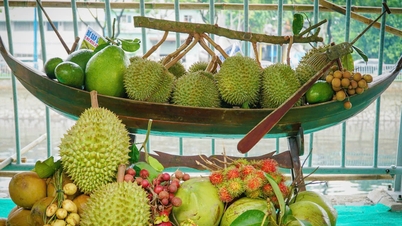
A prime example is the Hoang Son Agricultural Cooperative, with 40 members and 90 hectares dedicated to cultivating various fruit trees such as persimmons, mangoes, longan, avocados, plums, oranges, and pomelos. The cooperative guides its members to produce agricultural products according to VietGAP safety standards, resulting in many households achieving stable incomes ranging from 200 million to over 500 million VND per hectare per year.
Mr. Le Truong Sinh, Chairman of the Cooperative's Board of Directors, said: The cooperative requires all members to care for fruit trees according to proper technical procedures, ensuring food safety and hygiene. At the same time, the cooperative proactively connects with businesses and suppliers of fertilizers and seedlings, transfers cultivation techniques, and guarantees the purchase of products from its members. Thanks to strict adherence to production processes and limited use of chemical pesticides, the cooperative's products are increasingly trusted and chosen by customers.

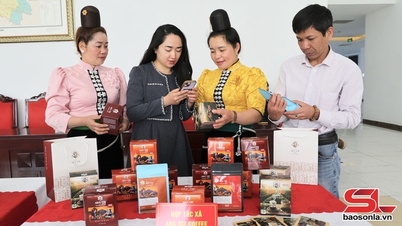
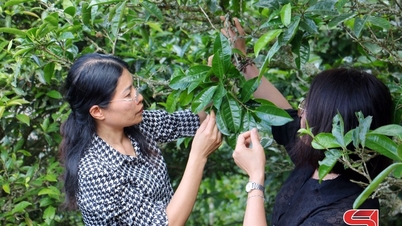
Along with fruit trees, tea is also a key crop of the commune, with a specialized tea cultivation area of over 360 hectares, yielding nearly 5,000 tons of fresh tea leaves. The commune's People's Committee has implemented many solutions for the sustainable development of tea cultivation; encouraging people to plant and care for tea according to organic and VietGAP standards; and attracting and calling on businesses and cooperatives to invest in tea processing and sign long-term product purchase contracts with growers. The price of fresh tea leaves has always remained stable at 5,500 - 6,000 VND/kg, helping people feel secure in their commitment to tea cultivation.
Ms. Lo Thi Thuy, from Nam Den village, shared: "My family has nearly 1 hectare of tea plantations. Thanks to guidance and technical support from commune officials and specialized agencies on planting and caring for the tea plants, the tea plants are developing well, yielding about 15 tons per year, and generating an income of over 70 million VND annually from tea."
Commercial and service activities in the commune are currently mainly concentrated in the commune center and along National Highway 43 and Provincial Highway 102, with common types such as: retail of consumer goods, food and beverage services, small-scale accommodation, and goods transportation. In addition, Chiềng Sơn possesses pristine and majestic natural landscapes, a clean climate, and unique local culture. Recognizing this as a significant advantage, the commune is orienting its development towards ecotourism, community tourism, and agricultural experiences linked to the preservation of local culture, considering this a sustainable direction contributing to socio-economic development. The focus is on strengthening the promotion of tourist destinations such as Khò Hồng, Sò Lườn, and Pha Luông; while simultaneously mobilizing and integrating resources to invest in and upgrade infrastructure and develop distinctive tourism products.
To improve people's income, Chieng Son commune continues to promote economic restructuring associated with labor restructuring; encouraging households to link production along value chains with businesses and cooperatives to ensure product outlets. The goal is for Chieng Son to become a relatively developed locality in the province by 2030; with a production value of over 50 million VND per hectare of cultivated land; an average per capita income of 60 million VND per year; and to become a shining example in the border region.
Source: https://baosonla.vn/kinh-te/chieng-son-phat-huy-the-manh-phat-trien-kinh-te-5310utADR.html















































































Comment (0)