

This reality necessitates monitoring and gathering information, reviewing the market, strengthening the brand, and proactively expanding the market for Vietnamese rice.
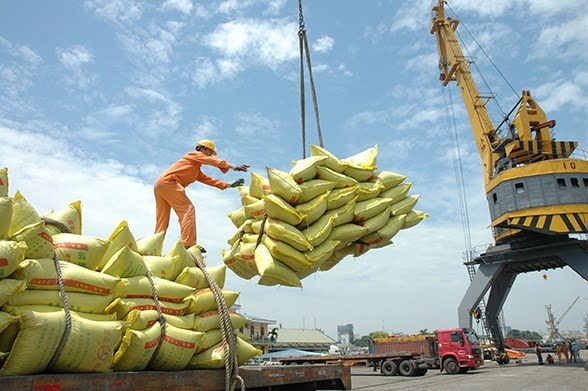
In the first 8 months, Vietnam exported 6.3 million tons of rice.
According to the Ministry of Industry and Trade , in the first eight months of 2025, Vietnam exported approximately 6.3 million tons of rice, a 2% increase compared to the same period last year. With a target of 8 million tons for the whole year, rice exports have reached nearly 80% of the target in two-thirds of the year and are likely to exceed it. Notably, Vietnamese rice has established a presence in many traditional markets and is expanding into new markets such as the Middle East, Africa, and West Asia.
According to Mr. Nguyen Anh Son, Director of the Import-Export Department, the Philippines continues to be Vietnam's largest rice importer, with nearly 2.9 million tons, accounting for 45.9% of total imports and increasing by 4.2% compared to the same period last year.
Following closely behind is the Ivory Coast market, with 753.7 thousand tons accounting for 11.85%, a 1.5-fold increase compared to the same period last year. The Ghanaian market saw an increase of nearly 94.8% year-on-year, with exports reaching 662.4 thousand tons, accounting for 10.4%.
Next is the Chinese market, which, after several years of continuous decline, has rebounded in the first eight months of the year, reaching 565.3 thousand tons, accounting for 8.9% of total exports, an increase of 141.3% compared to the same period last year.
Conversely, there was a significant drop from the Indonesian market, down nearly 97.2% to just 25,400 tons in eight months after the Indonesian government announced a halt to rice imports in 2025. The Malaysian market also saw a 45% decline compared to the same period.
Minister of Industry and Trade Nguyen Hong Dien affirmed that, with export volumes reaching tens of millions of tons, rice brings in tens of billions of USD annually, making a significant contribution to import and export turnover and the national budget, while also creating jobs and income for millions of farmers.
Rice exports are not only of economic significance, but also contribute to affirming the position and image of a developing Vietnam, contributing to poverty reduction and ensuring global food security.
Minister of Industry and Trade Nguyen Hong Dien
It is expected that the summer-autumn crop will be basically harvested by mid-September 2025. According to the cropping pattern, the autumn-winter crop will be harvested in November and December. The Ministry of Agriculture and Environment aims to prevent localized congestion during the peak rice harvesting period.
The seasonal planting schedule in each region will be closely monitored to balance production, while maintaining a high-quality rice variety to ensure supply for both domestic and export markets.
According to the Ministry of Industry and Trade, the temporary suspension of imports in some key markets such as Indonesia and the Philippines has put pressure on prices and consumption. However, overall, the output of Vietnamese rice remains stable, and import demand in many markets is expected to return towards the end of the year.
Maintaining market stability amidst fluctuations.
According to Deputy Minister of Agriculture and Environment Tran Thanh Nam, the program to cultivate 1 million hectares of high-quality rice and reduce emissions in the Mekong Delta is continuing to expand. It is expected that by mid-September, the Ministry will summarize the results of 11 high-quality rice cultivation models, and then replicate them in key production areas.
Regarding the balance of supply and demand for exported rice, Deputy Minister Nam stated that Vietnamese rice is present in 80 countries and territories. Among them, Australia highly appreciates the quality of Vietnamese rice, demonstrating the potential for market expansion beyond just a few traditional countries. Many African countries have also expressed interest and a desire to import Vietnamese rice in the future.
Based on that, the Deputy Minister of Agriculture and Environment suggested that the system of trade attachés strengthen connections and market information in the destination countries, so that domestic businesses can develop appropriate export strategies.
"The important thing is that production must be based on demand, with close linkages, and reduced costs to increase competitiveness. Then, the Vietnamese rice market will be more stable in the face of fluctuations," Deputy Minister Tran Thanh Nam emphasized.
To boost rice exports in the coming period, the Minister of Industry and Trade has outlined a group of solutions. Accordingly, it is necessary to continue monitoring, gathering information, and assessing the situation related to the Philippines' suspension of rice imports and Indonesia's temporary suspension, in order to advise the Government on appropriate solutions.
Providing updates and guidance to production areas and export businesses regarding changes in policies in the Philippines and Indonesia to help them adapt.
At the same time, actively provide information and market forecasts, especially for potential markets (Africa, the Middle East, South Asia, West Asia, South America), so that export businesses have room to choose and access them, avoiding dependence on a few large markets in the long term.
At the same time, it is urgent to consider supporting businesses in completing import and export procedures quickly and conveniently, such as applying digital transformation and reducing time and costs in rice procurement and export activities.
Strengthen negotiations, sign new agreements, or upgrade existing agreements on rice trade with other countries, especially those with high potential or those with which we have FTAs.
Strengthen trade promotion activities and brand promotion of Vietnamese rice products in accordance with the Strategy for the Development of Vietnam's Rice Export Market until 2030.
With traders strengthening and promoting the Vietnamese rice brand; boosting sales to Africa, Bangladesh, Senegal, the Middle East, and other markets with demand; diversifying product types, niche markets, and markets with high demands.
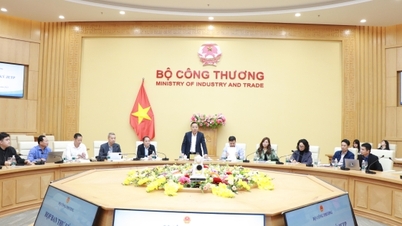
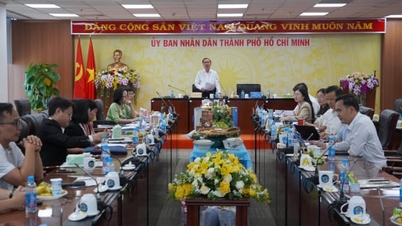
In light of the shrinking rice export market and in order to promptly implement Prime Minister's Directive No. 160/CĐ-TTg on strengthening tasks and solutions to promote rice production, export, and market stability, the Ministry of Industry and Trade organized a conference on promoting rice production, export, and market stability on the afternoon of September 10th.
Source: https://hanoimoi.vn/chu-dong-mo-rong-thi-truong-cho-gao-viet-nam-715700.html


![[Photo] Prime Minister Pham Minh Chinh attends the Conference on the Implementation of Tasks for 2026 of the Industry and Trade Sector](/_next/image?url=https%3A%2F%2Fvphoto.vietnam.vn%2Fthumb%2F1200x675%2Fvietnam%2Fresource%2FIMAGE%2F2025%2F12%2F19%2F1766159500458_ndo_br_shared31-jpg.webp&w=3840&q=75)




















































































Comment (0)