


Non-cash payments have increased 500-fold in number.
According to statistics from the State Bank of Vietnam, after 20 years, non-cash payment transactions have increased approximately 500 times in volume and over 60 times in value compared to 2005. During the period from 2015 to 2025, internet transactions increased approximately 59 times in volume and 21 times in value; mobile transactions increased approximately 280 times in volume and 600 times in value; and QR codes, which became popular in 2018, have seen a significant increase, reaching over 700 times in volume and over 400 times in value to date.
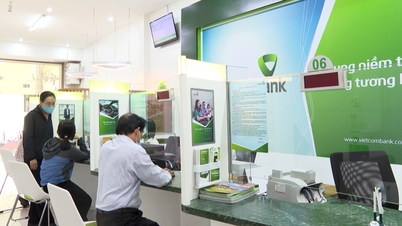
The rapid development of digital technology has made it impossible for banks to remain outside the trend of investing in and expanding digital banking services. Specifically, Vietnam Joint Stock Commercial Bank for Industry and Trade (VietinBank) has allocated VND 2,767 billion for digital service development; and Vietnam Foreign Trade Joint Stock Commercial Bank ( Vietcombank ) has allocated VND 2,479 billion. Vietcombank focuses on personalizing customer experiences through the application of AI and big data, creating flexible consulting and support solutions. VietinBank, on the other hand, is promoting digital platforms such as customer portals to improve 24/7 customer care efficiency and reduce reliance on human resources.
Private joint-stock commercial banks are also focusing on significant investments. For example, Saigon Thuong Tin Commercial Joint Stock Bank ( Sacombank ) has allocated 2,300 billion VND to serve nearly 19 million individual and corporate customers, 67% of whom are operating through digital channels. Tien Phong Commercial Joint Stock Bank (TPBank) has allocated over 1,000 billion VND to cloud computing, big data, and artificial intelligence (AI) in all its operations.
According to TPBank CEO Nguyen Hung, TPBank had only one option at the time: Focus on developing digital channels to overcome the limitations of space and time. This decision stemmed from an analysis of the market context, where the number of smartphone users had exceeded 50 million. Digital channels therefore became the key to reaching millions of potential customers without the need for costly physical network expansion.
According to Tu Tien Phat, General Director of Asia Commercial Bank (ACB), ACB actively invests in infrastructure, technology, and security. On average, ACB invests approximately VND 1,000 billion annually to develop its transaction infrastructure and core systems.
Over the past five years, Vietnam Technological and Commercial Bank (Techcombank) has invested more than $500 million in technology, and this figure is expected to continue to increase significantly in the future. All of the bank's internal processes have been fully digitized.
Adding more digital banking products
Along with many traditional digital services, card and banking organizations have recently launched many new products. For example, Visa, a leading global electronic payment technology company, has partnered with VNPT Money to launch Visa Pay – a new feature that allows Vietnamese consumers to make quick and secure payments using e-wallets at Visa's domestic and international network of acceptance points. VNPT Money is the first partner to deploy Visa Pay in Vietnam. In the initial phase, the QR code scanning feature enables users to make quick and secure payments at all QR code acceptance points within Visa's network in Vietnam and worldwide. Other features such as tap-to-pay and online payments (eCommerce) will be implemented in 2026. The launch of Visa Pay brings convenience, a seamless experience, and security according to Visa's global security standards to VNPT Money users.
Ms. Dang Tuyet Dung, Director of Visa Vietnam and Laos, stated that the launch of this feature demonstrates Visa and VNPT Money's commitment to expanding access to digital financial services, contributing to the promotion of the digital economy, e-commerce, and international tourism, while also contributing to the national digital transformation roadmap.
TPBank continues to expand its application of artificial intelligence (AI) in economic forecasting, service personalization, and customer base expansion, especially in the younger and rural segments. With over 86% of Vietnamese adults having bank accounts, TPBank aims to increase its customer base to 20 million in the coming years.
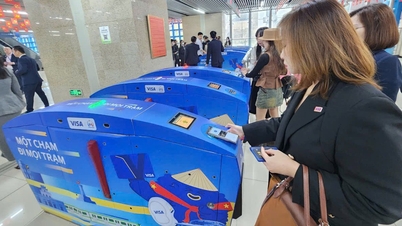
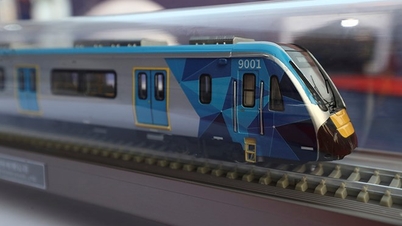
Recently, VietinBank collaborated with Hanoi Metro to integrate a cashless payment system, allowing passengers to swipe their bank cards to pass through ticket gates. Thanks to this, train passengers no longer need to carry cash, paper tickets, or personal cards – they can simply swipe their VietinBank Visa card to board the train. This solution is particularly useful for working people, students, and even the elderly who want to use the metro daily.
According to Deputy Governor of the State Bank of Vietnam Pham Tien Dung, the digital transformation of the banking sector is not limited to the sector itself, but also creates a ripple effect across all aspects of social life. People can pay tuition fees, medical bills, utilities, etc., through banking applications anytime, anywhere, without using cash. Meanwhile, businesses can easily access online loans, reducing processing time. The government gains more data for management purposes. From small vendors to large corporations, from students to retirees, everyone benefits from this breakthrough in the banking sector's digital transformation.
Source: https://hanoimoi.vn/ngan-hang-so-phu-song-doi-song-xa-hoi-727512.html

![[Photo] Prime Minister Pham Minh Chinh attends the Conference on the Implementation of Tasks for 2026 of the Industry and Trade Sector](/_next/image?url=https%3A%2F%2Fvphoto.vietnam.vn%2Fthumb%2F1200x675%2Fvietnam%2Fresource%2FIMAGE%2F2025%2F12%2F19%2F1766159500458_ndo_br_shared31-jpg.webp&w=3840&q=75)









































































































Comment (0)