

Prioritize environmental protection.
In its development strategy, the province aims to attract green investment and develop a green economy , with environmental protection considered a key criterion. Leveraging its advantages in industrial space, regional transportation infrastructure, and abundant labor resources, the province encourages projects that utilize clean technologies, save energy, develop renewable energy, promote organic farming and a circular economy, and limit emissions to reduce pressure on natural resources.
Currently, 34 out of 42 industrial parks and 23 out of 82 industrial clusters in the province are operational. Notably, 42 industrial parks and clusters have built centralized wastewater collection and treatment systems that meet standards; 31 industrial parks have installed automatic wastewater monitoring systems; and 23 operational industrial clusters strictly comply with regulations on wastewater treatment before discharging into the environment.
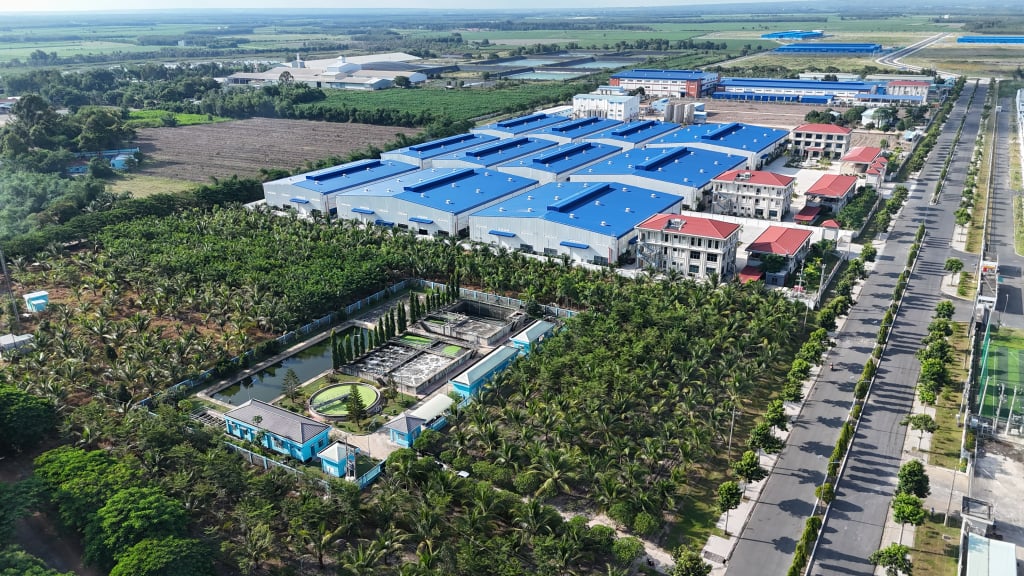
According to the Department of Agriculture and Environment, 100% of industrial parks in the province have built centralized wastewater collection and treatment systems and installed automatic monitoring stations that continuously connect data to the Department. Simultaneously, businesses within these industrial parks and clusters are strengthening their review of wastewater and exhaust gas treatment systems, strictly complying with environmental standards.
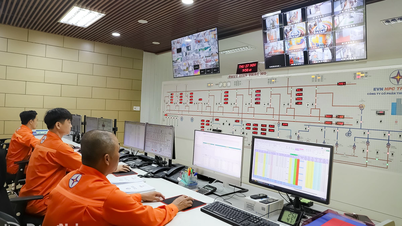
Through these systems, state management agencies can monitor wastewater quality in industrial parks and clusters 24/7. Thanks to this approach, businesses are gradually transitioning to a green economic model, with minimal impact on the ecosystem and ensuring a healthy living environment.
A compelling indicator of the government's and businesses' efforts is the Provincial Green Index (PGI). This criterion continues to be a focus of attention and improvement by the leaders of Tay Ninh province after the merger, attracting more businesses interested in long-term, sustainable investment.
Compared to 2022, when Long An province (before the merger) ranked 28th, in 2024 it rose to 6th place nationwide in the PGI, with 27.56 points. In 2025 and subsequent years, the province aims to be among the top 10 localities leading the national Green Index. This is a significant leap forward, demonstrating that the investment environment in Tay Ninh is continuously improving, promoting sustainable development.
Towards the goal of Net Zero
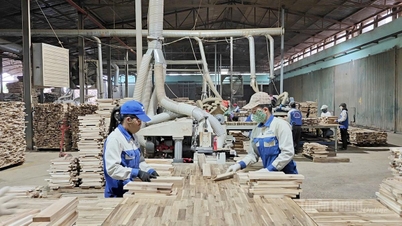
According to its new development orientation, Tay Ninh prioritizes projects that apply advanced technology and digital transformation; adopt circular and green production models; use energy efficiently and effectively; create high added value and participate in global supply chains. This is a crucial shift in the local industrial development strategy. Instead of projects that employ a large number of unskilled laborers or consume large amounts of resources, Tay Ninh is moving towards a smart and sustainable industrial model, in line with the world's green development trend.
In Trang Bang Industrial Park (An Tinh Ward), Tran Hiep Thanh Textile Joint Stock Company is a pioneering enterprise in converting its boilers to biomass boilers, gradually eliminating the use of coal in textile dyeing production. By 2025, the company is expected to be one of the exemplary units granted an environmental permit by the Provincial People's Committee in the textile and garment and supporting industries sector. It is one of the exemplary enterprises in Tay Ninh committed to Net Zero, continuing to invest in clean production technologies and reducing environmental impact from the dyeing and finishing stages of the textile industry.
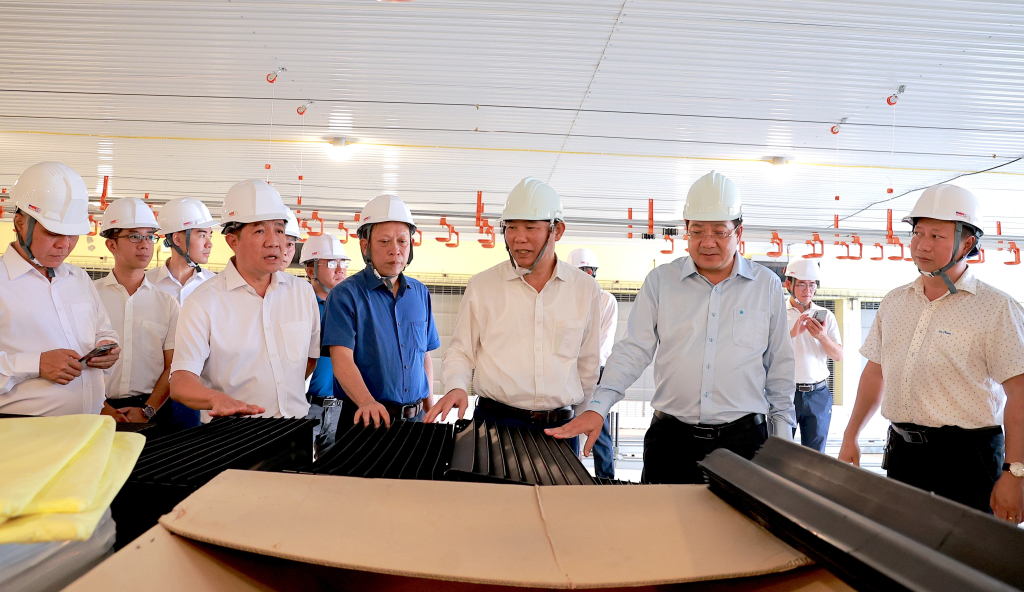
Nguyen Qui Hoang, Deputy Head of Human Resources at Tran Hiep Thanh Textile Joint Stock Company, said: “Green and sustainable development is an essential need and a trend in modern production today. The company aims to reduce CO2 emissions by nearly 30% compared to the 2019 baseline, even while production continues to grow in 2026.”
Mr. Hoang added that, to meet the needs of many large customers worldwide, the company invests in a water reuse system to conserve water resources, produces goods using recycled fibers, and utilizes environmentally friendly chemicals.
During the 2025-2026 period, many businesses in industrial parks will adjust and renew their environmental permits to meet export standards, demonstrating their commitment to adopting green production solutions, minimizing environmental impact, and aiming for sustainable growth. This is not only a solution to the environmental problem but also a passport for businesses to meet stringent environmental standards, enhancing their export advantage to major markets such as the US, Europe, and Japan.
There is significant potential to attract large-scale projects.
According to the Tay Ninh Provincial Planning for the period 2021-2030, with a vision to 2050, the province identifies digital transformation and green transformation not only as an inevitable trend but also as a mandatory requirement for restructuring the growth model. Developing a synchronized digital infrastructure, promoting the application of science and technology, encouraging clean production, renewable energy, and the circular economy are key elements to enhance the productivity, quality, and competitiveness of the economy. This is also a crucial step towards knowledge-based growth driven by innovation.
Tay Ninh particularly emphasizes the principle of "not sacrificing the environment for growth". 100% of industrial parks have wastewater treatment systems that meet standards; the rate of urban solid waste collection and treatment reaches 100%; and the development of green economy, circular economy, and renewable energy is prioritized.
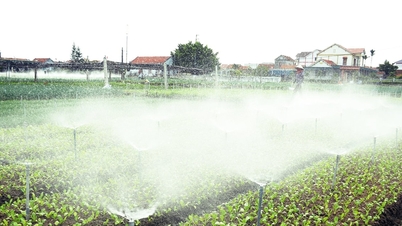
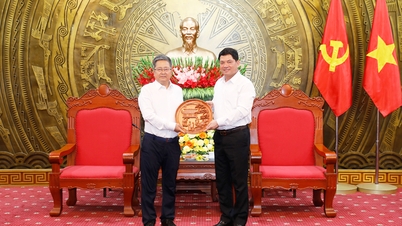
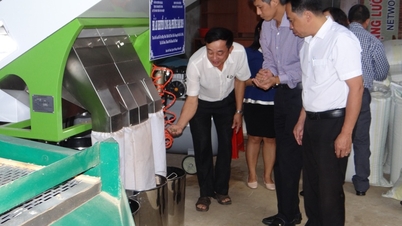
In late March 2026, the province held a meeting with De Heus Group and Hung Nhon Group to discuss the development orientation of high-tech agricultural projects in the province. These projects will be invested in an industrial direction, applying modern technology, biosafety, and automation, while integrating a circular economy model, processing waste into biogas and organic fertilizer, contributing to environmental protection, marking an important milestone in the field of high-tech agriculture, and expanding the export market for Tay Ninh province's agricultural products internationally.
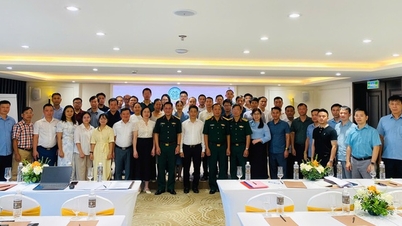
Recently, at the Tay Ninh Business Networking Forum 2026, the Provincial People's Committee issued decisions approving the investment in 3 industrial parks and decisions establishing 3 industrial clusters in Hiep Hoa, Ben Luc, Can Giuoc, Nhut Tao communes and Duc Hue commune. Along with this were cooperation agreements signed between the industrial clusters and parks with secondary investors.
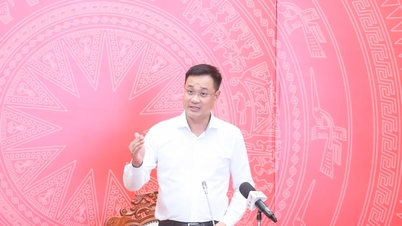
According to the Deputy Secretary of the Provincial Party Committee and Chairman of the Provincial People's Committee, Le Van Han, Tay Ninh will continue to improve the investment and business environment, enhance the quality of governance and services; create favorable conditions for the development of projects and models of modern, green, and sustainable agriculture, so that businesses can confidently invest, expand production, and develop long-term in Tay Ninh, contributing to the socio-economic development goals of the locality.
According to the Tay Ninh Provincial Planning for the period 2021-2030, with a vision to 2050: The goal is for Tay Ninh to become a dynamic, green, and sustainable province by 2030; a desirable place to visit and live in the South. The economic structure continues to shift towards industry and construction accounting for approximately 55-56%, services 26-27%, and agriculture 13-14%. This step aims to affirm the role of industry and services in creating high added value, while maintaining a sustainable and modern agricultural sector. |
Source: https://baotayninh.vn/chuyen-doi-xanh-thich-ung-bien-doi-khi-hau-145215.html

![[Image] Hanoi's urban life under the challenge of a "scorching hot" environment](https://vphoto.vietnam.vn/thumb/1200x675/vietnam/resource/IMAGE/2026/05/25/1779706979265_nang-nong-t5-2026-minh-duy-7-4636-jpg.webp)


![[Image] Close-up view of the interchange connecting the two expressways and Long Thanh Airport.](https://vphoto.vietnam.vn/thumb/1200x675/vietnam/resource/IMAGE/2026/05/25/1779703378210_ndo_br_z7863716673926-224453a31600126cce10622af6290afd-4549-jpg.webp)








































































Comment (0)