

Experts say that AI "knows" a lot, but doesn't know who you are; the key is learning how to ask questions and knowing when to learn more beyond what the algorithm suggests.
The preparation process for the trip is just as exciting as the actual journey. Dr. Daisy Kanagasapapathy, Associate Dean of the Tourism and Hospitality Management Department at RMIT University Vietnam, notes that AI offers speed, convenience, and a smart starting point, but it still cannot replace human intuition, local knowledge, or firsthand experience.
"AI is like a friend who reads a lot but isn't close to you; they know a lot, but don't know you well. The key is learning how to ask questions and knowing when to learn more beyond what the algorithm suggests," said Daisy Kanagasapapathy, explaining why AI is still in the process of being perfected and suggesting ways to leverage AI for travel planning.
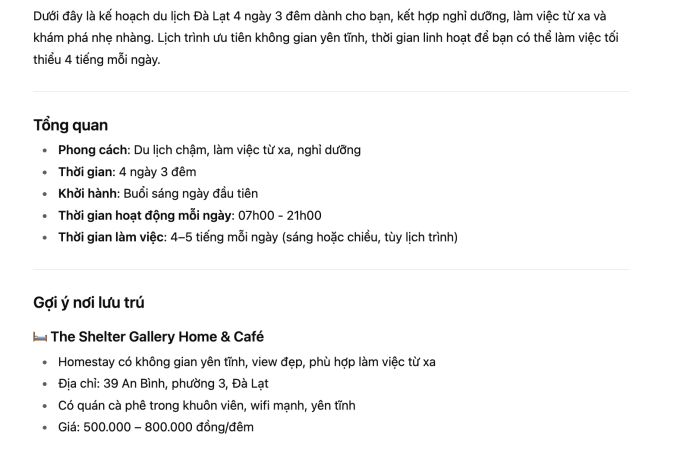
Reasons why AI can give wrong suggestions.
Technically, there are two common reasons why AI makes inaccurate suggestions. First, the training data is time-limited. Many AI models like ChatGPT (the free version) are only trained on data updated up to a certain point in time, such as the end of 2023. Therefore, the AI might "not know" that a restaurant just closed last month, a new exhibition has opened, or ticket prices have just changed.
Secondly, AI lacks the ability to update in real time. AI is not the default search engine. Without a direct connection to web data (via plugins, APIs, or real-time web access), AI cannot provide current ticket prices or booking status. If you ask AI: "What is the current price for an entrance ticket to Ba Na Hills?", users might get a price from two years ago instead of the latest. Not to mention that prices can change seasonally or with promotions.
User-generated content can be biased or unverified. For example, if AI reads a series of old blog posts about a place that closed during the Covid-19 pandemic, it might still suggest that place without realizing it's no longer operational.
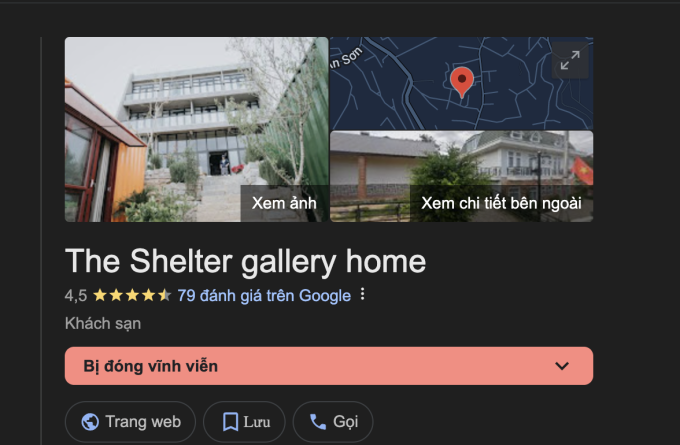
Why are AI-suggested itineraries often so generic?
AI tools like ChatGPT, Google Gemini, or AI-powered travel planning platforms often suggest popular destinations because they are largely trained on the amount of popular content available. If millions of blog posts, social media posts, and travel websites all talk about landmarks like "Eiffel Tower" or "Ha Long Bay," these destinations will dominate the AI training data. AI will associate popularity with relevance, even when users expect less well-known places.
Young travelers often seek authentic, locally-focused experiences or those that align with their specific interests and reflect their personality or social values. They tend to use less common search keywords. These types of suggestions are often more complex and harder to find unless users engage in in-depth discussions, frequently leave reviews, and consistently tag others.
AI reflects general information if users don't provide specific requests. Therefore, Gen Z often uses AI to sketch out preliminary ideas, then delves deeper on TikTok, Threads, or Facebook groups to personalize the plan.
Use AI to plan your personal travel effectively.
Despite its limitations, AI remains a useful tool if you know how to utilize it intelligently.
Start with AI, but don't stop there. Use AI to create preliminary itineraries like "Three days exploring Osaka's culinary scene " or "An ecotourism route in the Mekong Delta." Then, check back on Google Maps, TripAdvisor, and TikTok to read reviews and see updated photos.

Ask a very specific question. Instead of asking "What should I do when traveling to Ho Chi Minh City?", try "Suggested two-day itinerary in Ho Chi Minh City including street food, art galleries, and public transport." The more details you include, such as budget, travel style, and dietary preferences, the closer the result will be to your needs.
Ask the AI to compare options. For example, "compare Mui Ne and Quy Nhon for a relaxing holiday with local seafood" or "Are there any lesser-known places in Ninh Binh that are popular with students?".
Self-verification of information may change over time. Always double-check opening hours, ticket prices, and seasonality on the official website or Google. Think of AI as a starting point, not a complete replacement.
Look for AI tools that integrate live data. Several platforms now combine AI with real-time updates, such as Expedia, Kayak, and Klook. These are more reliable options for checking prices and booking availability.
Source: https://baolaocai.vn/chuyen-gia-chi-cach-dung-ai-lap-ke-hoach-du-lich-post878949.html


































































































Comment (0)