

The Deputy Director of the Payment Department said that biometric authentication is expected to be mandatory for online transfers exceeding a minimum amount, possibly from 10 million VND onwards.
This information was shared by Mr. Le Anh Dung, Deputy Director of the Payment Department (State Bank of Vietnam), at the seminar "Protecting bank accounts against the increasing risk of online fraud" on September 19th.
Biometric technology is a method of identifying and verifying individuals through biological characteristics such as fingerprints, iris patterns, voice, facial images, etc. This technology is considered to minimize the possibility of forgery and has the highest level of security currently available.
Vietnam has a high rate of online fraud, with 87,000 recorded cases, according to the Global Anti-Fraud Alliance (GASA). In 2021 alone, victims lost $374 million, equivalent to $4,200 per fraud case.
Mr. Dung assessed that criminals are increasingly operating in an organized manner, establishing companies operating on a global scale, and even having fraudulent recruitment camps. A series of new scams have continuously emerged in recent years, from impersonating government agencies and organizations (police, tax, insurance, banks), recruiting online sales collaborators, soliciting stock market investments... causing many people to unfortunately fall into the trap. However, from the perspective of account holders, Mr. Dung classified the scams into two groups.
The first type, and the most common, is unauthorized payment fraud (due to stolen information). This type of scam occurs when criminals obtain a customer's login information or have previously obtained customer authentication information.
Through this process, criminals gain access to customer accounts and carry out transactions without the account holder's knowledge. In this case, the customer may be compensated by the financial institution, unless they intentionally committed fraud.
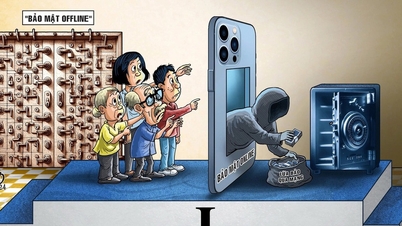
Mr. Nguyen Tran Nam, Director of Digital Banking at Asia Commercial Bank (ACB ), stated that fraudulent money transfer transactions usually do not occur on the customer's own device. One of the latest tactics is to entice customers to install applications that allow interference with the operating system and monitoring of customer activity on their mobile phones. The fraudsters wait until the victim's account has a significant amount of money, then remotely control the phone to steal the funds. Regarding these types of fraud, Mr. Nam said that biometric transaction authentication is a key factor in minimizing fraud.
Looking ahead, Mr. Le Anh Dung also stated that the State Bank of Vietnam will amend Decision 630, allowing credit institutions to apply biometric authentication to transactions exceeding certain transaction limits.
Mr. Dung stated that it is necessary to establish a minimum threshold for online transactions, requiring biometric authentication instead of simply using the standard OTP. Currently, 90% of online money transfers are under 10 million VND. This could serve as a basis for considering a minimum transfer amount requiring biometric authentication, ensuring a balance between customer experience and fraud prevention.

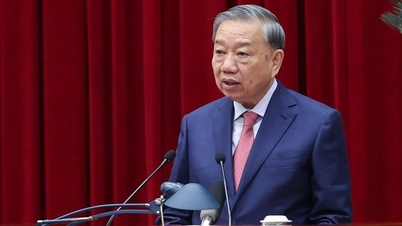
Mr. Le Anh Dung, Deputy Head of the Payment Department, shared this information at the workshop on September 19th. Photo: Huu Hanh
The second type of payment fraud, according to the Deputy Director of Payments, is "authorized" transactions by the account holder. In this type of fraud, criminals set traps and trick account holders into actively initiating transactions.
Criminals exploit victims' psychological vulnerabilities such as greed, fear, and compassion for social relationships. "Dealing with this type of fraud is not simple; it requires interdisciplinary initiatives to minimize risks and limit losses," according to the Deputy Director of Payments.
Therefore, the most important line of defense against all types of scams, especially psychological scams, comes from the users themselves.
However, the sad reality, according to Mr. Ngo Tan Vu Khanh - Country Director of Kaspersky security software in Vietnam, is that while businesses and banks invest heavily in ensuring security, users, who are the weakest link, do not equip themselves with any tools to prevent and detect fraud.
Moreover, many people still have a complacent attitude towards the repeated scams. Lieutenant Colonel Cao Viet Hung, Deputy Head of Department A05 - Ministry of Public Security, said that many scams are not new, having occurred several years ago, but when they resurface, people continue to fall into the trap.
To prevent scams, the General Director of Asia Commercial Bank (ACB), Mr. Tu Tien Phat, outlined three "don'ts" for the public. Firstly, customers should not click on links sent via text messages or social media, especially if the source has not been verified. Secondly, customers should not download applications not available on the Google Play or App Store. Customers should also not heed advice from strangers over the phone or on social media. Furthermore, people should slow down in the face of suspicious behavior, carefully read information and warnings sent to their phones before conducting any transactions.
Furthermore, the General Director of ACB also recommended several policy solutions to curb online fraud. According to him, authorities should impose severe penalties on the buying and selling of bank accounts – one of the factors contributing to the current surge in financial fraud. In addition, the State Bank of Vietnam should issue a mechanism for rapid coordination among commercial banks in cases of suspected fraud, in order to quickly freeze accounts and prevent unusual transactions, thereby limiting customer losses.
Quynh Trang
Source link






























































































Comment (0)