

On the morning of December 11th, with a high approval rate (424 out of 436 delegates present), the National Assembly officially passed the Resolution on mechanisms and policies for national energy development for the period 2026-2030.
Presenting a summary report on the revisions and amendments to the draft Resolution before the National Assembly's vote, Minister of Industry and Trade Nguyen Hong Dien stated that the Government had closely coordinated with the National Assembly's agencies to incorporate as many valid opinions as possible, ensuring the consistency of the legal system.
One of the most important aspects of this Resolution is the mechanism for selecting investors for large-scale renewable energy projects. Accordingly, the National Assembly unanimously agreed to grant the Prime Minister the authority to approve investment policies and simultaneously approve investors without auctioning land use rights or conducting bidding processes for offshore wind power projects in the 2025-2030 period.
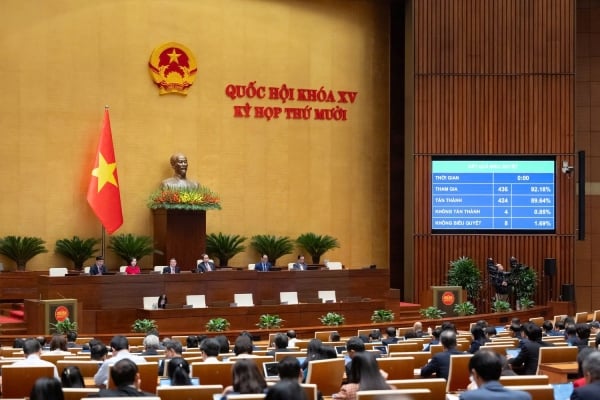
For the next phase (2031-2035), the Resolution implements strong decentralization by granting the authority to approve investment policies for offshore wind power projects to the chairmen of provincial People's Committees.
In addition, the Direct Power Purchase Agreement (DPPA) mechanism has been expanded to include electricity retailers, aiming to increase flexibility in the electricity trading market.
Regarding planning, the Resolution allows for adjustments and updates to the plan to meet urgent practical requirements. However, these adjustments must ensure that they do not alter the overall perspective, objectives, and orientations, and do not increase the total installed capacity according to the approved structure of each type of power source.
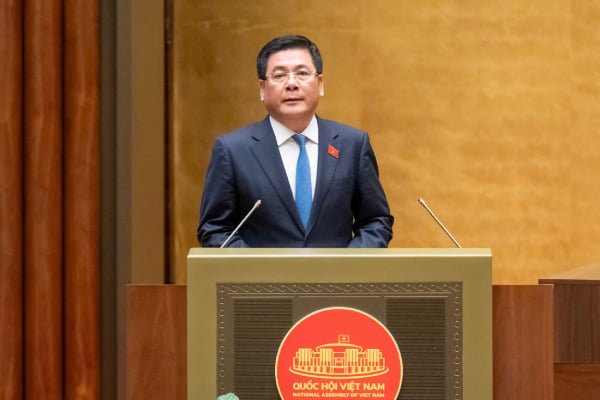
To ensure the consistency of the legal system, the drafting agency reviewed and excluded from the Resolution any overlapping policies or content currently under consideration in other laws such as: the Law on National Reserves, the Law on Public Debt Management (amended), the Law on Investment, and the Law on Land (regarding the mechanism for handling delayed projects).
Fluctuating or highly specialized issues such as the financial conditions of offshore wind power enterprises; mechanisms for handling survey costs; procedural documentation; or the development of small-module nuclear power... are determined to fall under the authority of the Government to provide detailed regulations to ensure flexibility in operation.
Speaking about the implementation plan, Minister Nguyen Hong Dien affirmed that immediately after the Resolution is passed, the Government will issue all necessary guiding documents to avoid creating any "legal vacuum".
The top priority is to promptly resolve obstacles for power generation and transmission projects, perfect market mechanisms, and boost investment attraction. This is a crucial prerequisite for ensuring national energy security, meeting the needs of socio-economic development with the goal of double-digit growth in the coming years and moving towards Net Zero by 2050.
The government also committed to enhancing transparency, monitoring implementation, and promptly reporting emerging issues to the competent authorities for resolution.
Previously, during group discussions on December 4th and plenary sessions on December 8th, National Assembly delegates unanimously agreed on the necessity of promptly issuing this Resolution. Opinions suggested that, in order to address the persistent bottlenecks in the electricity sector, breakthrough mechanisms are essential, especially for offshore wind power and electricity transmission, to ensure energy security in the context of projected high electricity demand.
Source: https://doanhnghiepvn.vn/kinh-te/co-che-dot-pha-cho-dien-gio-ngoai-khoi/20251211111848247
![[Photo] Solemn bathing ceremony and Buddha procession in Hue](https://vphoto.vietnam.vn/thumb/1200x675/vietnam/resource/IMAGE/2026/05/31/1780228263543_1-jpg.webp)
![[Image] Hanoi Police officially crowned champions of V-League 2025/2026](https://vphoto.vietnam.vn/thumb/1200x675/vietnam/resource/IMAGE/2026/05/31/1780244769054_ndo_br_039d561b692be875b13a-jpg.webp)


![[Photo] The General Secretary, President and his wife begin their state visit to the Philippines.](https://vphoto.vietnam.vn/thumb/1200x675/vietnam/resource/IMAGE/2026/05/31/1780230559452_anh-man-hinh-2026-05-31-luc-19-28-11.png)
![[Photo] Admire the coral "masterpiece" amidst the million-year-old heritage of Dak Lak province.](https://vphoto.vietnam.vn/thumb/1200x675/vietnam/resource/IMAGE/2026/05/31/1780221235105_anh-man-hinh-2026-05-31-luc-16-53-27.png)















![[Video] Sunset at Lap An Lagoon – Where the sun sets over the fishing nets](https://vphoto.vietnam.vn/thumb/340x192/vietnam/resource/IMAGE/2026/05/31/1780192137701_beach-landscape-sea-water-nature-grass-745871-pxhere-com.jpeg)



































![[Photo] Admire the coral "masterpiece" amidst the million-year-old heritage of Dak Lak province.](https://vphoto.vietnam.vn/thumb/402x226/vietnam/resource/IMAGE/2026/05/31/1780221235105_anh-man-hinh-2026-05-31-luc-16-53-27.png)































Comment (0)