

 |
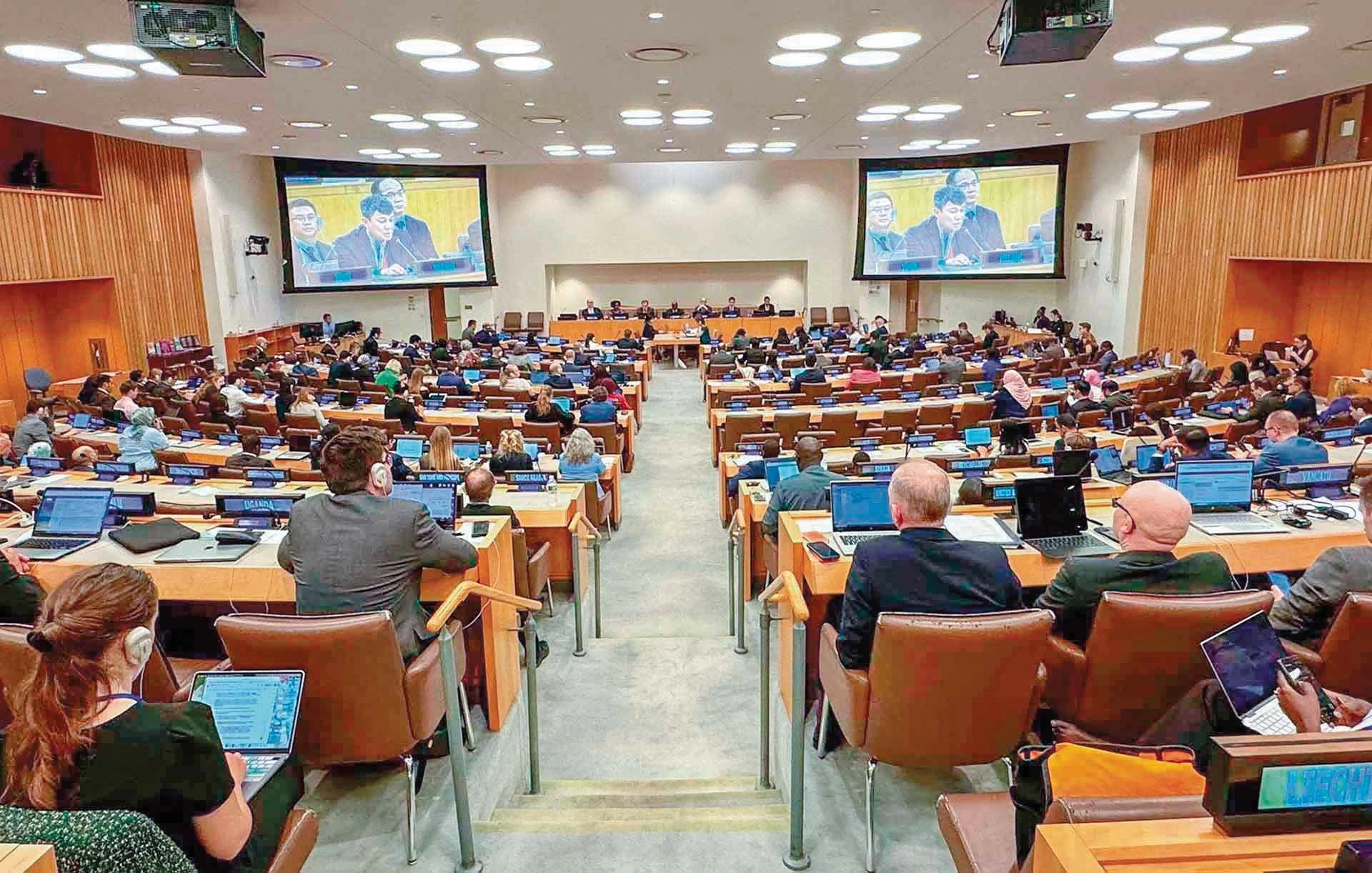
| Permanent Deputy Minister of Foreign Affairs Nguyen Minh Vu delivered a speech at the 34th Conference of States Parties to the United Nations Convention on the Law of the Sea (SPLOS) at the United Nations Headquarters in New York from June 10-14. (Source: Vietnam Delegation to the United Nations) |
All international agreements are at risk of becoming outdated, and UNCLOS is no exception. How can we avoid becoming complacent and keep pace with the changing realities? These concerns were partly analyzed by Vietnamese and international diplomats, experts, and scholars at the 16th International Conference on the South China Sea, hosted by the Diplomatic Academy (Ministry of Foreign Affairs) in Quang Ninh recently.
The ocean's "constitution".
Judge Horinouchi Hidehisa of the International Tribunal for the Law of the Sea (ITLOS) affirmed that the United Nations Convention on the Law of the Sea (UNCLOS) can be considered the "constitution" of the ocean, encompassing provisions related to activities in the seas and oceans. This international convention provides a comprehensive understanding of maritime concepts, outlining the rights and obligations of states with respect to the seas and oceans, and includes provisions for the sustainable conservation of fish stocks. Furthermore, UNCLOS emphasizes elements related to the Law of the Sea such as jurisdiction and the operation of vessels at sea.
It can be said that UNCLOS is a common law governing activities in the seas and oceans. During the initial negotiations in 1973, UNCLOS contained provisions that were overly idealistic and unrealistic; therefore, when UNCLOS came into effect in 1994, it also amended some of its provisions.
Reiterating UNCLOS's role as the "constitution" of the oceans, Niclas Kvarnström, Director-General for Asia-Pacific Affairs at the European Union External Relations Agency (EEAS), affirmed that UNCLOS plays a crucial role in regulating maritime activities among nations in accordance with international law, and has been agreed upon and adopted by many countries. UNCLOS can be considered the key to maritime issues, a "compass" for nations in various seas, including the South China Sea.
 |
| Diplomats, experts, and scholars from Vietnam and abroad discuss the value of UNCLOS 1982. (Photo: PH) |
Dr. Nguyen Dang Thang, an arbitrator at the Permanent Court of Arbitration (PCA) and an arbitrator at the Annex VII Arbitration Tribunal under UNCLOS, believes that all agreements are at risk of becoming obsolete, and UNCLOS is no exception. However, to date, UNCLOS remains highly valuable, a "living mechanism." According to him, agreements and mechanisms based on the spirit of UNCLOS will contribute to improving and overcoming its obsolescence.
Australian Ambassador Andrew Goledzinowski shares this concern. Although after 30 years, UNCLOS remains highly relevant and continues to be a cornerstone of the legal system governing the oceans and seas, the question is how to implement UNCLOS more effectively in the context of new challenges arising from technology, such as the issue of undersea cables…
“If a country chooses to ignore the rules, that is indeed a problem. But that doesn’t mean those rules are wrong. The challenges that arise can still be addressed within the framework of UNCLOS,” said Australian Ambassador Andrew Goledzinowski.
Despite many changes, it remains… relevant.
Within the framework of this international conference, diplomats, experts, and scholars also presented various approaches to solutions surrounding the question of how UNCLOS can keep pace with the evolving practices of current maritime use and management.
Why is amending the Convention difficult? According to Dr. Pham Lan Dung, Acting Director of the Diplomatic Academy of Vietnam and President of the Asian Society for International Law (AsianSIL), amending the Convention requires all UNCLOS member states to participate in negotiations, signing, and ratification for it to take effect. Therefore, this process is relatively complex.
The proposed solution is to include annexes within the framework of the Convention, which would help develop and expand it. Negotiating such annexes may not necessarily require the participation of all member states; the annexes would only be binding on UNCLOS member states that negotiate and sign them.
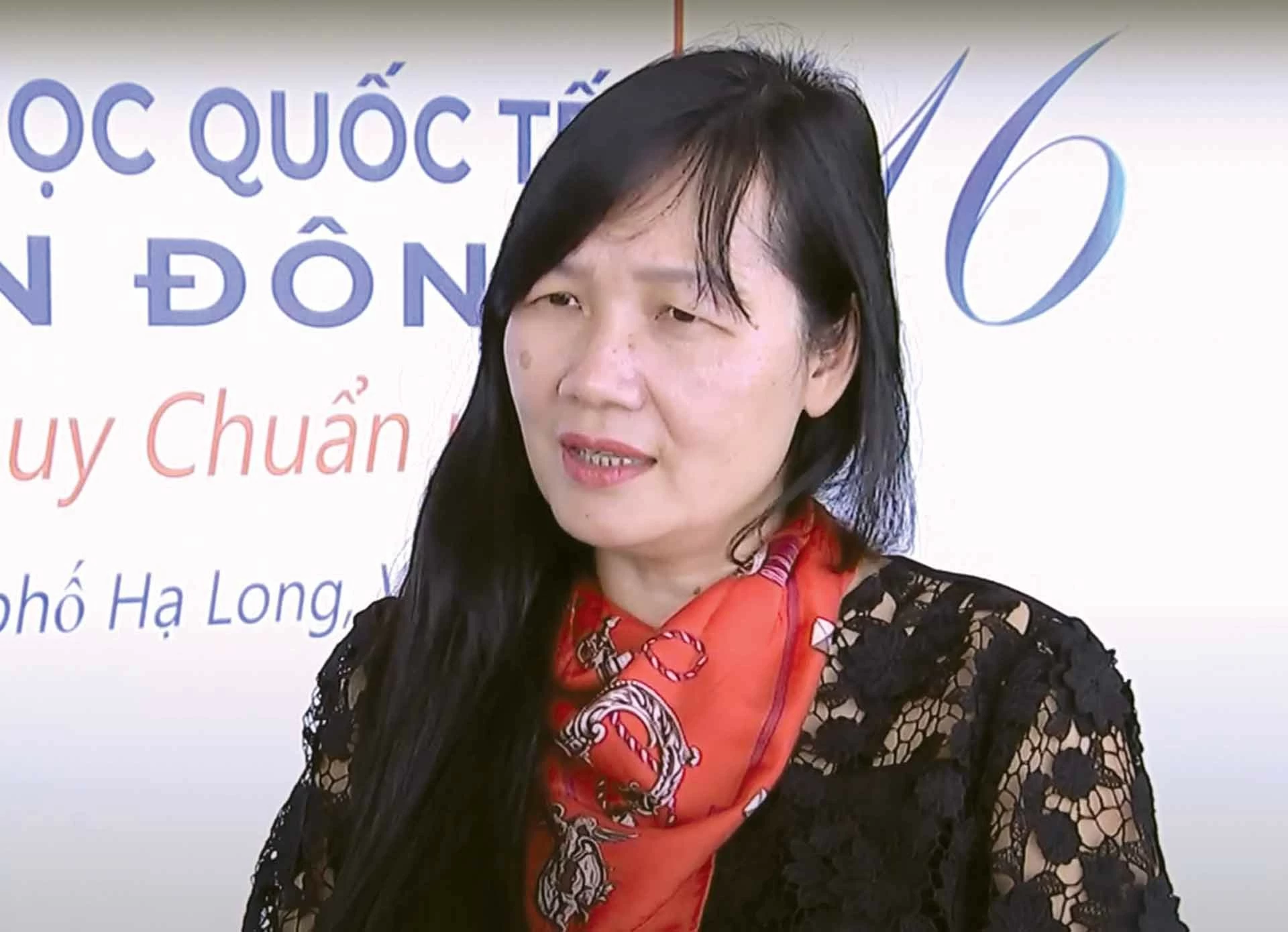 |
| Dr. Pham Lan Dung, Acting Director of the Diplomatic Academy, President of the Asian Society of International Law. |
Dr. Pham Lan Dung emphasized that UNCLOS is an international treaty that can be developed, expanded, and adjusted to meet new practical requirements. The Convention contains very detailed provisions related to regulating maritime disputes between states, clearly addressing regulations prohibiting the use of force or the threat of force, as well as approaches to "gray zone" operations in undemarcated, overlapping, or disputed areas.
Furthermore, according to Dr. Pham Lan Dung, a reasonable solution is for countries to jointly consider negotiating and signing other suitable international conventions or treaties. Specifically, countries could agree to negotiate with each other and incorporate relevant international treaties linked to the UNCLOS into the framework. Evidence of such efforts is the signing of the Agreement on the Conservation of Biological Diversity Outside National Jurisdiction (BBNJ), one of the important recent developments in the field of ocean and maritime law, which delves into regulating a specific subject.
Regarding the BBNJ Agreement, Associate Professor Takei Yoshinobu of Keio University (Japan) stated that a closer look at UNCLOS reveals no mention of biodiversity. Clearly, the flexibility in drafting the agreement has helped the parties to UNCLOS address new challenges.
Australian Ambassador Andrew Goledzinowski added further significance to the agreement's creation: "The adoption of the BBNJ Agreement demonstrates that the international community is capable of supplementing, rather than undermining, UNCLOS. That is a crucial difference."
Approaching solutions from within the framework of UNCLOS, Dr. Muhammad Taufan, Deputy Director of the Department of Legal Affairs and Territorial Treaties, Ministry of Foreign Affairs of Indonesia, believes that the key to effectively implementing UNCLOS is cooperation at the national, bilateral, and multilateral levels.
The Indonesian diplomat cited the example of his country issuing numerous decrees and domesticating laws based on the UNCLOS framework, as well as maritime delimitation agreements with Vietnam and Malaysia, as evidence of the "sweet fruits" of compliance and cooperation within the UNCLOS framework.
Unwavering commitment
After 30 years of participating in UNCLOS, according to Dr. Pham Lan Dung, Vietnam has become an active member, complying with the Convention's provisions, such as through the Vietnamese Law of the Sea, thereby demonstrating Vietnam's determination to abide by the Convention. In addition, Vietnam participates in forums and activities of many member states of the Convention. Notably, recently, Vietnam has proposed the idea of establishing a Friends Group on UNCLOS.
The Friends of UNCLOS group was the first group that Vietnam initiated and co-chaired the effort to establish (together with Germany) in 2020. The founding group consisted of 12 countries: Argentina, Canada, Denmark, Germany, Jamaica, Kenya, the Netherlands, New Zealand, Oman, Senegal, South Africa, and Vietnam. To date, the Friends of UNCLOS group comprises over 120 countries, representing all geographical regions.
According to Dr. Pham Lan Dung, this is a proactive and creative effort by Vietnam, helping to gather the voices and support of many countries that share a similar approach to, and in good faith in, complying with and interpreting the Convention.
Furthermore, Vietnam recently announced the nomination of Associate Professor Dr. Nguyen Thi Lan Anh, Director of the East Sea Institute, Diplomatic Academy of Vietnam, as its candidate for the position of Judge of the International Tribunal for the Law of the Sea (ITLOS) for the term 2026-2035. This demonstrates Vietnam's increased proactiveness as a member state, not only in complying with and promoting compliance among other countries but also in setting higher goals by participating in international judicial bodies within the framework of the Convention.
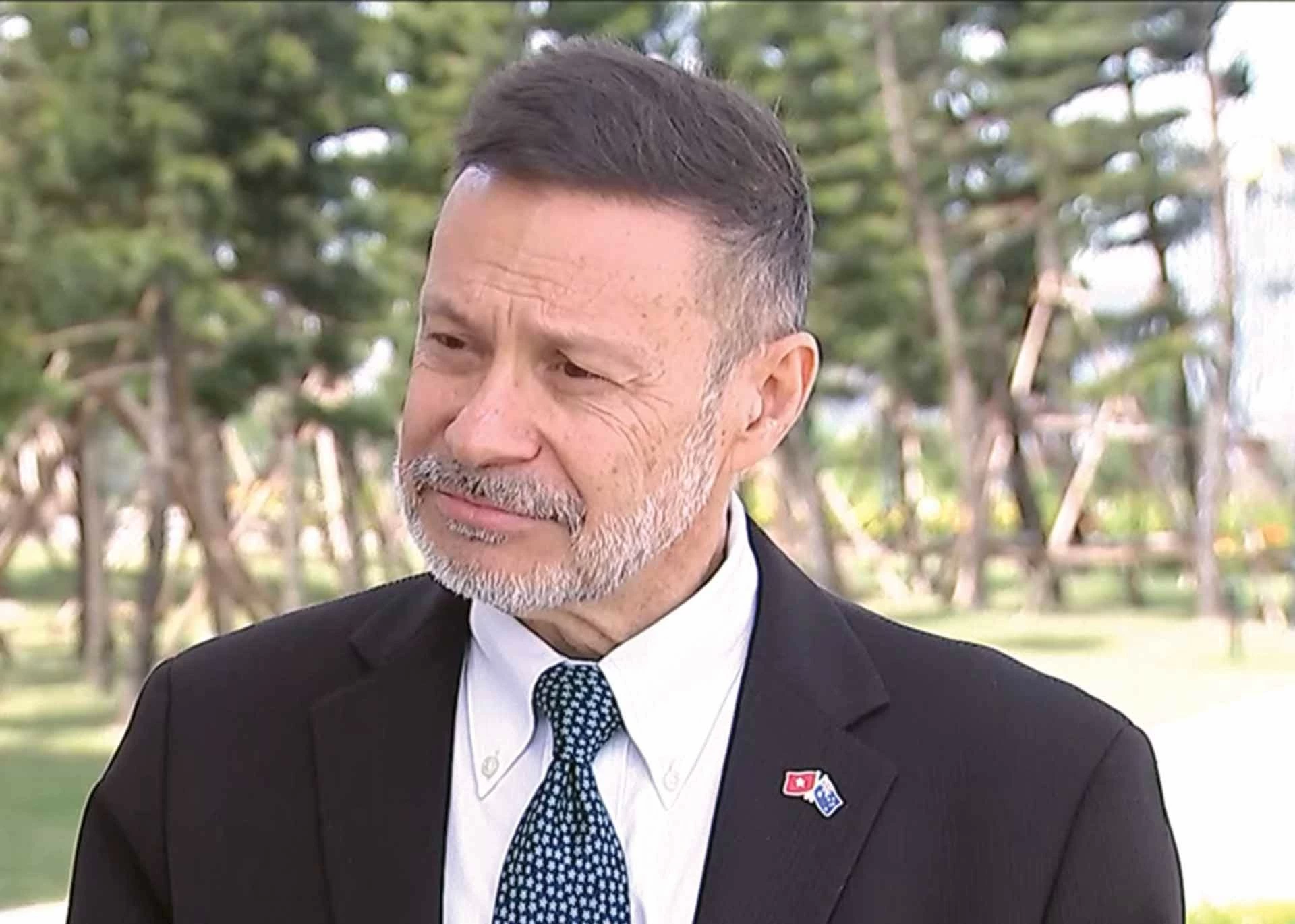 |
| Australian Ambassador Andrew Goledzinowski. |
Ambassador Andrew Goledzinowski highly appreciated Vietnam's efforts as an active member of UNCLOS. "Vietnam is a maritime nation that always supports international law, and its role in promoting the implementation of UNCLOS is very important," the Australian diplomat emphasized.
According to the Ambassador, Vietnam's annual hosting of the International Conference on the South China Sea, which brings together many international scholars and experts, shows that Vietnam not only adheres to the rules of UNCLOS but also aims to become one of the countries contributing to promoting standards in this field. Vietnam's candidate for the position of ITLOS Judge is excellent; this is a very positive and welcome development. All efforts demonstrate that Vietnam is doing very well in its role.
“Just as sailors need a guiding star to find their way, we need established rules and principles to anchor our policies and actions,” quoted Deputy Foreign Minister Do Hung Viet, summarizing the enduring values of UNCLOS. These values will contribute to nurturing aspirations for peace, cooperation, and development in the present and future.
| Speaking at the 16th International Conference on the South China Sea, Deputy Foreign Minister Do Hung Viet stated: “Adherence to widely recognized rules and norms is the foundation of global peace and stability, as it provides a common framework for countries to resolve disputes peacefully and cooperatively. In this regard, I do not see any norms and principles more appropriate for the South China Sea than those enshrined in the United Nations Charter and the United Nations Convention on the Law of the Sea (UNCLOS).” |
Source: https://baoquocte.vn/30-nam-unclos-co-che-song-ben-vung-vuot-thoi-gian-292026.html
































































































Comment (0)