

Chaos, destruction, and confrontations have led to curfews in some areas around the capital. Bus and tram services are disrupted with a nationwide shutdown from 9 p.m., according to CNN .
What's happening in France?
Riots erupted in several major French cities for consecutive nights after a young man named Nahel Merzouk, of Algerian origin, was shot dead by police.
Clashes between police and protesters began on the night of June 27 in the Paris suburb of Nanterre, where Merzouk was shot, and have since spread to areas of the capital and several other cities.
More than 800 people were arrested on the night of June 29, as outrage continued to mount. Merzouk's death became the "last straw" regarding racial inequality in France and allegations of police discrimination.
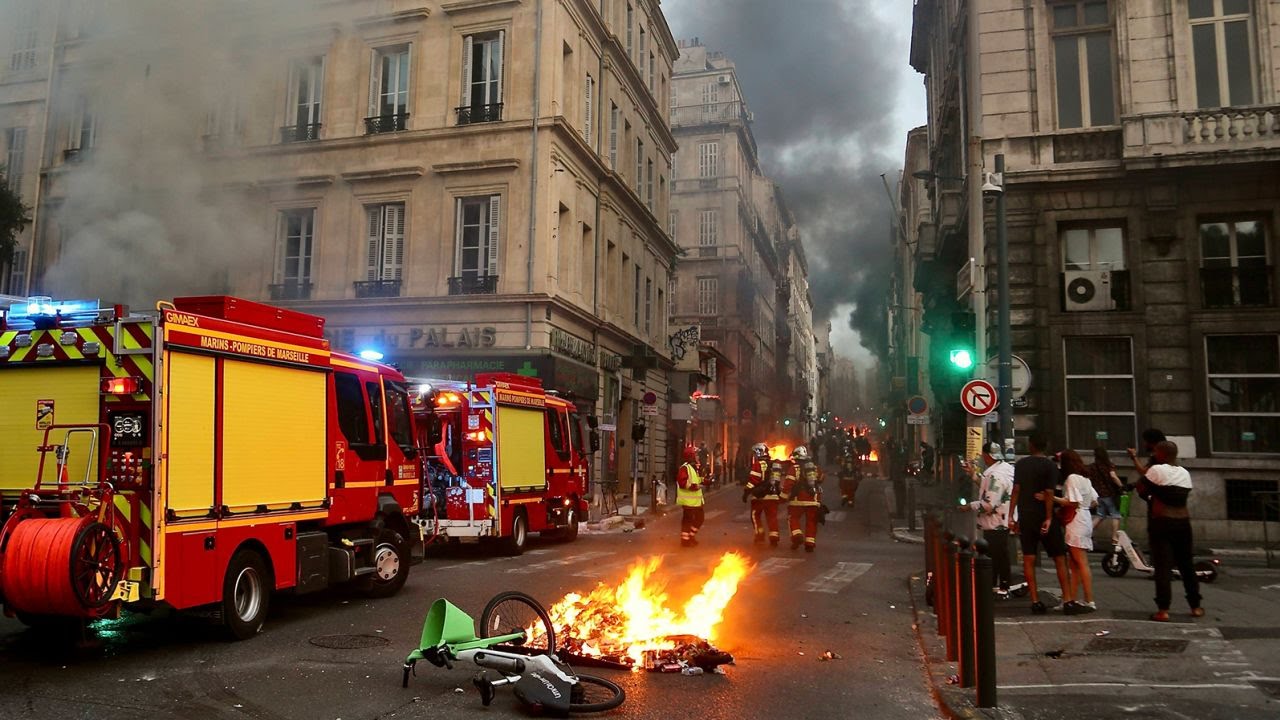
The southern city of Marseille has been hit by the wave of violence sweeping across France.
Buildings, vehicles, and shops were set ablaze amidst the chaos. French President Emmanuel Macron held crisis talks amid fears that the country could repeat the riots of 2005 that led to a state of emergency.
Which cities were affected?
The protests began in Nanterre, a suburb northwest of Paris. This was followed by demonstrations in other areas around the capital: Bezons, Gennevilliers, Garges-lès-Gonesse, Asnières-sur-Seine, Montreuil, Neuilly-sur-Marne, Clamart, and Meudon. Trappes, Clergy, Guyancourt, and Vigneux-sur-Seine were also affected.
They all lie outside the "Periphique" ring road that encircles the central "districts" of Paris, where most of the famous tourist attractions and main residential areas are concentrated.
Elsewhere in France, police have been deployed to the key tourist cities of Marseille and Bordeaux in the south, as well as the northern city of Lille – a stop on the Eurostar train from London and Roubaix.
What about curfews?
Curfews have been imposed in two areas near Paris, the epicenter of the worst of the riots. In Clamart, a curfew from 9 p.m. to 6 a.m. was introduced on Thursday and will continue nightly until July 3. Restrictions from 11 p.m. to 6 a.m. will apply in Neuilly-sur-Marne.
The transport network was severely affected. On Friday, France ordered the suspension of all bus and tram services nationwide before 9 p.m.
It is unclear how long the protests will continue and what measures France will take to address them.
The measure was announced by the Interior Ministry a day after several services in and around Paris were suspended as a direct consequence of the riots, some of which targeted transport infrastructure.
In Clamart, one of the hardest-hit areas, a tram was set on fire, and numerous buses were burned in the Parisian suburb of Aubervilliers.
On Friday, bus services were disrupted in Paris, but the metro system remained operational. However, the Nanterre-Préfecture train station was closed.
In Lille, buses and trams cease operation after 8 pm on Thursday. During the day on Friday, services are more or less normal, with some routes operating.
In the southern city of Marseille, public transport must cease operations at 7 p.m.
There were no disruptions to the Eurostar service connecting London, Lille, and Paris due to the protests. French intercity trains were also unaffected.
It is unclear whether there will be any further outages or disruptions if the protests continue in the coming days, so travelers should check websites for updates before traveling.
Is it safe to travel to Paris?
Much of life in Paris continues as normal. The central areas of Paris, home to the Louvre Museum and the Eiffel Tower, are almost entirely unaffected. The same is true for the rural and coastal areas frequented by tourists.
However, it remains unclear how long the protests will continue and what further measures the French government will take to address them.
Several countries have warned of unrest in France, urging citizens to monitor news and register with travel companies; no country has yet issued a travel advisory for France.
The U.S. State Department issued a security alert on June 29 to France, highlighting the violent consequences of the deadly shooting and warning its citizens to stay away from potential hotspots.
"These protests, along with spontaneous demonstrations, are expected to continue and could turn violent," the agency emphasized.
"American citizens should avoid large gatherings and areas with significant police presence as violence may erupt and clashes may occur. Several cities are imposing curfews. As always, you should inform friends or family of your whereabouts. Note that public transportation is being affected," the warning stated.
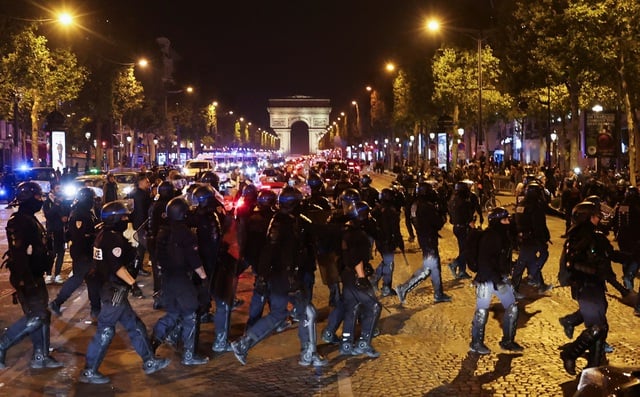
Security forces on the Champs Elysees avenue in Paris on the evening of July 1st.
The UK's Office for Overseas and Commonwealth Affairs also issued a warning but stressed that most trips to France have been uneventful.
"Protests may disrupt travel or target vehicles parked in areas where demonstrations are taking place. You should monitor the media, avoid protests, check the latest advice from travel companies, and follow the advice of authorities," the warning emphasized.
Tourism in France has been affected by the riots.
Chef Thierry Marx said he receives daily warnings from industry professionals who have suffered "attacks, looting and destruction of their businesses, including a number of restaurants and cafes," according to French24 .
"Our facilities are, by their very nature, places of hospitality, and sometimes even shelters and places of assistance in crisis situations. We cannot bear the consequences of anger that we did not provoke, and we condemn such actions," he added.
Marx wanted authorities to do "everything" to ensure the safety of those working in the hotel and food service industries in Paris, the world's most popular tourist destination.
The French Retail Federation (FCD) has also called on police to increase security around stores, CEO Jacques Creyssel said.
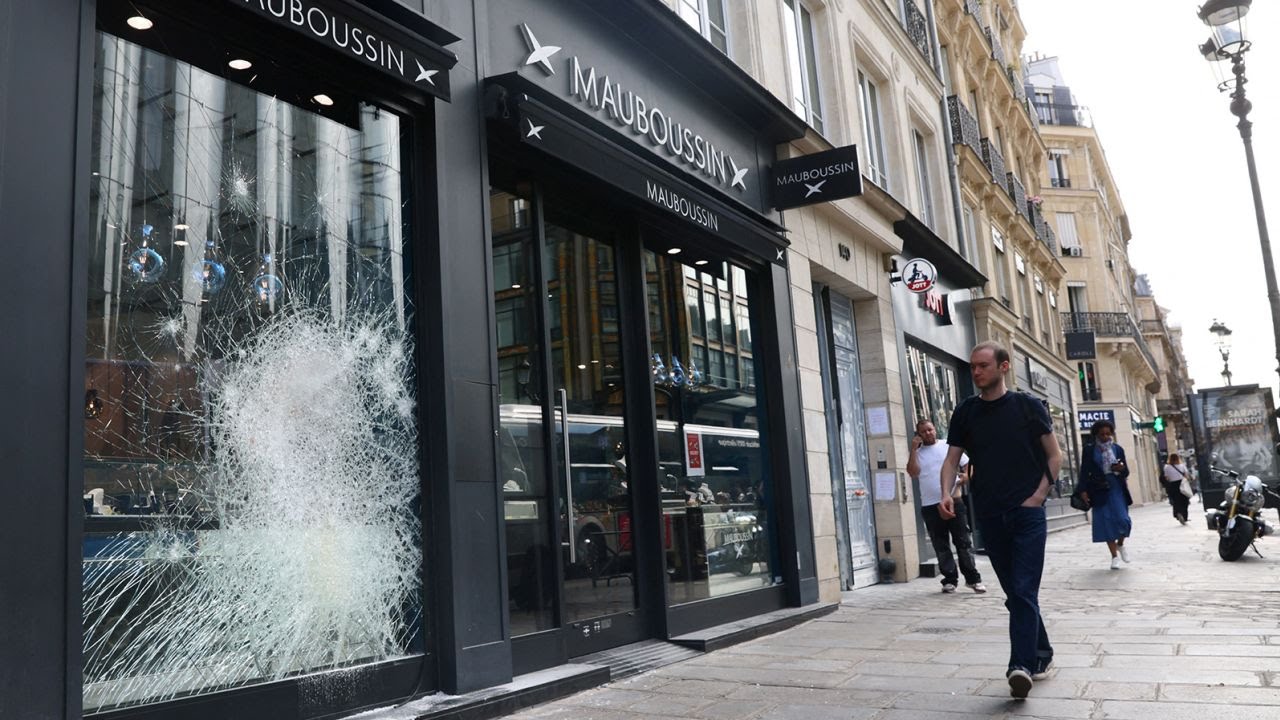
He said the riots "have given rise to scenes of actual looting," with "more than one hundred medium and large food or non-food stores vandalized, looted or even burned."
"Asian tourists are very concerned about security issues and may not hesitate to postpone or cancel their trips," he warned.
Source link

![[Image] Nearly 125,000 Hanoi students completed the Literature exam for the 10th grade entrance exam.](https://vphoto.vietnam.vn/thumb/1200x675/vietnam/resource/IMAGE/2026/05/30/1780117233041_ndo_br_thiet-ke-chua-co-ten-2-png.webp)



































































































Comment (0)