


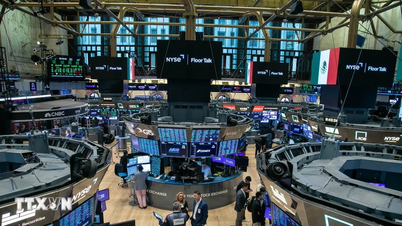
Strong gains in technology stocks and positive signals about a peace deal in the Middle East helped investors dismiss concerns about inflation and the risk of rising interest rates.
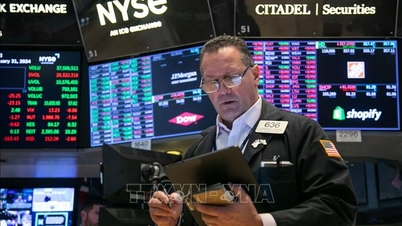
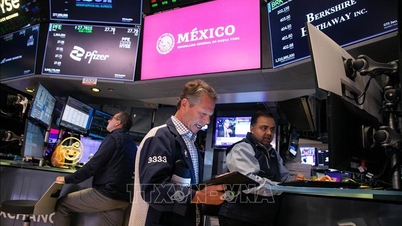
At the close of trading on May 29, the Dow Jones Industrial Average rose 363.37 points (0.72%) to 51,032.34. The S&P 500 advanced 16.44 points (0.22%) to 7,580.07, while the Nasdaq Composite added 55.15 points (0.21%) to 26,972.62.
For the week as a whole, the S&P 500 rose 1.43%, marking its ninth consecutive weekly gain and its longest winning streak since December 2023. The Nasdaq gained 2.39%, the Dow Jones advanced 0.9%, and the Russell 2000 small-cap index added 1.72%.
Looking back at the entire month of May 2026, the S&P 500 rose 5.15%, the Nasdaq jumped 8.36%, and the Dow Jones advanced 2.78%. Year-to-date, the S&P 500 has gained more than 10%, while the Nasdaq has surged 16%.
The main motivations
The biggest driving force behind Wall Street's recent surge has been the boom in technology stocks, particularly those related to artificial intelligence (AI). Dell's positive earnings report at the end of the week further fueled the rally.
Notably, an index tracking the software services sector surged more than 6% this week, erasing any losses since the end of January 2026 – a time when concerns about AI-induced disruption weighed heavily on the sector.
According to Ohsung Kwon, chief equity strategist at Wells Fargo, the market remains buoyant about AI. This upward trend is being driven by solid earnings growth from businesses. Sharing this view, Melissa Brown, head of investment decision research at SimCorp, stated that the sharp increase in trading volume in recent weeks indicates that new capital continues to flow into the market.
Besides technological factors, the hope of ending the three-month-long US-Iran conflict is also a crucial pillar. US President Donald Trump said he would make a final decision on a deal with Iran as early as May 29 (local time), after mediators worked to draft a memorandum of understanding to pave the way for negotiations.
Risks from inflation and interest rates
Despite stock indices continuously reaching new highs, Wall Street is still facing macroeconomic challenges.
Data released on May 28th showed that the Personal Consumption Expenditures (PCE) price index – the Federal Reserve's preferred measure of inflation – rose to 3.8% in April 2026 compared to the same period last year. This is the sharpest increase since May 2023, mainly due to soaring energy prices amid the war. At the same time, the US Gross Domestic Product (GDP) growth for the first quarter of 2026 was revised down to just 1.6%.
Persistent high inflation has forced Fed officials to issue warnings. Kansas City Fed President Jeffrey Schmid suggested the energy shock may be more than just temporary. Vice Chair for Supervision Michelle Bowman also warned that continued inflation could necessitate tighter monetary policy.
Notably, market expectations have shifted completely. Instead of hoping for interest rate cuts, currency traders now forecast that the Fed will keep interest rates unchanged for most of the year and are betting on the possibility of a further 0.25 percentage point rate hike in December 2026.
Outlook for next week
Next week, the market will face crucial tests to determine whether inflation and the risk of rising interest rates will derail the recovery.
Investors' attention will be focused on the May 2026 non-farm payrolls report, scheduled for release on June 5th. According to a Reuters survey, the US economy is expected to add 85,000 jobs with the unemployment rate remaining at 4.3%.
Angelo Kourkafas, global investment strategist at Edward Jones, warns that if the number of new jobs exceeds 150,000, it could cause trouble for the stock market. Overly strong data could fuel concerns about an overheating economy, pushing up US government bond yields and drawing money away from the stock market. In fact, the yield on 10-year US Treasury bonds is currently pegged at a high 4.45%, creating a risk of competing capital flows for the stock market.
Beyond macroeconomic data, the earnings report of semiconductor giant Broadcom on June 3rd will be a major test for AI investment trends. Since hitting a low point in late March, Broadcom's stock has risen more than 50%, contributing to an 80% increase in an index tracking semiconductor stocks.
Upcoming data will be crucial ahead of the Federal Reserve's policy meeting on June 16-17. This will also be the first meeting under the leadership of the new Fed Chairman, Kevin Warsh. The market is holding its breath to see how he will steer US monetary policy amidst rising inflationary pressures.
Source: https://baotintuc.vn/kinh-te/co-phieu-cong-nghe-dua-pho-wall-lap-dinh-bo-qua-rui-ro-lam-phat-20260530153055550.htm





![[Image] Nearly 125,000 Hanoi students completed the Literature exam for the 10th grade entrance exam.](https://vphoto.vietnam.vn/thumb/1200x675/vietnam/resource/IMAGE/2026/05/30/1780117233041_ndo_br_thiet-ke-chua-co-ten-2-png.webp)































































































Comment (0)