

 |
Ngima Tashi Sherpa carries a Malaysian climber during a rescue from the top of Base Camp Four (ECB 4) on Mount Everest, May 18, 2023. Photo: Gelje Sherpa/Reuters . |
More than 30 climbers were trapped on the summit of Everest on May 10, 1996, in a blizzard with winds of 113 km/h and temperatures of minus 40 degrees Celsius. Lacking oxygen and facing harsh weather conditions, they struggled for survival.
However, within 24 hours, the storm claimed the lives of eight climbers, causing one of the most serious disasters in the history of conquering the world's highest peak, according to CNN.
From "death zone" to a multi-million dollar industry.
Everest is both a dream and a terror for mountaineering enthusiasts. A turning point came in 1992 when the New Zealand company Adventure Consultants successfully brought six clients to the summit of Everest and back safely. This success paved the way for numerous other companies to quickly enter the commercial mountaineering market.
Guy Cotter, CEO of Adventure Consultants and also a guide on that historic expedition, recalls: “We had no idea how big this industry would grow. Back then, we didn’t even think of it as an industry.”
Four years later, in May 1996, Adventure Consultants was one of three climbing teams from the Nepalese side on their way to the summit when a sudden snowstorm struck. The climbers, guides, and Sherpas (local people who assist with Everest climbs) were trapped on the treacherous slopes within the "death zone"—where oxygen levels are so low that the human body cannot function properly for extended periods.
According to experts, the cause of the incident stemmed not only from harsh weather conditions but also from organizational errors in the climbing effort, delays in securing the ropes, and congestion near the summit.
Since this disaster, the Everest climbing industry has changed significantly. Companies are coordinating more closely in securing climbing ropes, setting up oxygen supply points, increasing medical personnel, and tightening regulations on turnaround times.
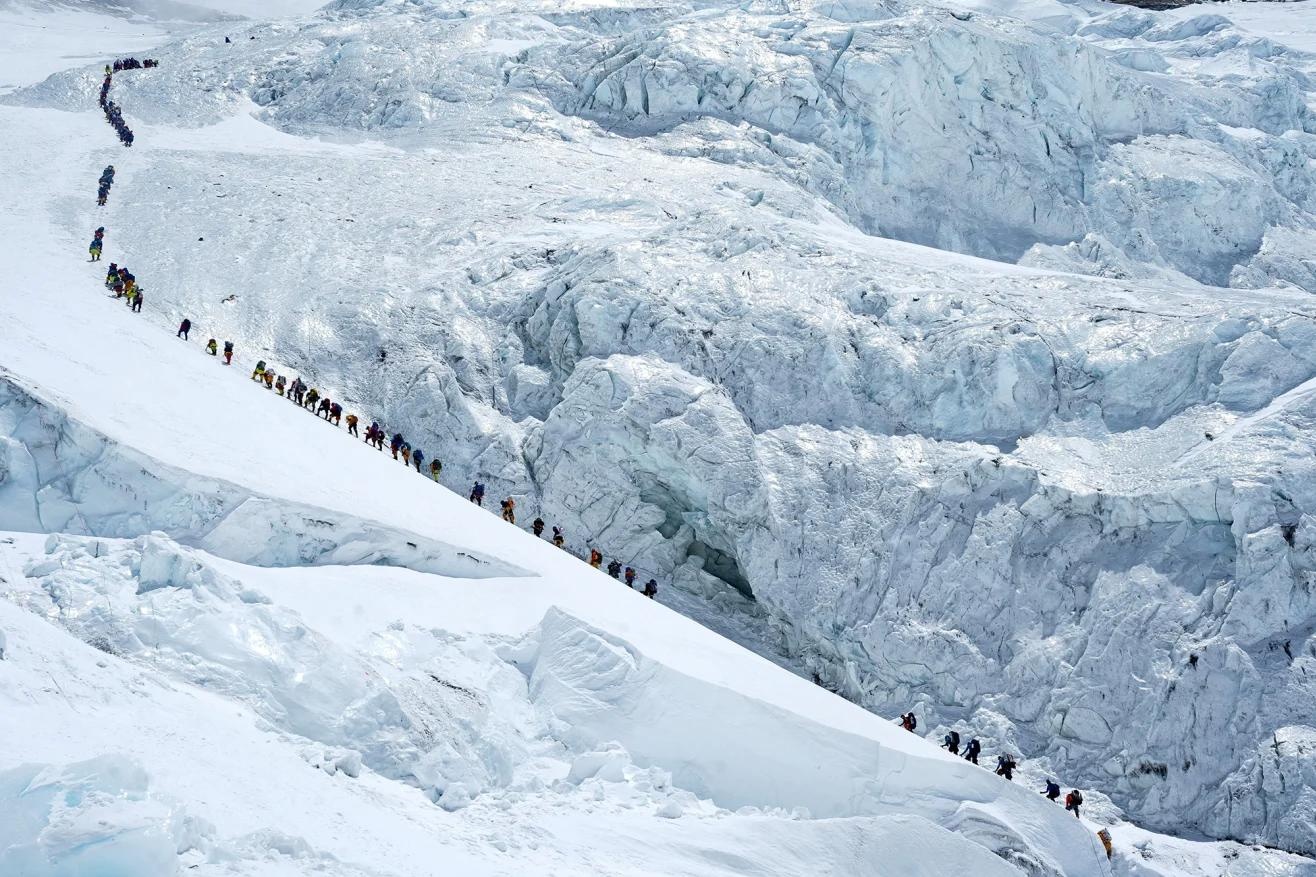 |
Mountaineers walk in formation on their way to conquering Mount Everest, May 18. Photo: Purnima Shrestha/Reuters. |
In particular, advances in weather forecasting technology have helped organizers accurately identify the favorable "weather window" for reaching the summit.
According to Will Cockrell, author of Everest Inc.: The Renegades and Rogues Who Built an Industry at the Top of the World, modern predictive models have evolved to the point where a disaster similar to 1996 is almost impossible to repeat.
In addition, drones are expected to become important rescue tools in the future, as they can transport goods, navigate, and assist in search and rescue operations in hazardous areas.
"That was the moment the commercial climbing industry truly matured," he said.
Humans are the greatest threat.
Following the first ascent by Tenzing Norgay and Edmund Hillary in 1953, it took more than 30 years, until 1989, for 270 people to reach the summit of Everest.
However, in just one day of this year's climbing season, 274 people accomplished this feat, setting a new record.
Following the 1996 disaster, weather forecasting technology, satellite communication systems, GPS navigation, and rescue capabilities have significantly reduced the risks on Everest. However, according to veteran guides, the greatest threat today is not the unpredictable snowstorms, but the boom in commercial climbing.
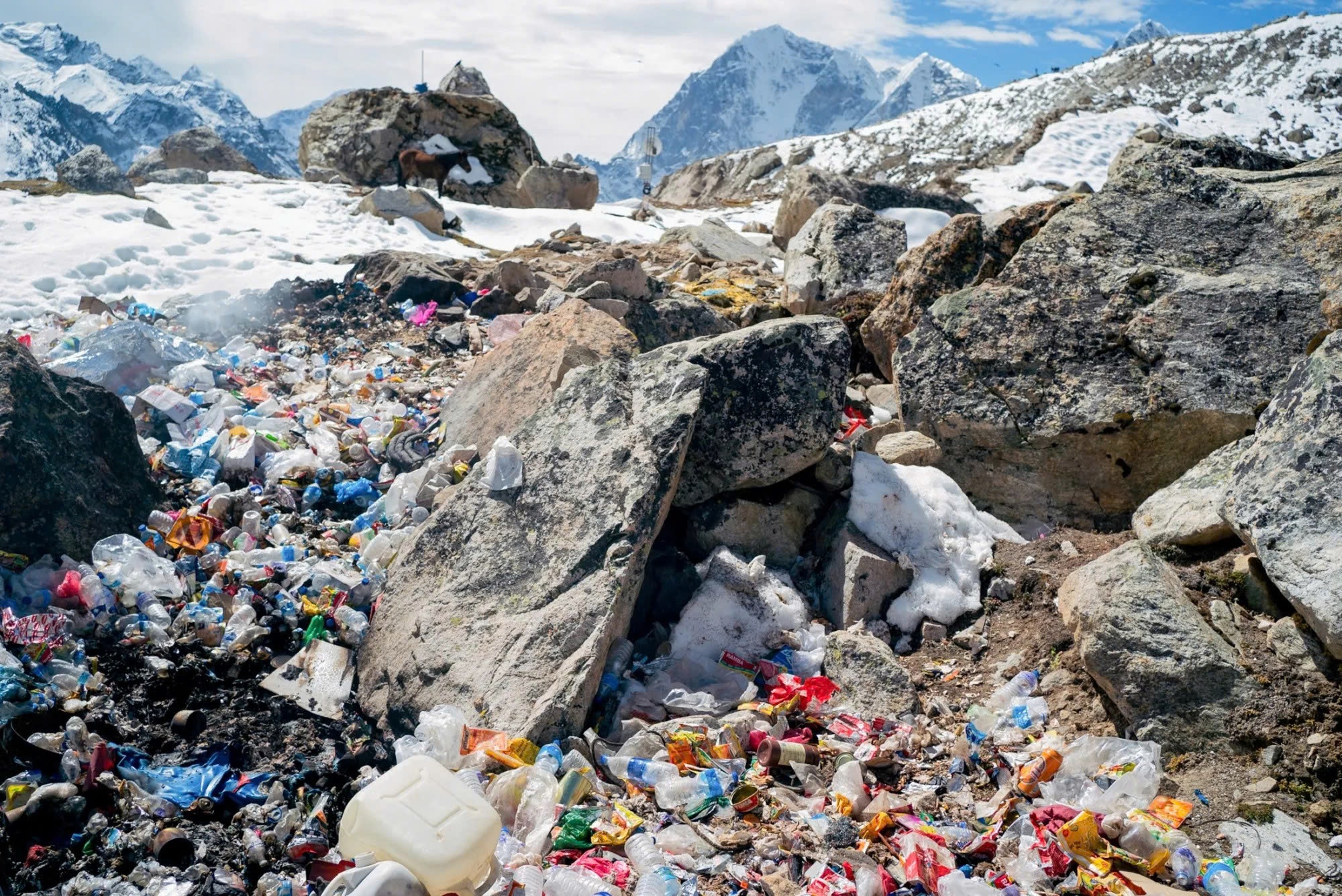 |
Plastic waste is left behind at a landfill 3.5 km from the main Everest base camp, in the Sagarmatha region (Nepal), October 2024. Photo: Mailee Osten-Tan. |
According to the Himalayan Database, 344 people have died on Everest since records began in the 1920s.
By the end of 2025, more than 7,560 people will have reached the summit of Everest, with nearly 14,000 recorded ascents. The increasing number of climbers means a greater need for supplies, generating more waste and placing greater pressure on guides, porters, and support staff.
"Some groups have up to 60 customers, which puts a lot more pressure on those traveling in the mountains and leads to more fatalities," Cotter said.
Gelje Sherpa, co-founder of the expedition company AGA Adventures, said that congestion can force climbers to wait for hours in severely oxygen-deficient conditions, increasing the risk of frostbite and impaired brain function. Five oxygen tanks are more than enough. But sometimes, due to congestion, you get stuck there for too long and run out of oxygen. Then they can no longer descend the mountain.
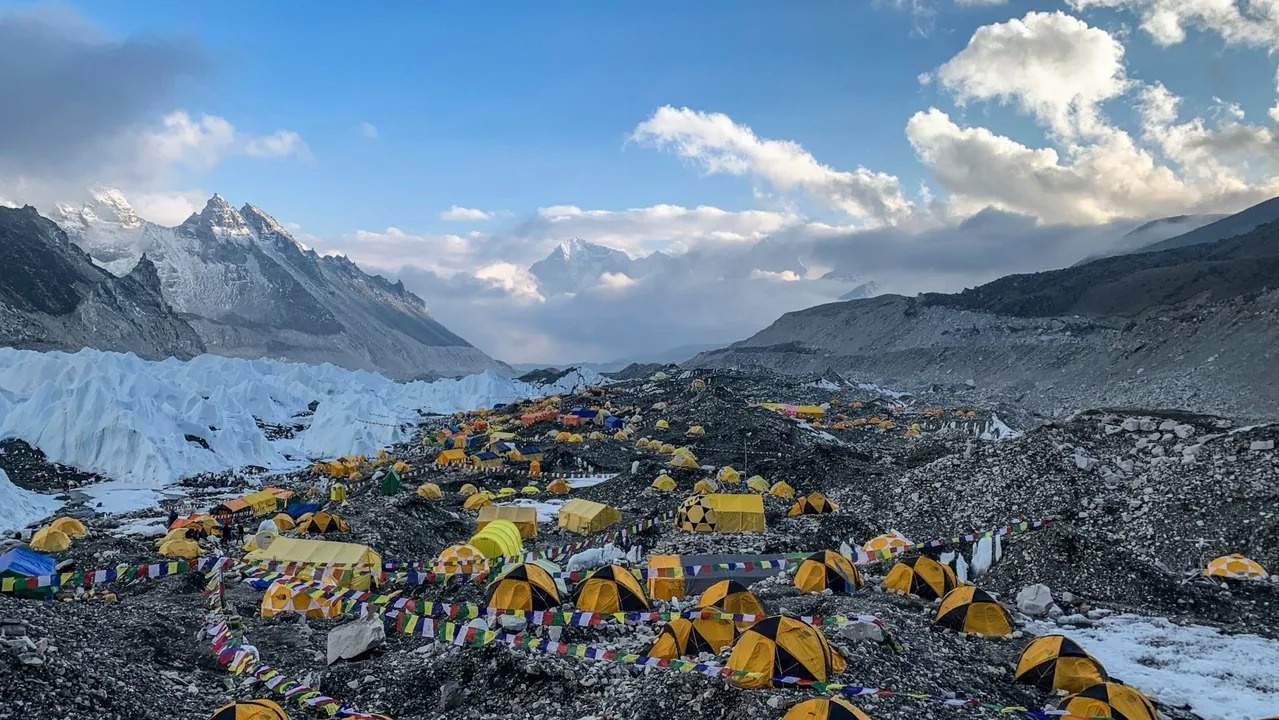 |
The Everest Base Camp in Nepal is a stopover point for explorers attempting to conquer the world's highest peak. Photo: Alex Tait. |
However, many experts believe that Everest can still withstand the current number of climbers. The problem lies with inexperienced climbers and incompetent organizing bodies.
"People were told they didn't even need to know how to climb; we would teach them along the way. But the instructors didn't know how to train," Cotter said.
However, Gelje believes they still face more risks than anyone else on the mountain. Climate change is making the Khumbu Icefall, the most dangerous glacier on Everest, increasingly unstable. "The Khumbu Icefall is becoming more dangerous every year," he warned.
Despite controversies surrounding commercialization, overcrowding, and recurring accidents, Everest remains a symbol of human ambition to conquer the limits of human capabilities.
"Standing atop the world's highest mountain remains one of the greatest adventures a human being can experience," Cotter said.
Source: https://znews.vn/con-nguoi-thanh-moi-de-doa-tren-dinh-everest-post1656096.html



![[Photo] General Secretary and President To Lam presides over a meeting on preparations for the review of one year of operation of the three-tiered government system.](https://vphoto.vietnam.vn/thumb/1200x675/vietnam/resource/IMAGE/2026/06/02/1780391821195_a1-bnd-4595-9717-jpg.webp)

















































































Comment (0)