

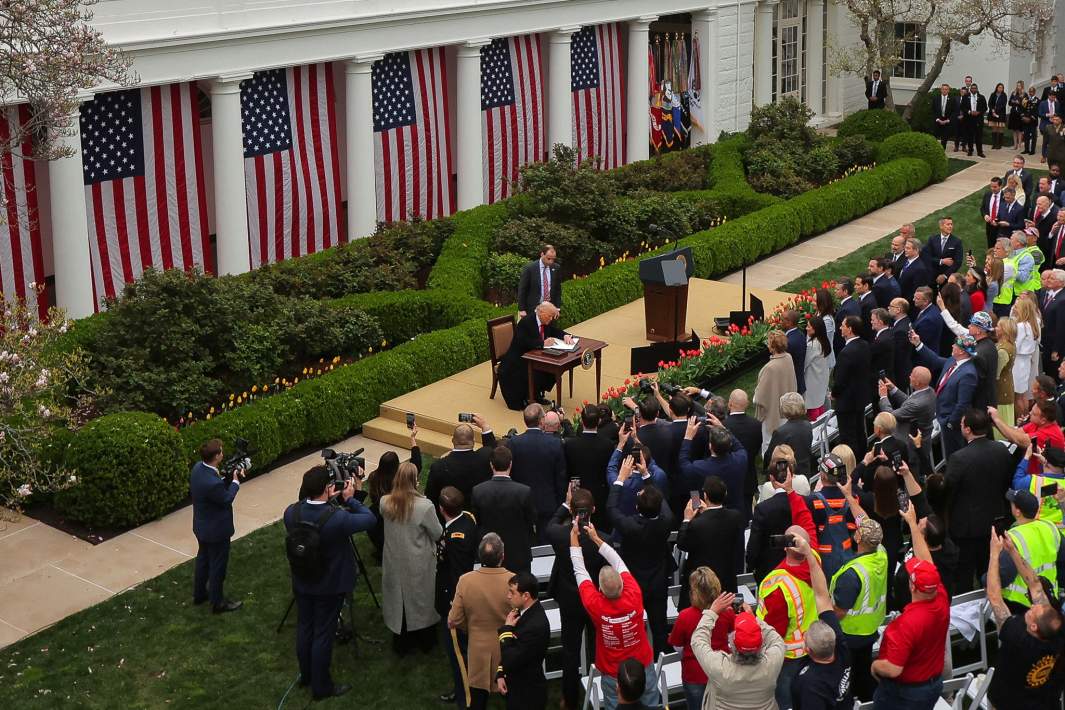
The US is gradually increasing retaliatory tariffs on China.
On April 2, U.S. President Donald Trump imposed retaliatory tariffs on all goods imported into the United States. A base tariff rate of 10% was applied to all countries, but higher and differentiated tariffs were applied to countries with the largest negative trade balances with the U.S. China faced the highest tariff rate, reaching 54%. Of the existing 20% tariff, a further 34% tariff was added as part of the “retaliatory measures.”
At the end of President Donald Trump's first term, the average US tariff on Chinese goods was 12%, so after the new measures take effect, the average US tariff on Chinese goods will reach approximately 66%.
However, this is not the final figure in the escalating US-China trade war. On April 8th, the US officially implemented a new series of tariffs on imported goods from 86 countries, with China bearing the heaviest burden: a total of 104%. This tariff includes three parts: 20% already applied, an additional 34%, and a shocking 50% increase signed into law at the last minute on April 8th.
Explaining President Trump's tariff policy, Bai Wenxi, a leading economist at China Enterprise Capital Alliance, stated that the current US strategy toward China comprises three components: tariffs, technological containment, and financial containment. For example, the increased tariffs on Chinese solar panels and polysilicon (up to 50%) are directly aimed at China's leading position in clean energy. Simultaneously, through controls on chip exports and tight monetary policy, the US aims to force concessions from China.
The US also extended the concept of "symmetry" to non-tariff measures: it accused China's VAT system of creating an "unfair advantage" that undermines WTO principles. According to Bai Wenxi, this is an attempt to push China out of the new cycle of globalization and pull the value chain toward the US. The potential tariffs of up to 104% on Chinese goods once again demonstrate President Trump's use of tariffs as a key tool in his trade policy, particularly with China.
And recently, in a surprising move, on April 10th, US President Donald Trump announced he would temporarily suspend retaliatory tariffs for 90 days, while increasing tariffs on Chinese goods to 125%.
Reaction from Beijing
China was seen as the first country to retaliate against President Trump's reciprocal tariff policy. On the morning of April 3rd, a representative from the Chinese Ministry of Commerce described the US action as "a typical unilateral coercive policy," emphasizing that it goes against multilateral trade principles. On the same day, Chinese Foreign Ministry spokesperson Guo Jiakun criticized the new US tariffs as "a serious violation of WTO rules" and said they would cause immeasurable damage to the multilateral trading system.
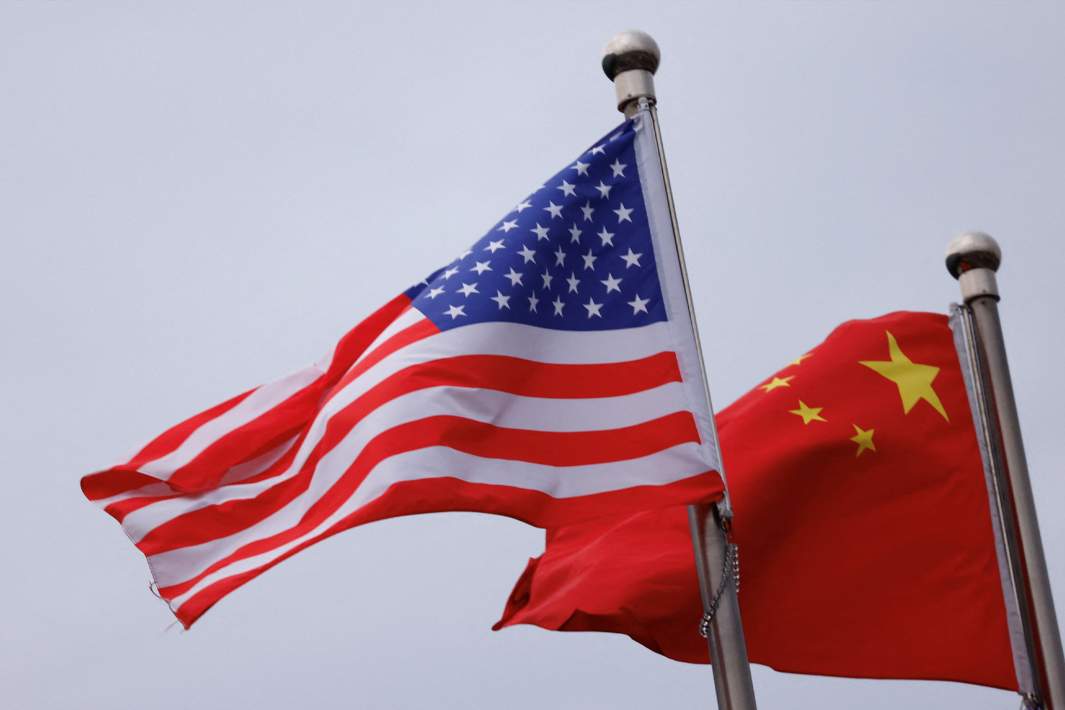
According to an official statement from the Chinese Ministry of Finance on April 4, the Tariff Commission of the State Council issued a notice on the application of additional tariffs on goods imported from the United States. Effective April 10, 2025, China will apply an additional 34% tariff on top of the existing tariff on all goods imported from the United States. Existing related-party transaction regimes and preferential tariffs will remain in place, but will not be applied when the additional tariffs officially take effect on April 10. In addition, the Chinese Ministry of Commerce and the General Administration of Customs have issued six additional measures: (1) Adding 11 US companies to the list of unreliable entities; (2) Adding 16 US companies to the list of entities subject to export controls; (3) Suspending access to the Chinese market for products of 6 US companies; (4) Conduct an anti-dumping investigation into medical tubing for CT scanners imported from the United States; (5) Apply export restrictions on certain items related to heavy rare earth elements; (6) File a complaint against the US reciprocal tariff policy with the WTO.
On April 9th, China's Ministry of Finance announced it would impose an 84% tariff on imported goods from the United States, an increase from the previously announced 34%. The decision took effect on April 10th. China stated it would take "resolute and effective measures" to protect its rights and interests, following President Trump's official imposition of a 104% tariff on Chinese imports on April 9th.
Until April 2025, China had implemented several retaliatory measures against US tariffs, but it maintained restraint, hoping the situation would cool down and negotiations could begin to resolve the trade disputes. Beijing used asymmetrical and selective measures, targeting agricultural products, energy goods, and goods heavily reliant on imports from China to the US. However, President Trump's decision in April forced Beijing to change its approach.
This time, China is employing a tough response, reflecting almost the entire structure of the US measures. The symmetry here is not just quantitative, but more importantly qualitative. China will use tools that demonstrate its ability to inflict long-term economic damage on the US (especially in the areas of rare metals and rare earths, strategic exports, and pressure on US multinational corporations). This response demonstrates Beijing's determination to protect its national security and technological sovereignty, as well as its willingness to retaliate against US tariff policies despite the potential for profound impacts on Chinese economic growth.
The spiral of a new trade war.
The new wave of tariffs has escalated in both scope and depth. Unlike previous measures targeting individual countries or sectors, the US reciprocal tariff policy will encompass global trade. Furthermore, the additional tariffs imposed on China are among the highest of those applied to affected countries. This move by the US clearly demonstrates not only a desire to balance the trade deficit, but also a deeper strategy – to encourage manufacturing to return to US territory and limit China's ability to maintain key positions in the global production chain.
In response, China also employed a completely symmetrical tariff pressure tactic for the first time, viewing it as a fair and balanced response from a major power. According to China, it was time to set limits because the US had crossed the line of conventional pressure tactics. Beijing's response demonstrated a significant shift in strategy: China was prepared for a balanced confrontation; at the same time, it kept the door open for de-escalation and de-escalation should Washington abandon its hardline approach.
Experience from the US-China trade war during President Trump's first term shows that measures will be difficult to reverse the bilateral trade situation, even if the two countries negotiate and reach a compromise in the future. The previous agreement (Phase 1 trade deal), signed in January 2020, only resulted in partial changes to the tariffs that the US imposed on China in 2018 and 2019, in exchange for China's commitment to purchase more than $200 billion worth of US goods. Most of the tariffs on Chinese goods remained in place and were in effect during President Joe Biden's subsequent term.
Therefore, recent drastic actions suggest that the US and China may be spiraling into a new trade war, with a complete and irreversible decoupling of their economies. The global economy will also face new shocks: slowing growth, disrupted supply chains, impacted financial markets, and forced changes in trade policies for many countries.
Hung Anh (Contributor)
Source: https://baothanhhoa.vn/con-song-than-thue-quan-giua-my-va-trung-quoc-nbsp-245116.htm














![[E-Magazine]: A Smile in the Mist](https://vphoto.vietnam.vn/thumb/402x226/vietnam/resource/IMAGE/2026/01/09/1767966303539_e-magazine-nu-c-w1200t0-di2601d199d5141507t11920l1-nctsm-155.webp)






























































Comment (0)