

At the "Shanghai (China) Academic Exchange on Divination Studies" conference, held from December 28-30, 2025, the topic of applying Qimen Dunjia in business management attracted particular attention from the international academic community.
In the context of a volatile global economy , the search for a capable "strategic advisor" to assist leaders in optimizing decision-making is no longer confined to traditional Western management tools but is expanding to include ancient Eastern wisdom systems.
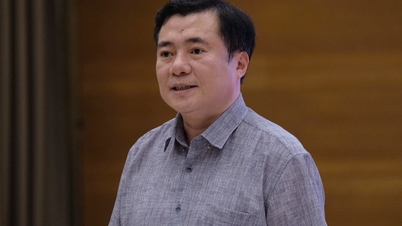
Making a significant contribution to this academic stream, Master's student and PhD candidate in Economic Management Nguyen Trong Manh – founder of Dai Nam Feng Shui, and recently appointed Vice President of the Shanghai International Association of Divination Studies – has offered a practical and modern perspective on applying Qi Men Dun Jia to real-world operations.

According to him, every brilliant CEO, no matter how outstanding their personal abilities, always needs a system to illuminate the "blind spots" in management. By combining leadership intelligence with the unique "Heaven - Earth - Man" algorithm of Qimen Dunjia, managers will possess a universal lens to identify opportunities, knowing when to advance when the time is right, when to defend when the location is favorable, and when the human element is harmonious.
The core difference in Feng Shui master Nguyen Trong Manh's thinking lies in his approach to freeing Qi Men Dun Jia from the preconceived notion of it as a "predictive" tool. Instead, he defines it as a probabilistic map that helps managers identify risks and bottlenecks. Within the business ecosystem, Qi Men Dun Jia does not replace "hard" management tools such as legal, financial, or strategic approaches, but rather acts as a "soft" tool to minimize errors and select the optimal time to act during crucial periods.
To ensure its practical application, expert Nguyen Trong Manh particularly emphasizes the principle of "defining first – using the right tools later." He argues that a common mistake today is setting up a strategy without clearly identifying the core issue. Before applying Qimen Dunjia, leaders need to clarify specific goals, accurately identify pain points in finance, human resources, or legal matters, and clearly define the metrics for measuring success. Only when the right management categories are "locked in" can Qimen Dunjia unleash its value as a strategic thinking support system, instead of relying on unfounded speculation.

In particular, the theory of "Four Harms" in Qimen Dunjia has been creatively linked by Dai Nam Feng Shui to the stagnant states of modern businesses. Concepts such as Void, Tomb Entry, Striking Form, or Gate Blocking are no longer abstract terms, but are understood as "fuses" in the operating system.
This could be due to the company not being adequately prepared to implement the plan, inflexibility in the operational structure, potential internal conflicts, or barriers from the business environment. Identifying these "fuses" correctly helps CEOs prevent system overload and breakdowns before pushing forward with growth objectives.
Facing the challenges of the artificial intelligence (AI) era, the Vice President of the Shanghai International Association of Divination Studies affirmed that the enduring value of Qimen Dunjia lies not in simply predicting the future. Its strength lies in its system of thinking about the laws of change, balance, and profound risk mitigation capabilities.
"This is a crucial foundation that helps leaders maintain vigilance and foresight, enabling them to make cautious yet groundbreaking decisions amidst the pressures of speed and technology. The combination of classical knowledge and modern management science not only helps businesses optimize resources but also contributes to protecting the prosperity and position of Vietnamese businesses in the global digital commerce space," the expert emphasized.
Source: https://doanhnghiepvn.vn/cong-nghe/cong-cu-quan-tri-giup-ceo-nhan-dien-diem-mu-trong-quan-tri/20260108011629038
![[Photo] Secretary of the National Assembly Party Committee, Chairman of the National Assembly presides over the meeting of the Standing Committee and Executive Committee of the National Assembly Party Committee.](https://vphoto.vietnam.vn/thumb/1200x675/vietnam/resource/IMAGE/2026/06/03/1780480353201_ndo_br_bnd-2585-jpg.webp)




![[Photo] General Secretary and President To Lam presides over a meeting with the Central Organizing Committee.](https://vphoto.vietnam.vn/thumb/1200x675/vietnam/resource/IMAGE/2026/06/03/1780482764658_a1-bnd-4741-3342-jpg.webp)






































![[Video] Sunset at Lap An Lagoon – Where the sun sets over the fishing nets](https://vphoto.vietnam.vn/thumb/1200x675/vietnam/resource/IMAGE/2026/05/31/1780192137701_beach-landscape-sea-water-nature-grass-745871-pxhere-com.jpeg)







![[Photo] General Secretary and President To Lam attends the 14th Congress of the Vietnam Trade Union](https://vphoto.vietnam.vn/thumb/402x226/vietnam/resource/IMAGE/2026/06/04/1780543339765_anh-man-hinh-2026-06-04-luc-10-22-07.png)



















Comment (0)