

 |
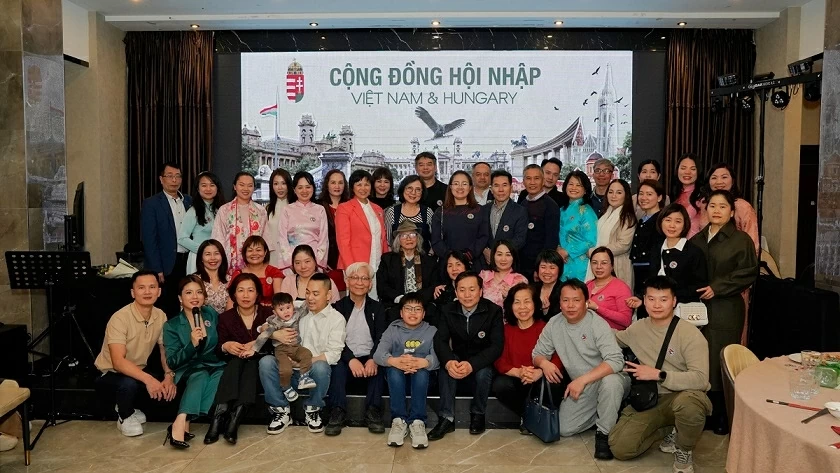
| The Vietnamese and Hungarian Integration Community held a meeting. (Photo courtesy of the interviewee) |
Recently, in a cozy setting in Budapest, approximately 140 Vietnamese people gathered to socialize and reflect on their long and challenging yet meaningful journey of integration as expatriates.
Extraordinary classes in everyday life
The Vietnam & Hungary Integration Community is the collective name of an integration learning group that started over 15 years ago, aiming to help members prepare for the Hungarian citizenship test. Over time, the community has grown to include more members studying Hungarian at a basic level and preparing for the cultural test with the goal of applying for permanent residency in Hungary.
Mr. Nguyen Hoang Linh, the group leader and also the instructor for the courses, said that the Vietnamese community in Hungary was established in the early 1990s, with most of the pioneers being former students and researchers who stayed to build their careers after completing their studies. Over time, the community has expanded in size with the participation of those who came seeking livelihood opportunities, mainly in the business sector.
From small markets and shops, the people gradually established and stabilized their economic situation . But as their material lives became less difficult, a big question began to emerge: How to truly integrate into the local society?
According to Hungary's Citizenship Act of 1993, foreigners wishing to become citizens must pass an examination on their knowledge of the constitution, history, culture, and laws of the host country.
This presented numerous challenges. For many who had been out of school for a long time, relearning everything from the language to fundamental knowledge was a major obstacle. But it was precisely from this that a learning movement was formed. According to Mr. Linh, the first classes were organized, although they did not meet the standards in the conventional sense. They might have been a small room in a market, with makeshift tables and chairs, and students of all ages, from young people to those in their 50s and 60s, studying Hungarian, its history, and politics . Some students had to balance studying with their businesses.
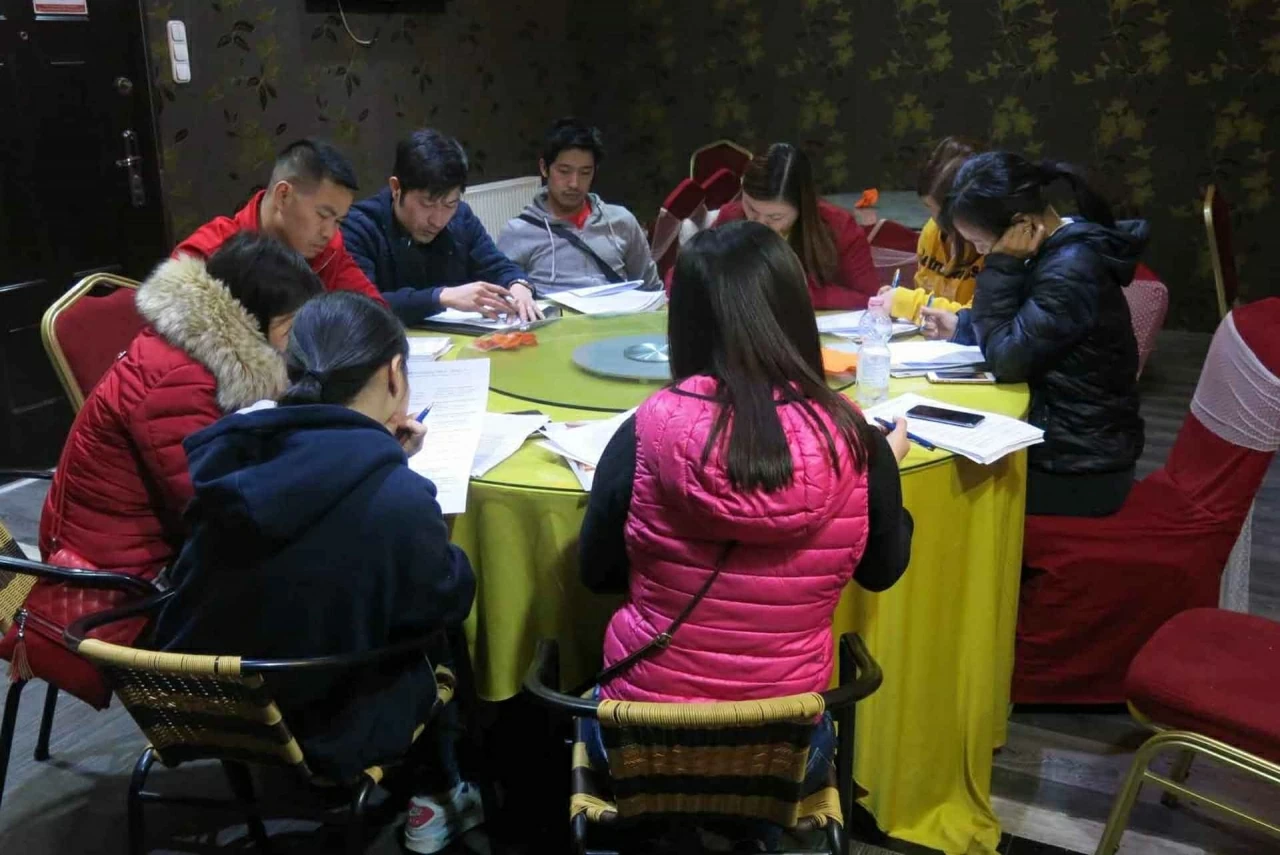 |
| Vietnamese people attend a class to take the Hungarian citizenship test. (Photo courtesy of the interviewee) |
In Mr. Linh's memory, those difficult days were truly memorable. That space became a place that commemorated the persistent efforts of many people. Among them were those who started with almost no prior knowledge, but persevered and answered all 40 questions of the citizenship test.
According to Mr. Linh, the most important thing is not the certificate. Many people, after passing the exam and becoming Hungarian citizens, still return to the class to share their experiences with the next generation, thus continuing to extend the bond of the community.
Based on his direct experience with hundreds of trainees, Mr. Nguyen Hoang Linh believes that integration has no limits. A clear sign of change is in the daily life of the community. Previously, in the markets, people mainly talked about business; now, they begin discussing Hungarian current events, elections, and social issues. It is through these small changes that a community gradually transforms from "living in" to "living alongside" the host society.
Beyond just classes, the Vietnam & Hungary Integration Community emerged as a unique form of connection, attracting an increasing number of members.
Integrate but do not assimilate.
Besides studying and integrating into society, the Vietnamese community in Hungary actively participates in activities focused on their homeland and preserving traditional cultural values.
At a recent gathering, popular Hungarian songs like "Hazám, hazám" and "A Csitári hegyek alatt," along with many activities steeped in Vietnamese culture such as folk games and a traditional New Year's bingo game, created a lively and unifying atmosphere.
The intermingling of the two cultures is not a process of assimilation, but rather a resonance, where each person learns to be a part of Hungarian society while preserving their Vietnamese identity.
At Hungarian citizenship ceremonies, the authorities always remind naturalized citizens not to forget their roots once they have become part of the country. Perhaps this is also the general spirit of the Vietnamese community in Hungary today. For them, integration does not mean losing their identity, but enriching it in a new environment. That journey does not end when they receive citizenship, but continues in every day of their lives, in every relationship, and in every choice they make.
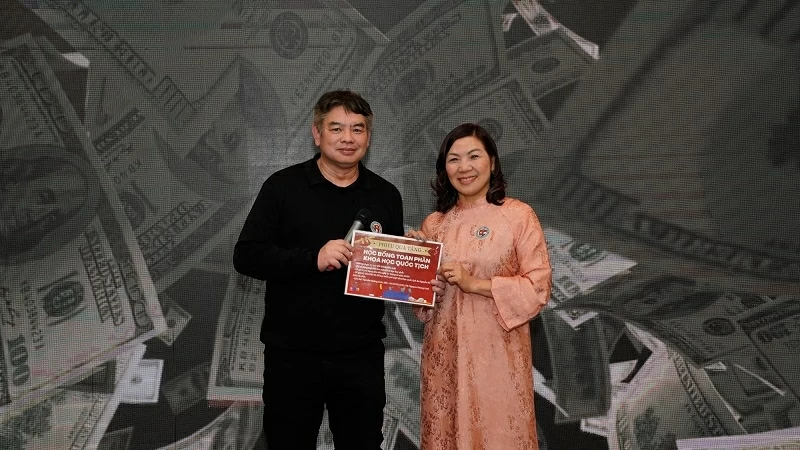 |
| Group leader Nguyen Hoang Linh presents a full scholarship for a citizenship course to a member. (Photo courtesy of the group) |
Mr. Nguyen Hoang Linh also said that former students shared that amidst the "sea" of information from the course, not all knowledge remains intact over time. But what remains more profoundly is the spirit of learning and the expansion of understanding.
The value gained lies not only in the certificate, but also in a deeper understanding of Hungary, its people, and how its society functions. As a result, many members have proactively participated in activities they previously found unfamiliar, such as following and discussing elections, connecting with the local press, and showing more interest in life in their host country.
These efforts gradually gained recognition when the activities of the "Nationality Group - Understanding Hungary" appeared in the local media, showcasing the academic achievements and integration stories of the Vietnamese community and their citizenship. Based on this foundation, the members believe that, as citizens of Hungary, they can make more practical contributions to both their homelands.
This direction also aligns with Hungary's desire to gradually recognize the Hungarian-Vietnamese community as a national minority, thereby facilitating sustainable integration and promoting their role as a bridge between the two countries.
The journey has no end.
Looking back on the journey so far, Group Leader Nguyen Hoang Linh believes that the Vietnamese community in Hungary has come a long way. From focusing solely on making a living, to prioritizing education , and then to integration, it has been a challenging journey. However, according to him, this journey is far from over, because integration is a long process, and each day brings new learning experiences.
Mr. Linh hopes that the Vietnamese community in Hungary can integrate more deeply, not only in economics or education, but also in local social and political life.
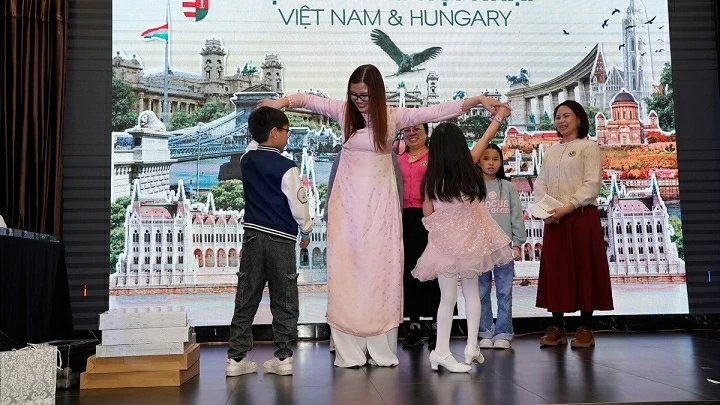 |
| Exchange activities between the Vietnam-Hungary Integration Community. (Photo courtesy of the interviewee) |
Vietnamese Ambassador to Hungary Bui Le Thai highly appreciated the determination of the Vietnam-Hungary Integration Community in encouraging Vietnamese people to learn Hungarian, explore local culture, and actively integrate into the host society.
The Ambassador also acknowledged and appreciated the role of Group Leader Nguyen Hoang Linh and the members in contributing to enhancing understanding, strengthening cohesion, and supporting the community's increasing integration into Hungarian society, while preserving and promoting the positive values of the Vietnamese community abroad.
Source: https://baoquocte.vn/cong-dong-hoi-nhap-cua-nguoi-viet-tai-hungary-389793.html
![[Image] Nearly 125,000 Hanoi students completed the Literature exam for the 10th grade entrance exam.](https://vphoto.vietnam.vn/thumb/1200x675/vietnam/resource/IMAGE/2026/05/30/1780117233041_ndo_br_thiet-ke-chua-co-ten-2-png.webp)













































































Comment (0)