

This was emphasized by Prime Minister Le Minh Hung - Head of the Government Steering Committee on Science , Technology, Innovation, Digital Transformation and Project 06 - at the third meeting of the Steering Committee in 2026.
In recent years, science, technology, and national digital transformation have been issues of particular concern to the Party and State of Vietnam. Many policies, laws, and resolutions have been issued promptly, along with preferential and specific mechanisms and policies to create leverage for the development of this sector. Numerous domestic industrial enterprises have gradually participated in high value-added fields, such as the Military Telecommunications and Industry Group (Viettel), a pioneer in telecommunications networks and information security solutions; andFPT Group, a global technology group, notable for FPT Software and AI platforms like FPT AI. Alongside this, many foreign corporations and businesses have chosen Vietnam as a destination for their science and technology operations. These include global technology corporations such as Samsung, LG, and Intel, which have established chip and electronics manufacturing plants or large-scale Research and Development (R&D) centers in Vietnam.
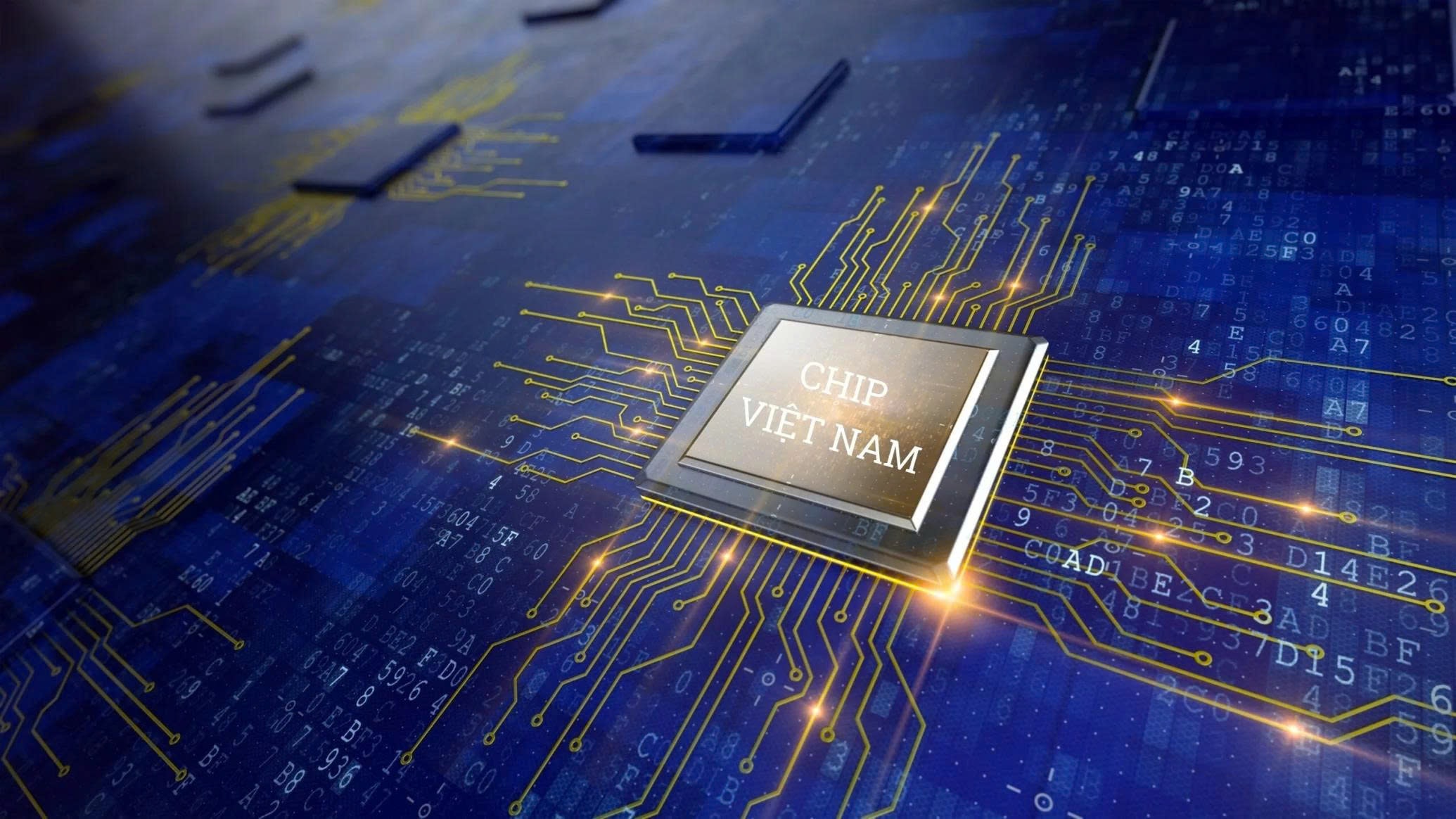
Recognizing the importance of science, technology, and innovation, especially strategic technologies, one of the key tasks identified by the Party during the 14th National Congress was to focus on implementing breakthroughs in science, technology, innovation, and digital transformation, creating a foundation for the development of new, modern productive forces, prioritizing the development of several strategic industries and technologies, with a focus on semiconductor chips and artificial intelligence.
Recently, the Prime Minister issued the List of Strategic Technologies and the List of Strategic Technology Products. Accordingly, Vietnam has 10 strategic technology groups including: Digital technologies (artificial intelligence, big data, digital mirroring, cloud computing, edge computing, Internet of Things and blockchain); Next-generation mobile network technologies; Robotics and automation technologies; Advanced biotechnology and biomedical technologies; Advanced energy and materials technologies; Semiconductor chip technologies; Cybersecurity and quantum technologies; Marine, ocean and subsurface technologies; Aerospace technologies; High-speed rail and urban rail technologies. Along with these, there are 30 groups of strategic technology products.
Clearly defining the Strategic Technology Portfolio and the Strategic Technology Product Portfolio will help to focus the deployment, investment, and resource allocation in this field, avoiding inefficient and scattered investments.
In the Resolution of the First Session of the 16th National Assembly, the National Assembly also requested the effective implementation of the National Assembly Resolution on piloting a number of special mechanisms and policies to create breakthroughs in the development of science, technology, innovation, and national digital transformation. It urged the prompt completion of institutions, mechanisms, and policies, and the removal of bottlenecks and barriers in science, technology, and innovation activities linked to output results. It encouraged businesses to invest in the development and application of science and technology, especially new technologies, high technologies, and strategic technologies. Priority was given to the acquisition, transfer, creative application, and mastery of foundational technologies, advanced technologies, strategic technologies, core technologies, source technologies, and digital technologies.
The Party's resolution, the National Assembly's resolution, and the Prime Minister's directives are clear; now is the time to immediately begin implementation. Accordingly, it is necessary to continue improving the institutional framework to create momentum for the development of strategic technologies; establishing mechanisms attractive enough to encourage the active and proactive participation of experts, businesses, research institutes, and universities in this field. Policies cannot be a driving force for the development of strategic technologies when businesses are bogged down by bureaucratic procedures, or meet one regulation only to be met by another. Strategic technologies also struggle to develop when implementing officials find ways to make it difficult for businesses to participate in this "playing field."
Mastering strategic technologies is mastering the destiny of national development. This requires a stronger determination than ever before from the entire political system for Vietnam to assert its position in the global technology value chain. To achieve this, implementation must be substantive and effective, guided by the principle of "clear responsibilities, clear tasks, clear timelines, clear accountability, clear authority, and clear results," avoiding superficial or merely following trends.
Source: https://daibieunhandan.vn/cong-nghe-chien-luoc-phai-do-bang-ket-qua-cu-the-10417020.html
![[Image] Hanoi's urban life under the challenge of a "scorching hot" environment](https://vphoto.vietnam.vn/thumb/1200x675/vietnam/resource/IMAGE/2026/05/25/1779706979265_nang-nong-t5-2026-minh-duy-7-4636-jpg.webp)
![[Image] Close-up view of the interchange connecting the two expressways and Long Thanh Airport.](https://vphoto.vietnam.vn/thumb/1200x675/vietnam/resource/IMAGE/2026/05/25/1779703378210_ndo_br_z7863716673926-224453a31600126cce10622af6290afd-4549-jpg.webp)





























































































Comment (0)