

By correctly identifying its potential and strengths, and overcoming difficulties and challenges, the industrial sector is gradually asserting itself as one of the three pillars of economic development in Dak Nong province.
Businesses resume production.
In 2022, industrial production in the province was assessed as more stable than the previous year. In particular, several factories producing products such as alcohol, cassava starch, rubber, cashew processing, hydropower, solar power, and wind power have returned to operating at maximum capacity.
Notably, in June 2022, the first phase of operation of Huy Hien Dak Mil Co., Ltd. (Dak Mil), a coffee processing plant with a capacity of 20,000 tons of green coffee beans per year and 1,500 tons of ground coffee per year, commenced. This is a significant milestone for the coffee industry of Dak Nong.
It is expected that in early 2023, the Nam Binh 1 wind power plant (30MW capacity) and the Nam Long hydroelectric power plant (9MW capacity) will also come into operation. These plants will not only provide electricity for production but also contribute significantly to the national budget.
Furthermore, the mining industry for construction materials is operating efficiently in 2022. This is increasingly meeting the demand for construction materials in Dak Nong.
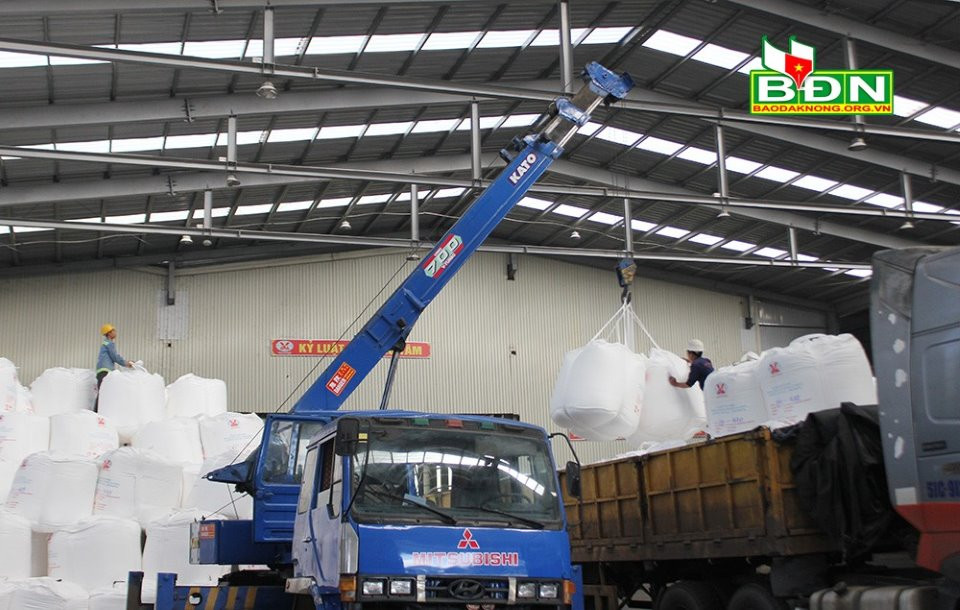 |
| The alumina plant's operations are stable, making a significant contribution to the development of Dak Nong's industrial sector. |
In particular, production and consumption activities at the Nhan Co Aluminum Plant (Dak R'lap) have remained stable. The company's mineral revenue in 2022 reached over 3,509 billion VND, achieving nearly 128% of the plan and almost 120% compared to 2021.
According to Mr. Nguyen Ba Phong, Director of Dak Nong Aluminum Company - TKV, in 2022, the company made outstanding efforts to surpass the targets set in production.
In 2023, the company will continue its efforts to implement production management solutions. The most important aspect remains ensuring the availability of raw materials and fuel for the factory.
Next, solutions are needed to reduce consumption indicators; at the same time, automation of production lines and processes, and application of Industry 4.0 technology are implemented to ensure the factory's production becomes increasingly stable and develops.
| According to the Department of Industry and Trade, Dak Nong's industrial production index in 2022 increased by 11% compared to 2021. Several key industrial products showed growth compared to the previous year, including: construction stone of all types reaching 1,150 thousand m3, up 3.6%; industrial ethanol reaching 14,500 tons, up 2.3%; powdered coffee reaching 1,890 tons, up 11.2%; cassava starch reaching 30,000 tons, up 12%; commercial electricity reaching 812 million kWh, up 10.8%; and electricity production reaching 2,550 million kWh, up 24.4%. |
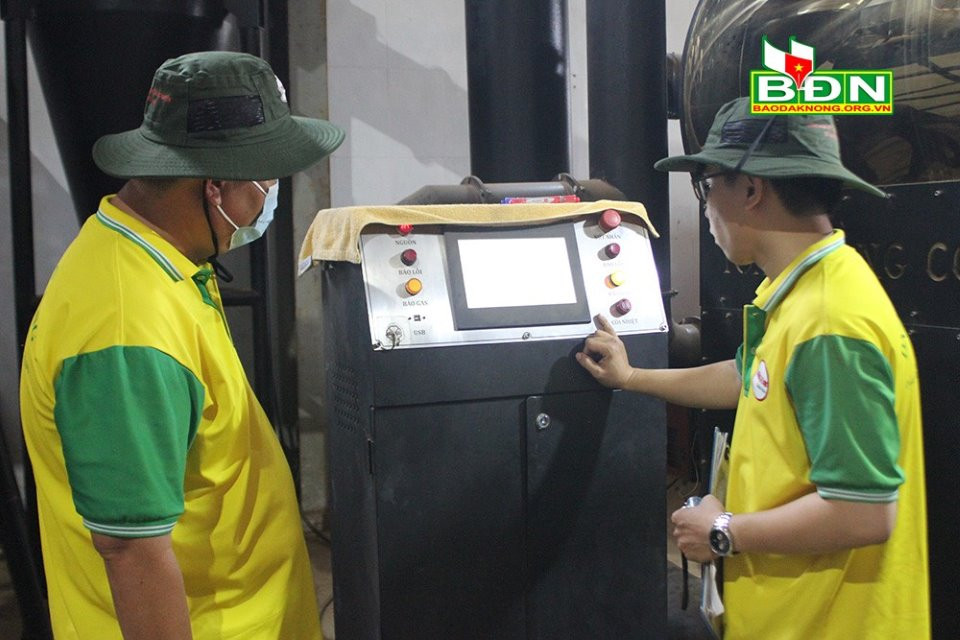 |
| Businesses are stepping up the adoption of Industry 4.0 technologies in their production operations. |
Appropriate development mechanisms and policies
The Resolution of the 12th Provincial Party Congress, term 2020-2025, set the goal of making Dak Nong "a moderately developed province by 2025 and a moderately developed province by 2030 in the Central Highlands region".
To concretize this goal, the Department of Industry and Trade of Dak Nong province is effectively implementing the Dak Nong Provincial Industrial Development Plan until 2025, with a vision to 2030.
The implementation plan is oriented towards promoting industrial development and shifting the province's economic structure towards industrialization as soon as possible. This includes focusing on mobilizing and effectively utilizing all resources to develop advantageous industries such as bauxite-alumina-aluminum, renewable energy, and agricultural and forestry product processing.
| During the period 2021-2025, Dak Nong strives to achieve an average annual increase of 16% in the industrial production index; specifically, mining industry by 3.03%; processing and manufacturing industry by 31.04%; electricity, gas, hot water, and steam production and distribution industry by 24.93%; and water supply, waste management, and wastewater treatment industry by 5%. |
Specifically, the agricultural and forestry processing industries will be boosted with a value-added growth rate of 7-8% per year; bauxite mining, alumina and aluminum smelting industries will increase by 46.46%; electricity production will increase by 13.32% per year, and commercial electricity by 36.5% per year. The industrial sector's share of GRDP will reach 16.74% by 2025.
During the period 2026-2030, Dak Nong aims to increase the proportion of the industrial sector in its GRDP to 23%. Several large-scale industrial clusters and industrial enterprises with domestic and international competitiveness will be established within the province.
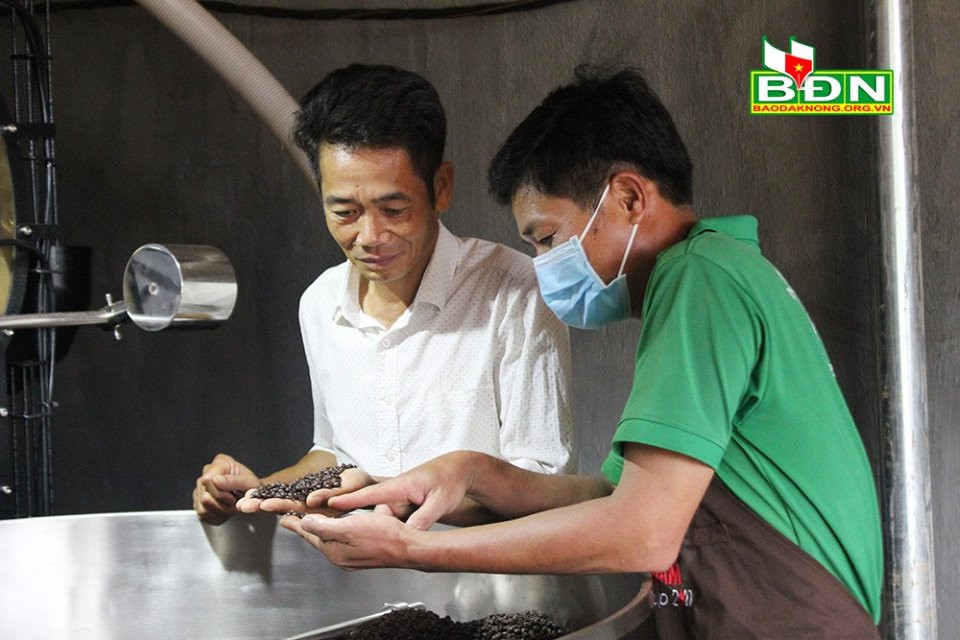 |
| By 2025, Dak Nong aims for an annual growth rate of 7-8% in the value of processed agricultural products. |
The province has determined that it will continue to promote industrial development to contribute to increased budget revenue. This will create momentum to boost growth and shift the province's economic structure.
The goal is that by 2030, the province's industrial sector will be among the strongest developing sectors in the Central and Central Highlands regions, and Dak Nong will become a center for bauxite and aluminum mining and processing in Vietnam.
According to Mr. Nguyen Ba Ut, Director of the Department of Industry and Trade, in order for the industrial sector to develop and maintain its leading position among the province's three economic pillars, the department will continue to advise on and refine appropriate mechanisms and policies.
This will focus on preferential policies such as exemptions and reductions in land rent, land use fees, and taxes… This will serve as a basis to encourage the attraction of bauxite-alumina-aluminum industrial development projects, renewable energy projects, and high-tech agricultural processing projects using the province's raw materials.
The Ministry of Industry and Trade will review, adjust, and supplement investment procedures to make them more favorable for investors. Specifically, the time for processing investment procedures will be further shortened, and this will be linked to the accountability of the head of the agency.
"In particular, Dak Nong will gradually build a cluster for the development of the bauxite-alumina-aluminum industry; at the same time, develop a cluster for production-processing, deep processing, and consumption of the province's agricultural products. This will help attract leading enterprises with the capacity to guide the supply chain smoothly and effectively," Mr. Ut emphasized.
Source


![[Image] A brilliant symphony and explosive power in the skies of Da Nang.](https://vphoto.vietnam.vn/thumb/1200x675/vietnam/resource/IMAGE/2026/05/31/1780196945787_anh-man-hinh-2026-05-31-luc-10-08-51.png)







![[Video] Sunset at Lap An Lagoon – Where the sun sets over the fishing nets](https://vphoto.vietnam.vn/thumb/340x192/vietnam/resource/IMAGE/2026/05/31/1780192137701_beach-landscape-sea-water-nature-grass-745871-pxhere-com.jpeg)











































































Comment (0)