

Human resources are a valuable asset that directly impacts business performance.
Associate Professor Bui Thanh Thuy, Head of the Tourism Department at Hanoi University of Culture, believes that for the tourism industry, human resources are considered a valuable asset, directly impacting the business performance of enterprises as well as the sustainable development of the industry.
According to current statistics, the tourism industry needs more than 40,000 workers each year, but the number of students graduating from vocational tourism training institutions annually is only about 15,000, of which more than 15% have college or university degrees. The workforce in the tourism sector is still lacking in both quantity and professional expertise.
The quality of human resources provided by training institutions to the tourism labor market is generally assessed as not meeting the requirements of businesses. Only 9.7% of the workforce has a university or postgraduate degree, over 50% have a primary, secondary, or college degree, and 39.3% have qualifications below the primary level. Of these, only 43% have received specialized professional training in tourism-related fields.
Furthermore, the structural shift in the tourism industry's human resources is not yet sustainable; its scale remains small, not commensurate with its potential, and does not meet the country's sustainable development requirements. Many areas lack highly skilled and foreign-language proficient workers, such as accommodation services and tour guides; there is also a significant shortage of professional staff and experts in state management, business administration, policy planning, market research, strategy development, and planning.
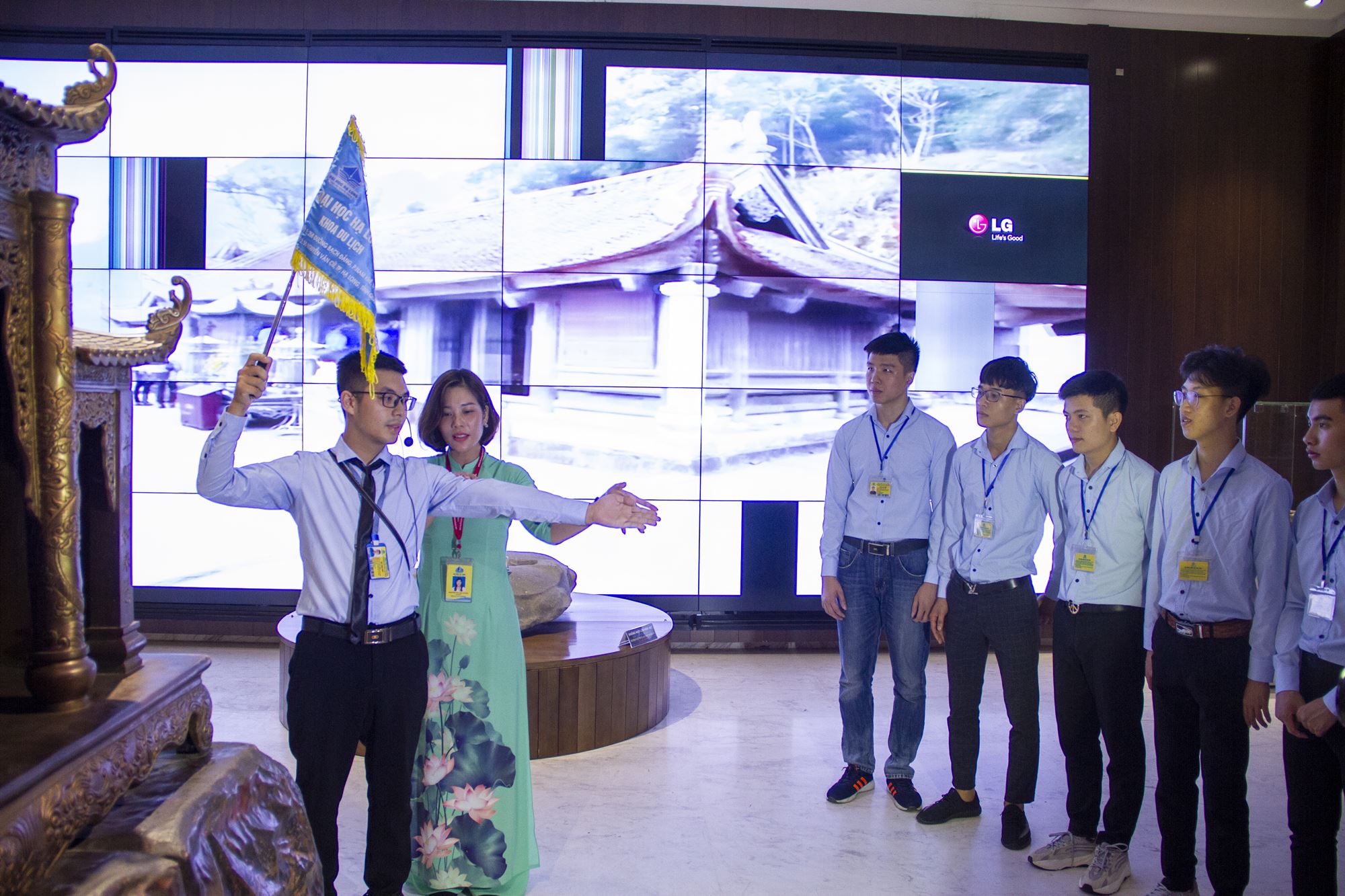
Students from Ha Long University are given the opportunity to practice tour guiding skills at tourist destinations.
According to Associate Professor Bui Thanh Thuy, ensuring human resources is one of the breakthroughs for the tourism industry, contributing to the successful achievement of the goals set out in the Vietnam Tourism Development Strategy 2030 with a vision to 2045.
Vietnam's tourism industry always needs a large workforce to create opportunities for strong economic development in the tourism sector. On the other hand, it addresses the significant pressure on employment and vocational training. Ensuring an increase in both quantity and quality, with a more rational structure to meet the demands of tourism development and the trends of science and technology as Vietnam integrates deeply and comprehensively into the international community in the process of industrialization and modernization.
To develop Vietnam's tourism human resources in the current new phase, Associate Professor Dr. Bui Thanh Thuy believes that training qualified and competent human resources always requires the attention and coordinated efforts of all levels, sectors, and society as a whole.
In this context, the State needs to consider training in general, and training in specialized fields in particular, as a key issue and must be implemented more seriously and fundamentally through priority development policies; developing high-quality human resources, according to international standards, must become an important strategy in the country's development process. This should be considered a breakthrough in the process of integration and development.
The tourism sector needs to focus on collecting and building an information system on the supply and demand of tourism human resources nationwide to ensure a balance between supply and demand. Policies, mechanisms, and tools for human resource development need to be reformed.
Furthermore, it is necessary to improve and strengthen coordination with relevant ministries, sectors, and localities to adjust the planning of the tourism training network to ensure it aligns with the development of each region. Investment should be made in schools under the Ministry of Culture, Sports and Tourism to serve as the core for training human resources in the tourism industry at all levels in key tourism centers such as Hanoi, Hue, Da Nang, Da Lat, and Ho Chi Minh City... Simultaneously, local vocational training schools should be established.
Simultaneously, it is encouraged to expand tourism training facilities in businesses, non-public institutions, and those with foreign investment, in accordance with Vietnamese law. The diversification of types of schools, classes, centers, and training facilities for tourism will continue to be promoted. Coordination with the Ministry of Education and Training, the Ministry of Labour, Invalids and Social Affairs, and other relevant ministries and agencies is necessary to develop regulations on standards for tourism training schools…
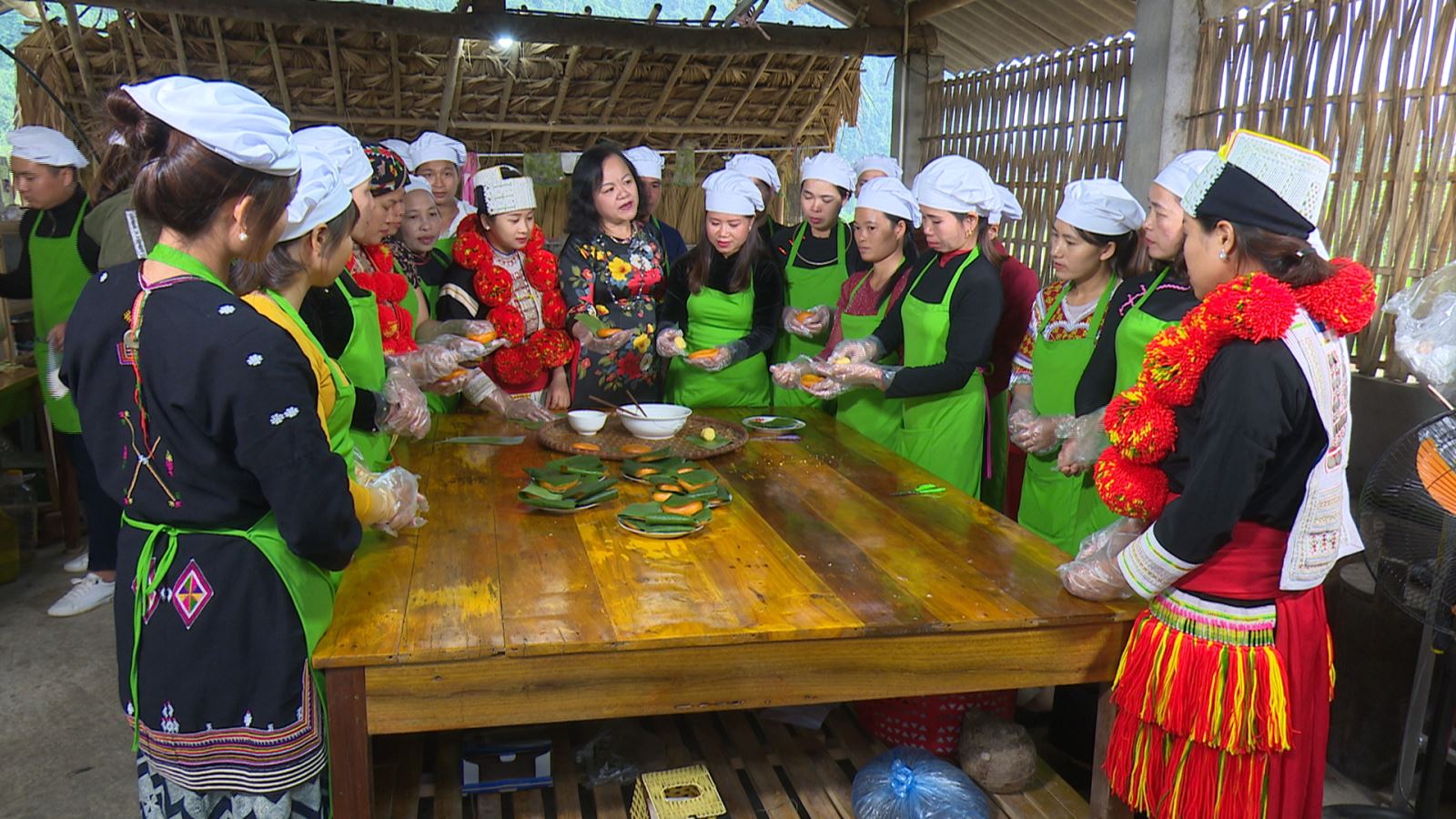
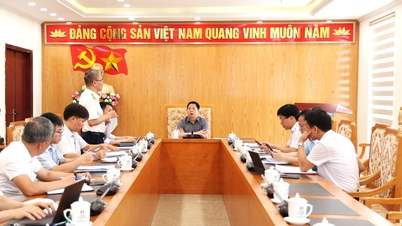
Training human resources for the tourism industry in Lam Binh district, Tuyen Quang province.
To meet the demands for increasing scale and improving the quality and effectiveness of training and developing human resources for the tourism industry, Associate Professor Dr. Bui Thanh Thuy believes that it is necessary to focus on mobilizing resources for training. In addition to budget funds, it is necessary to promote social mobilization and develop policies to attract investment in the field of training and developing human resources for the tourism industry.
The tourism training system needs to quickly meet national standards; establish a national qualifications framework that is consistent with the region and the world; rapidly implement digital transformation and build an ecosystem within the system of tourism training schools as prescribed by the Ministry of Education and Training and the Ministry of Culture, Sports and Tourism; develop regulations and mechanisms for international cooperation in training and developing human resources for the industry…
In addition, it is also necessary to seriously implement the accreditation of educational institutions and training programs; develop vocational skills assessment centers for workers in conjunction with investment in construction at vocational training facilities in some enterprises and some training institutions…
The qualities of someone working in international tourism are necessary.
According to Dr. Do Hai Yen, Deputy Head of the Tourism Faculty at Dong A University of Technology, the tourism workforce has undergone significant changes due to the impact of the Covid-19 pandemic. Many skilled professionals have switched to other professions such as working in restaurants, as delivery drivers, or in real estate. While some Vietnamese tourism professionals have returned to the tourism industry in the past two years, those who were successful in their "side businesses" continue to pursue them as a side job. As a result, there has been a certain number of high-quality personnel lost, leading to a "brain drain."
In addition, international tourism has not fully recovered, except for the South Korean market at destinations such as Nha Trang and Phu Quoc;
According to the tourism development strategy set forth by the Ministry of Culture, Sports and Tourism, by 2030, Vietnam's tourism sector will create approximately 5.5-6 million jobs, including about 3 million direct jobs.
According to the Vietnam National Tourism Administration, although Vietnam's tourism workforce has received attention in recent years, the proportion of personnel with international professional standards is still low. The number and quality of specialized personnel, such as international tour guides for specific markets like spiritual tourism and themed tourism, are limited in terms of foreign language skills, experience, productivity, and professionalism.
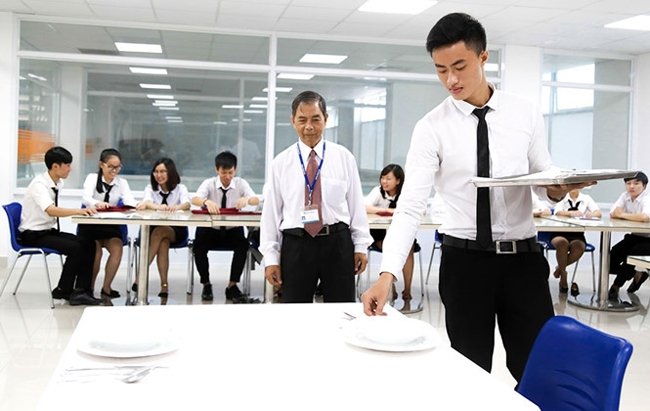
Internship time for tourism students at Ho Chi Minh City University of Technology.
Dr. Do Hai Yen believes that, in the context of current international integration in tourism human resources, tourism professionals need to possess the qualities of international tourism professionals, according to societal needs; specifically: foreign language proficiency; specialized foreign language knowledge in tourism; and creative and professional practical skills.
In the current context of tourism training, and in line with the trend of integration, the integration of tourism training between schools, businesses, the government, and students is essential. This connection creates a workforce for future businesses, generates jobs and opportunities for tourism students, facilitates government management, reduces costs for schools through collaboration with businesses, shortens class time, allows students to gain on-the-job experience at businesses, and provides them with income.
During theoretical lessons, the school's collaboration with experts from tourism businesses brings practical knowledge closer to the classroom, allowing both students and teachers to mature professionally more quickly.
"However, to implement this 'three-party' human resource development solution, policy research is needed to support lecturers and provide support procedures and payment assistance for experts, given the limited salaries of lecturers; income from businesses is inherently very high, and tuition fees already cover everything for students. Therefore, the active implementation of this solution is currently mainly through the 'relationships' of lecturers, rather than being formal and widespread. Consequently, if not addressed and resolved soon, many shortcomings will still exist," Dr. Do Hai Yen expressed.
Source



![[Image] Close-up view of the interchange connecting the two expressways and Long Thanh Airport.](https://vphoto.vietnam.vn/thumb/1200x675/vietnam/resource/IMAGE/2026/05/25/1779703378210_ndo_br_z7863716673926-224453a31600126cce10622af6290afd-4549-jpg.webp)










































































Comment (0)