

 |
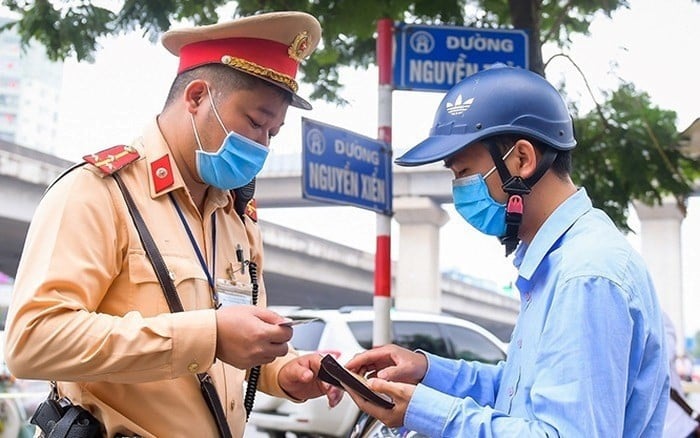
| What documents are traffic police allowed to check when stopping vehicles, according to Circular 32/2023/TT-BCA? (Source: TVPL) |
On August 1, 2023, the Minister of Public Security issued Circular 32/2023/TT-BCA regulating the duties, powers, forms, content, and procedures for patrolling, inspecting, and handling administrative violations of road traffic by the Traffic Police.
According to Circular 32/2023/TT-BCA, what documents are traffic police allowed to stop vehicles and check?
Specifically, traffic police are authorized to stop vehicles and check documents related to the driver and the vehicle, including:
(1) Driving license;
(2) Certificate of training in road traffic law, Diploma, Certificate of driving specialized motorcycles;
(3) Vehicle registration certificate or certified copy of vehicle registration certificate with original receipt from credit institution that is still valid (during the period when the credit institution holds the original vehicle registration certificate);
(4) Inspection certificate, technical safety and environmental protection inspection sticker, Certificate confirming the validity period of the inspection certificate and inspection sticker (for types of vehicles that are required to be inspected);
(5) Certificate of compulsory civil liability insurance for motor vehicle owners;
(6) Other necessary documents as prescribed (hereinafter referred to as documents).
In particular, when databases are connected to the electronic identification and authentication system, and information about the status of documents is determined, control through checking and comparing the information of those documents in the electronic identification account is as valuable as a direct document verification.
(Point a, Clause 2, Article 12 of Circular 32/2023/TT-BCA)
The duties of traffic police in patrolling and controlling traffic are outlined in Circular 32/2023/TT-BCA.
Accordingly, during road traffic patrols and inspections, traffic police are responsible for performing the following tasks:
- Comply with legal regulations and orders, as well as patrol, control, and violation handling plans issued by competent authorities.
- Patrol, monitor, and handle violations to ensure road traffic order and safety within the assigned route and area.
- Detect, promptly prevent, and handle violations of road traffic regulations and other violations of the law as prescribed; coordinate with road management agencies to detect and prevent violations of regulations protecting road infrastructure and road safety corridors.
- Investigate and resolve traffic accidents in accordance with the law and regulations of the Ministry of Public Security.
- Directly and in coordination with units within and outside the People's Public Security Force, combat crime and other violations of the law on road transport routes.
Participate in counter-terrorism and anti-riot efforts; prevent and control epidemics, natural disasters, and fires; and conduct rescue and relief operations on road transport routes as prescribed.
- Through patrol, inspection, and handling of violations, the following tasks are performed:
+ Identify loopholes, shortcomings, and inadequacies in state management of security, order, and road traffic to report and propose to competent authorities recommendations to relevant agencies for timely remedial measures;
+ Guiding, publicizing, and mobilizing the people to participate in ensuring road traffic order and safety and complying with road traffic laws.
- Perform other duties of the People's Public Security Force as prescribed by law.
(Article 7 of Circular 32/2023/TT-BCA)
Circular 32/2023/TT-BCA takes effect from September 15, 2023.
Circular 65/2020/TT-BCA; Article 4, Clauses 11, 12, 13, and 14 of Article 7 of Circular 15/2022/TT-BCA are repealed from the date Circular 32/2023/TT-BCA comes into effect.
Source















































































Comment (0)