


On the final day of the first session of the 16th National Assembly , on the morning of April 24th, the National Assembly voted to approve the Resolution on the Development of Vietnamese Culture.
The resolution has fundamentally and promptly institutionalized the major policies outlined in Resolution 80 of the Politburo, with 10 highly feasible policy groups.
At the same time, it affirms the view that the development of culture and human resources is the foundation of important endogenous resources, a great driving force, a pillar, and a regulating system for the rapid and sustainable development of the country.
The resolution also emphasized that investing in culture is investing in the future of the nation, reflecting innovative thinking on resource mobilization, in which state resources play a leading role, and social resources and the participation of the entire population are important factors.
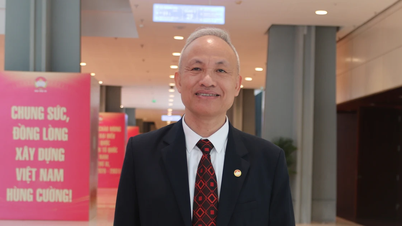
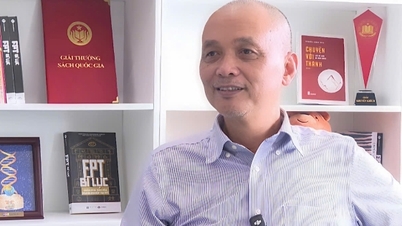
Mr. Pham Cao Thai, Director of the Legal Department (Ministry of Culture, Sports and Tourism), spoke with a reporter from the Culture Newspaper about the opportunities for breakthrough development of Vietnamese culture when implementing the Resolution.
Interviewer: Sir, on the morning of April 24th, the National Assembly officially approved the Resolution on the Development of Vietnamese Culture. How do you view the significance and opportunities that this Resolution brings to the cultural sector?
- Mr. Pham Cao Thai: The Resolution on the Development of Vietnamese Culture is a resolution that institutionalizes many major policies and guidelines of the Party as stated in Resolution No. 80-NQ/TW dated January 7, 2026, of the Politburo on the development of Vietnamese culture . This is a great opportunity for the Culture sector to promote and accelerate the development of the areas under its management.
In the past, implementation has still faced obstacles stemming from legal regulations related to investment resources, management and use of public assets, and assets formed from state capital.
Even obstacles related to existing specialized legal regulations, such as the Law on Cultural Heritage, regulations on performing arts, or areas that lack a specific legal framework and are only at the planning stage, such as the development of cultural industries, are still under study through government projects.
When this Resolution takes effect on July 1, 2026, combined with resources from the National Target Program on Culture , I believe it will truly create a "boost" for cultural development in depth, concentrating resources from both the State and society.

As you just mentioned, mobilizing resources outside the state budget is crucial. So, what groundbreaking mechanisms has the Resolution introduced to unlock resources from society, sir?
- The National Assembly's resolution thoroughly reflects the Party's viewpoint and policies on attracting investment resources for culture. We are committed to investing in culture without placing a burden on the state budget; the important thing is to unlock the resources of society.
Therefore, the Resolution outlines mechanisms to attract investment resources such as: guiding new cultural business models, forming cultural creative industrial clusters and zones; and creating preferential mechanisms for private investors and large technology corporations to invest in digital platforms. This presents a great opportunity to develop the cultural sector in the current digital transformation process.
Organizations, individuals investing, and innovative startups in the cultural sector, as well as businesses operating in creative industrial clusters and zones, are entitled to policies supporting access to land and business premises.
Organizations and individuals investing in digital infrastructure and developing high-tech solutions for culture, and focusing on the development of certain cultural industries and sectors, including cultural tourism, film, performing arts, fine arts, and online video games, will receive tax and fee support.
In addition, there are preferential mechanisms such as reducing the value-added tax rate for certain sectors from the current 10% to 5% for activities such as film production, film distribution, film exhibitions; physical education and sports; and performing arts.

Besides mechanisms related to capital and infrastructure, how is the human factor, specifically those directly involved in culture and arts, being addressed and supported in this Resolution ?
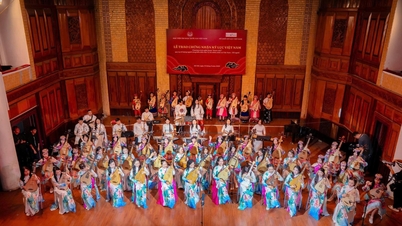
- The resolution pays special attention to cultural workers such as artists and staff at public institutions in the performing arts sector.
The regulations apply not only to public service units in the cultural sector but also to the armed forces, who will receive preferential professional allowances ranging from 40% to 60%.
Specifically, this includes civil servants and employees working in specialized professions in traditional performing arts, classical performing arts, and circus arts; and civil servants and employees working in specialized professions. in border areas, islands, ethnic minority and mountainous regions, and areas facing extreme difficulties.
To attract talent, the Resolution allows public institutions in the fields of culture and sports to apply a recruitment mechanism without competitive examinations for talented athletes, artists, and students who have graduated abroad with state budget funding in the fields of culture, arts, and sports, or individuals who have won medals or awards at regional or international levels.
Those recruited will benefit from policies aimed at attracting and utilizing talent as stipulated by law.
The resolution aims to prioritize investing at least 2% of the total budget in culture. In your opinion, what kind of impetus will this goal create for development ?
- In fact, the resources from the state budget invested in culture have increased significantly in recent years, reflecting the deep concern of the Party and the State. However, this time it is a concretization of the viewpoint and policy of Resolution 80 of the Politburo on investing at least 2% of total budget expenditure and requiring a gradual increase annually.
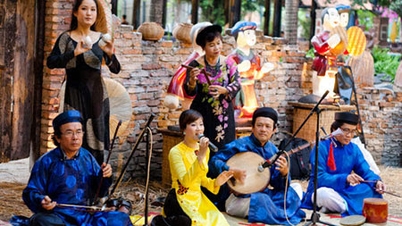
This will be a very significant resource. This resource will focus on several areas where we have long had regulations and mechanisms in place, but lacked sufficient capital for investment and development. A prime example is investment in human resources, particularly highly skilled and talented professionals, especially in the field of traditional culture and arts.
Traditional arts, without prioritized resource allocation from the State, are difficult to survive because these professions inherently struggle to attract support from society.
Thank you very much, sir !
Source: https://baovanhoa.vn/van-hoa/cu-hich-de-van-hoa-phat-trien-theo-chieu-sau-226738.html
![[Photo] General Secretary and President To Lam receives Amazon's Senior Vice President David Zapolsky](https://vphoto.vietnam.vn/thumb/1200x675/vietnam/resource/IMAGE/2026/05/22/1779466547770_a1-bnd-3513-6601-jpg.webp)













































































Comment (0)