

In the 1990s and early 2000s, stock markets around the world moved in sync with Wall Street's "drumbeat," while central banks either followed the Federal Reserve's lead or faced the influx or outflow of "hot money," putting currency values and price stability at risk.
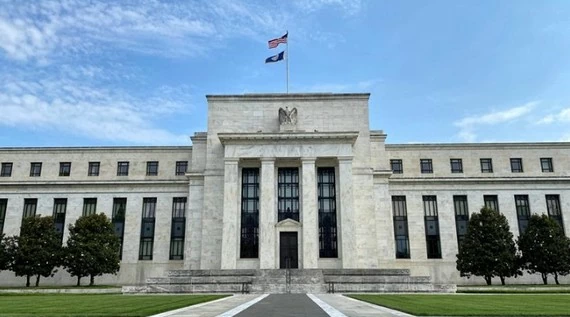 |
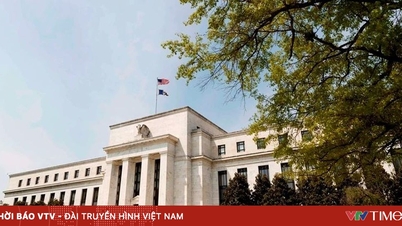
| The Federal Reserve headquarters in Washington, D.C., USA. (Source: Getty Images) |
Currently, the situation in major economies varies greatly. In the US, the issue over the past two years has been post-pandemic inflation. Europe is facing similar pressures, and the situation is worsened by the conflict in Ukraine, which has cut off the supply of cheap Russian gas. In Japan, higher inflation is expected, as it is a sign that the country's weak economy may be recovering. In China, the problem is not that prices are too high, but that they are too low.
As a result, many central banks are acting at different speeds, or even in different directions. The Fed was late in raising interest rates when inflation was rising sharply and also late in lowering interest rates when inflation was moderate.
The European Central Bank and the Bank of England, as well as many central banks in emerging markets, began lowering interest rates ahead of the Fed. Conversely, in China, policymakers are working to stem the quiet collapse of the real estate market and revive the stock market. The Bank of Japan (BoJ), however, did not lower but raised interest rates.
When central banks choose different paths, strange things happen. For example, the Japanese yen fell in the first half of the year, then surged in the summer, only to plummet again amid the possibility of the Fed and the BoJ taking different directions.
Currency fluctuations have repercussions. A weaker yen means Japanese companies will have higher profits and the Nikkei index will rise. When the yen strengthens, Japanese stocks fell 12% in a single day in August 2024.
For global markets, interest rate differentials (investors borrowing at low interest rates in Japan and investing in high-yielding assets elsewhere) worth 4 trillion yen ($26.8 billion) were the main driver. When the yen appreciated, making these deals unprofitable, investors quickly withdrew capital, dealing a severe blow to everything from US stocks and the Mexican peso to bitcoin.
The Fed is facing a decline in global influence. The structure of the world economy has changed, with the US and its allies accounting for a smaller share. In 1990, the US accounted for 21% of global GDP and the Group of Seven (G7) accounted for 50%. By 2024, these figures are projected to fall to 15% and 30%, respectively.
The US dollar remains the world's primary reserve currency, but it no longer holds the same strength as before. According to the International Monetary Fund, the share of the greenback in the foreign exchange reserves of central banks worldwide has fallen from 72% in 2000 to 58% in 2023. Data from the People's Bank of China (the central bank) shows that the country now settles a quarter of its trade transactions in yuan, up from zero more than a decade ago.
Unsurprisingly, the allure of the US has diminished. Other economies, particularly China, are beginning to exert greater influence. In the coming months, adjusting the pace and scale of the Fed's interest rate cuts will be crucial.
But perhaps China's economic stimulus package will be more significant. The measures announced by China at the end of September 2024 will add approximately $300 billion to global GDP next year, and even more if the country's Ministry of Finance implements fiscal stimulus.
Source: https://baoquocte.vn/cuc-du-tru-lien-bang-my-fed-doi-mat-voi-su-suy-giam-anh-huong-toan-cau-290748.html

![[Photo] Prime Minister Pham Minh Chinh presides over a meeting on private sector economic development.](/_next/image?url=https%3A%2F%2Fvphoto.vietnam.vn%2Fthumb%2F1200x675%2Fvietnam%2Fresource%2FIMAGE%2F2025%2F12%2F20%2F1766237501876_thiet-ke-chua-co-ten-40-png.webp&w=3840&q=75)

![[Photo] Prime Minister Pham Minh Chinh presides over the conference announcing the establishment of the International Finance Centre in Vietnam.](/_next/image?url=https%3A%2F%2Fvphoto.vietnam.vn%2Fthumb%2F1200x675%2Fvietnam%2Fresource%2FIMAGE%2F2025%2F12%2F21%2F1766309817714_ndo_br_dsc-3400-jpg.webp&w=3840&q=75)


























































































Comment (0)