

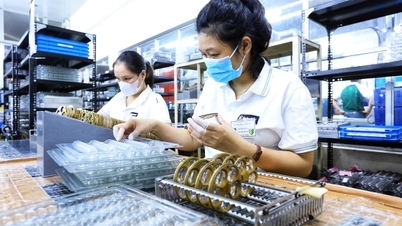
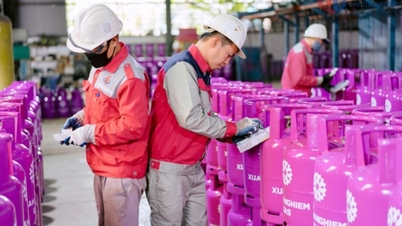
Foreign direct investment (FDI) is considered one of the key drivers for Vietnam to achieve its high growth targets in 2025 and beyond.
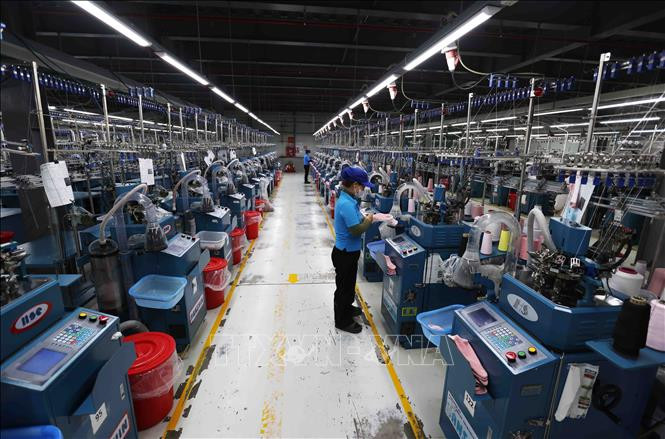
Many policies are being implemented by ministries and agencies to boost the attraction of this investment capital in the new era.
An attractive investment destination.
According to data from the General Statistics Office, in the first two months of 2025, total registered foreign direct investment (FDI) in Vietnam reached nearly US$6.9 billion, an increase of 35.5% compared to the same period last year. The disbursed capital of foreign investment projects is estimated at approximately US$2.95 billion, an increase of 5.4% compared to the same period.
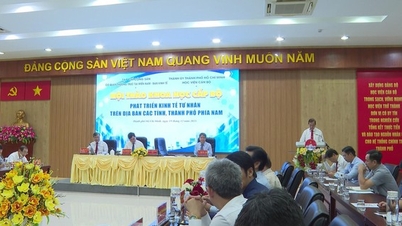
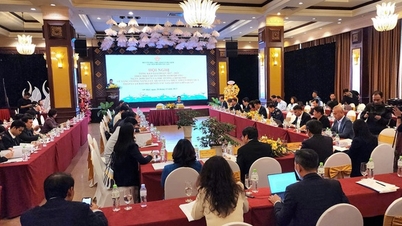
These data show that foreign investors' confidence in Vietnam's business environment remains very strong. At the Conference on Investment Funds and Foreign Investment in Vietnam's New Development Era, organized by the Ministry of Finance in Ho Chi Minh City on March 28, many foreign associations and businesses also expressed this message.
According to Jeong Jihoon, Vice President of the Korean Chamber of Commerce in Vietnam (KOCHAM), while investment flows into many countries around the world are slowing down, Vietnam continues to maintain an impressive level of FDI attraction.
Korean businesses consider Vietnam an attractive investment destination with many development advantages, as Vietnam is actively implementing large-scale infrastructure projects such as high-speed rail, urban rail, nuclear power plants, and gas-fired power plants.
In addition, the Vietnamese government is promoting policies to support investment in research and development (R&D); and is offering strong incentives for the information technology and high-tech industries.
In particular, thanks to its favorable geographical location, Vietnam has a developed logistics and transportation system; and maintains diplomatic stability, which helps reduce barriers to import and export activities.
"With these advantages, businesses around the world, especially many Korean businesses, highly appreciate the potential for FDI investment in Vietnam and consider it one of the top priorities when considering expanding investment abroad," said Mr. Jeong Jihoon.
Mr. Yee Chung Seck, Vice President of the Singapore Business Association in Ho Chi Minh City, also stated that Vietnam is a rising star in the global economy and its growth trajectory continues to attract the attention of investors worldwide.
According to Mr. Yee Chung Seck, Vietnam has been proactive in attracting FDI. Efforts to simplify administrative procedures, reduce tariffs, and provide tax incentives have made it easier for foreign businesses to establish and operate in Vietnam.
In particular, Vietnam's participation in various free trade agreements (FTAs), such as the Comprehensive and Progressive Trans-Pacific Partnership (CPTPP) and the Vietnam-EU Free Trade Agreement (EVFTA), has placed it in a favorable position within the global trade network. These agreements enhance market access and facilitate FDI.
From a business perspective, Marc Woo, General Manager of Google Vietnam, also stated that Vietnam is an important partner for Google, with numerous investments in supporting startups and developing artificial intelligence (AI). Google's recent opening of an office in Ho Chi Minh City also demonstrates the corporation's long-term commitment to the Vietnamese market.
Removing bottlenecks in attracting FDI.
Despite achieving many positive results, attracting foreign investment still faces several obstacles and difficulties. In practice, FDI enterprises still encounter numerous challenges due to cumbersome administrative procedures, inconsistent implementation of tax policies, and unpredictability.
Vietnam has a significant advantage in its young and dynamic workforce, but there are still skills gaps that need to be addressed to meet the needs of businesses. Many FDI businesses believe that, in order to attract and retain investors, Vietnam needs a high-quality workforce and a synchronized, modern infrastructure system.
According to Nitin Kapoor, Vice President of the Vietnam Business Forum Alliance (VBF), attracting sustainable and high-quality foreign investment is key to Vietnam's long-term development.
To enhance investor confidence, Nitin Kapoor believes that consistent, clear, and predictable policies are crucial. This is especially necessary for sectors requiring long-term investment, such as high technology, renewable energy, and infrastructure.
According to a VBF representative, investors are showing increasing interest in green, clean projects that utilize advanced technology. "To attract high-quality investment, Vietnam needs to accelerate digital transformation, develop renewable energy, and expand green supply chains. Simultaneously, policies encouraging businesses to adhere to ESG standards will help Vietnam become an attractive destination for advanced industries and the global green economy," said Mr. Nitin Kapoor.
KOCHAM representatives proposed that Vietnam should soon complete its administrative procedures through digitalization and upgrade its management system to enhance coordination among relevant agencies. This would facilitate faster and smoother market access for FDI enterprises, thereby boosting investment flows into Vietnam.
Mr. Do Van Su, Deputy Director of the Foreign Investment Department (Ministry of Finance), said that Vietnam has shifted from passively attracting investment to actively approaching large corporations and participating deeply in global supply chains. The future orientation is to attract selective, high-quality FDI, prioritizing high technology and environmentally friendly practices.
According to the Foreign Investment Agency, in addition to issuing new mechanisms and policies to create incentives to attract investors into key sectors, Vietnam is implementing a comprehensive set of solutions ranging from developing land funds and industrial park infrastructure, developing human resources and the labor market, to developing energy infrastructure and supporting industries.
To attract FDI in the new phase, Minister of Finance Nguyen Van Thang also stated that the Ministry will continue to work with other ministries, sectors, and localities to remove obstacles in the process of attracting FDI capital by further improving the business environment, reducing costs and administrative procedures. At the same time, it will promote public-private partnerships with corporations and investment funds that have sustainable capital sources, operate efficiently, possess management experience and good business models to invest in strategic infrastructure projects, artificial intelligence, semiconductors, science and technology development, innovation, digital transformation, renewable energy, etc.
The Ministry of Finance will also issue policies to attract selective investment, prioritizing projects with spillover effects, and listening to suggestions from businesses to address difficulties. This will create linkages between the FDI sector and the domestic economy, enhancing the competitiveness of Vietnamese businesses to participate effectively in global value chains.
"The Ministry of Finance will maintain policy dialogue to promptly identify difficulties and obstacles and proactively propose solutions, creating all favorable conditions for investors to participate in investment in Vietnam," Minister Nguyen Van Thang said.
Simultaneously, the head of the Ministry of Finance also recommended that investment funds and the business community develop long-term, sustainable, and environmentally friendly business strategies in Vietnam; and proactively innovate production and business models. He also called on businesses to implement good corporate culture, policies and regulations for employees, and promptly propose appropriate policies…
Source
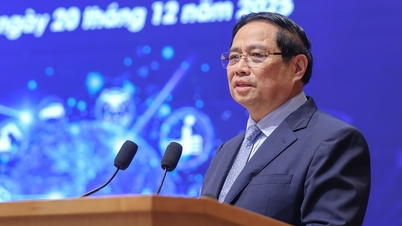
![[Photo] Prime Minister Pham Minh Chinh presides over a meeting on private sector economic development.](/_next/image?url=https%3A%2F%2Fvphoto.vietnam.vn%2Fthumb%2F1200x675%2Fvietnam%2Fresource%2FIMAGE%2F2025%2F12%2F20%2F1766237501876_thiet-ke-chua-co-ten-40-png.webp&w=3840&q=75)










































































Comment (0)