

General Secretary To Lam 's speech at the 14th National Congress forum: “ Every delegate attending the Congress, every cadre and Party member nationwide, when studying the documents, should ask themselves: What benefit does this bring to the people? Does it increase people's trust? Does it improve the people's lives? Does it make the country stronger and richer? If the answer is unclear, we must continue to refine it, because every decision is only meaningful when it is supported and approved by the people and brings practical benefits to the people, ” is not only a reminder of political thinking methods, but also a strong affirmation of the people-oriented nature of the ruling Party, a fundamental criterion for evaluating the quality of all decisions in the new stage of the country's development.
Source of strength
In Ho Chi Minh's thought, "the people are the foundation" is a fundamental principle of the revolution. He affirmed: "In the sky, nothing is more precious than the people. In the world, nothing is stronger than the united force of the people."
Historical experience shows that when the Party relies on the people, listens to the people, respects the people, and promotes the people's right to self-governance, then the revolution develops, the country is stable, and society is harmonious. Conversely, if it distances itself from the people and disregards their interests, then even if its policies are theoretically correct, they will be difficult to implement in practice, and may even damage the Party's prestige and leadership role.

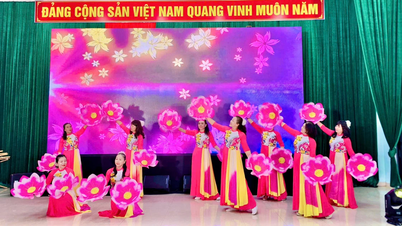
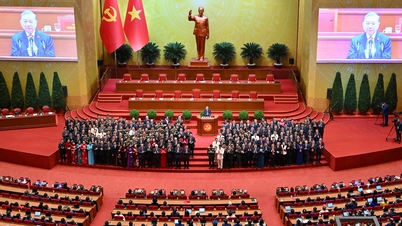
The special art program "Under the Glorious Banner of the Party" on the evening of January 23 (Photo: Hai Long)
Under the ruling party, as the country enters a new stage of development with intertwined opportunities and challenges, the profound understanding of the principle that "the people are the foundation" is of vital importance. This is not only a matter of revolutionary ethics, but also a fundamental political requirement to consolidate the social foundation of the regime.
The 14th National Congress of the Party took place in the context of the country facing new opportunities, with the aspiration to build Vietnam into a developed, high-income nation with a just, democratic, and civilized society. To realize that aspiration, there is no other way than to continue to steadfastly and creatively apply the ideology of "the people are the foundation" in all areas of social life.
When the people are truly placed at the center of development, when the interests of the people become the highest goal of all policy decisions, then the inherent strength of the country will be powerfully unleashed. This is the strength of trust, consensus, responsibility, and creativity of millions of Vietnamese people.
The Party is strong when the people trust it, and the country develops when the people are united.
The people's trust in the Party is not something that comes naturally, but is built up over the long course of history, through the concrete actions of cadres and Party members, and the practical effectiveness of policies. When the people see their legitimate rights respected, their voices heard, and their lives improving, their trust will be firmly consolidated.
In the current context, where the demands for rapid and sustainable development are increasingly high, it is very difficult to successfully implement major policies without broad social consensus. Such consensus can only be formed on the basis of harmonious interests, social justice, and transparency in management and administration.
The General Secretary stated: "All decisions are only meaningful when they are supported and endorsed by the people and bring practical benefits to the people." This is both a criterion and a goal of the leadership process. Correct decisions are those that are implemented in practice, embraced by the people, voluntarily carried out, and protected. In that case, the people are not only beneficiaries but also active participants in the country's development.
The interests of the people should be the yardstick for all policy decisions.
A key highlight in the General Secretary's speech was the requirement that every cadre and Party member must ask themselves before implementing any policy or initiative: what benefits does it bring to the people? Does it increase the people's trust? Does it improve the people's lives? This means using the practical interests of the people as the highest measure to assess the rightness or wrongness, the success or failure, of all decisions.
In reality, some policies are formulated with good intentions, but due to inadequate preparation, insufficient social impact assessment, or a lack of listening to opinions from the grassroots, problems arise during implementation, even causing public discontent. This shows that if policy-making thinking is limited to subjective will, narrow interests, or purely managerial thinking, it is very easy to fall into the situation of being "correct on paper, difficult to implement in practice."
The requirement, "if the answer is unclear, further refinement is necessary," reflects a spirit of openness, scientific thinking, and high responsibility towards the people. It also affirms that no policy is immutable; if it does not meet practical requirements and does not bring clear benefits to the people, it must be adjusted, supplemented, and perfected. This is what constitutes the character of a genuine revolutionary party, one that dares to look directly at the truth, speak the truth clearly, and make timely corrections for the benefit of the people.
"Servants of the people"
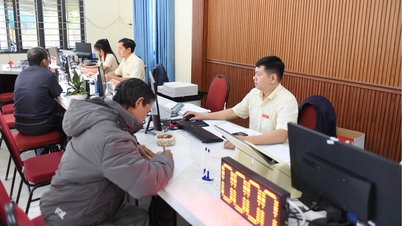
For the ideology of "the people are the foundation" to truly permeate political and social life, the most important thing is to translate it into concrete actions in every field, at every level, and by every official and Party member. First and foremost, in building and perfecting institutions, it is necessary to ensure that all legal regulations are geared towards protecting the legitimate rights and interests of the people; reducing the burden of administrative procedures and eliminating unnecessary barriers that cause difficulties for citizens and businesses.
For cadres and Party members, especially those in leadership positions, it is essential to truly consider themselves "servants of the people," placing the interests of the people above personal interests. Every decision signed and every daily action must be accompanied by self-reflection: what benefits will the people receive? Will the people be satisfied? This attitude will create a leadership style that is close to the people, respects the people, and serves the people. President Ho Chi Minh's teaching, "Whatever benefits the people must be done with all our might; whatever harms the people must be avoided at all costs," profoundly reflects the moral principle of "patriotism and love for the people," placing the interests of the people above all else. It demands that cadres and Party members wholeheartedly serve the people, regardless of difficulties and hardships, to build a prosperous and strong nation where the people are well-off and happy.
Furthermore, it is necessary to strongly promote mechanisms for the people to participate in providing feedback and critical opinions on policies and guidelines; listening to opinions from the grassroots level and from those directly affected by policies. When the voice of the people is valued, the quality of decision-making will be improved, errors will be minimized, and sustainable social consensus will be created.
"The people are the foundation" is not just a motto for action, but the ideological basis, the core value that constitutes the revolutionary and humane nature of our Party. Thoroughly understanding and consistently implementing this ideology is the most solid path for the Party to maintain its leadership role, for the country to develop sustainably, and for the goal of "a prosperous people, a strong nation, democracy, fairness, and civilization" to soon become a vibrant reality in the lives of every citizen.
Author: Dr. Dinh Van Minh, former Director of the Legal Department (Government Inspectorate), is an official with over 34 years of experience in the Inspectorate sector; including 16 years in scientific research, having served as Director of the Institute of Strategy and Science of Inspection; the remaining time he has been involved in legal work, participating in the drafting of the Law on Prevention and Combat of Corruption and regulations on controlling assets and income of officials, civil servants, and public employees.
Source: https://dantri.com.vn/tam-diem/dan-la-goc-20260123223343375.htm


























![[Photo] A vibrant celebration of generations of Nhan Dan Newspaper staff](https://vphoto.vietnam.vn/thumb/1200x675/vietnam/resource/IMAGE/2026/03/11/1773228432744_cb-75-nam-7-7034-jpg.webp)























































Comment (0)