

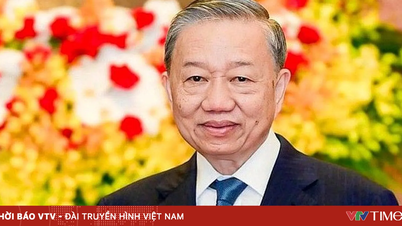
The fundamental problem is that the mechanisms for managing, exploiting, mobilizing, allocating, utilizing, and developing resources have not kept pace with the demands of new development. Therefore, if resources are not fully inventoried, not promptly unlocked, not allocated correctly, not used effectively, and not measured by productivity and output, then no matter how great the potential, it cannot automatically become a driving force for growth - General Secretary and President To Lam emphasized.
Currently, the main resources for economic development come from the state sector, the private sector, and foreign direct investment (FDI). However, according to calculations by the Ministry of Finance , to boost economic growth to over 10%, the total social investment needed is 4.93 trillion VND, equivalent to about 33-33.7% of GDP. This is a huge pressure despite many favorable factors such as the recovery of the economy and the increasing confidence of the business community in our country's growth potential.
This pressure is reflected in the fact that the promotion of private investment has not met expectations; the promotion of large-scale FDI projects still faces many obstacles; economic growth remains dependent on credit capital; and the role of the stock market in mobilizing medium- and long-term capital for businesses and the economy has not been fully utilized.
Analyzing these issues in more detail, many opinions suggest that while the double-digit growth target requires mobilizing enormous financial resources, it is more important to diversify funding channels and improve the efficiency of capital allocation and utilization. Furthermore, fiscal policy must continue to play a crucial role in fostering long-term growth, developing the capital market as a pillar for mobilizing medium and long-term resources, and reducing reliance on bank credit.
Bank credit should be recognized as just one of many important channels, not the sole pillar. In the long term, it is necessary to diversify resources; attract more private and foreign investment; expand public-private partnership (PPP) models; and better utilize resources within the population. In particular, the quality of growth must be prioritized, not just relying on capital without institutional reform, technological innovation, and improved labor productivity.
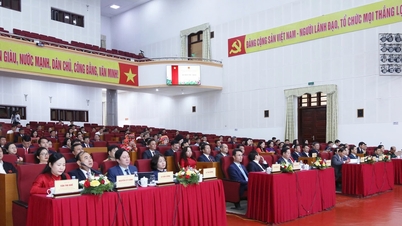
At the National Conference on Studying, Understanding, and Implementing the Resolution of the Second Plenum of the 14th Central Committee of the Communist Party of Vietnam in April, General Secretary and President To Lam affirmed the need for fundamental innovation in development thinking, effectively utilizing all resources and capital for sustainable growth. A high-growth, sustainable economy capable of breakthroughs cannot operate solely on a single resource base, and certainly cannot place the entire burden of development on the shoulders of the state.
More importantly, the goal of double-digit growth is high-quality development, not growth at all costs. High growth must be accompanied by macroeconomic stability, inflation control, ensuring major balances, public debt safety, financial and banking system safety, environmental protection, social security, national defense and security, improving people's lives, and strengthening social trust. We cannot sacrifice stability for growth. We cannot prioritize speed over quality. We cannot prioritize scale over efficiency. We cannot compromise long-term foundations for short-term gains.
To achieve this goal, according to General Secretary and President To Lam, it is necessary to accurately and comprehensively assess the country's development resources. This assessment must answer three questions: Which resources are outstanding advantages? Which resources can be mobilized immediately? Which resources are still potential and have not yet been transformed into driving forces for development? Furthermore, it is necessary to review, classify, and decisively address resources that are slow to be put into use, preventing national resources from lying dormant in procedures, disputes, fear of responsibility, or slow coordination between agencies.
Source: https://daibieunhandan.vn/danh-gia-dung-va-day-du-cac-nguon-luc-10417930.html



























































































Comment (0)