


From "growth quotas" to local governments and state-owned enterprises.
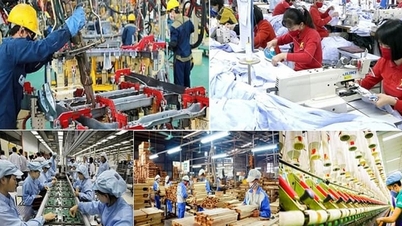
The report on the socio-economic situation in April and the first four months of 2026 shows many positive signs. The Industrial Production Index (IIP) in April is estimated to have increased by 3.0% compared to the previous month and by 9.9% compared to the same period last year. In April, nearly 20,400 new businesses were established nationwide. The total registered capital added to the economy in the first four months of 2026 was nearly 1.9 trillion VND, an increase of 4.2% compared to the same period in 2025. Investment from the State budget in April is estimated at nearly 54.8 trillion VND, an increase of 8.2% compared to the same period last year.
However, first-quarter growth did not meet the projected target, traditional growth drivers have not yet reached their full potential, and new growth drivers need time to become effective.
In light of the above situation, on May 21st, Prime Minister Le Minh Hung urgently requested the completion of assigning growth targets to localities and state-owned enterprises in the spirit of "assigning them once, as soon as possible." A specific and clear limit was set by the Prime Minister when he requested the Ministry of Finance to take the lead, in coordination with relevant ministries and agencies, in compiling reports from localities on growth targets; based on this, a document should be sent to request opinions from ministries and agencies managing sectors and fields, and then reviewed, finalized, and reported to the Government before May 25th.
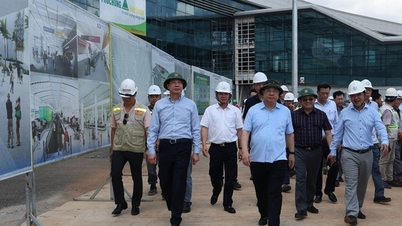
Shortly after last weekend, the Prime Minister assigned government leaders to monitor and direct localities in achieving the economic growth target of over 10% in 2026 and subsequent years.
On the part of the National Assembly, working with the Standing Committee of the Economic and Financial Committee on key tasks for 2026 and the entire term, National Assembly Chairman Tran Thanh Man requested that the Economic and Financial Committee proactively review current regulations to identify bottlenecks and inadequacies, and then propose timely amendments and additions. Regarding policy advice to ensure double-digit growth targets, creating room for development without sacrificing macroeconomic stability, financial security, public debt, and growth quality, it is necessary to clarify the responsibilities of each ministry, sector, and locality, as well as the responsibility of the National Assembly in issuing decisions and mechanisms to promote growth. The proposed solutions must be based on practical evidence, clearly assign responsibility, and avoid vague or impractical approaches.
The Speaker of the National Assembly also requested that the Economic and Financial Committee assist the National Assembly in designing mechanisms that are sufficiently safe for development, flexible enough to unlock resources, transparent enough to control risks, and accountable enough to prevent losses and waste. Financial discipline must be strict, but development policies must be open; management must be tight, but must not stifle resources; macroeconomic stability must be firm, but must not miss opportunities for growth.
Thus, it can be seen that setting growth targets is not only a technical requirement in economic management, but also considered an important starting point for localities and state-owned enterprises to proactively build development scenarios and allocate resources for the 2026-2030 period. The entire political system, the National Assembly, and the Government are striving to implement measures to promote double-digit economic growth in 2026 and subsequent years.

The issue has escalated to "delegating responsibility" to Deputy Prime Ministers and local leaders.
The allocation of socio-economic development targets to localities and state-owned enterprises is a particularly important task to realize the goal of double-digit growth. This is also a matter that will be applied in 2025 and has shown effectiveness with an impressive growth rate of 8.02%, placing Vietnam among the top high-growth countries in the region and the world. The lessons learned from 2025 can become valuable experience for the new "outsourcing" system because the goal of double-digit growth is extremely challenging. Especially noteworthy is that this time, the allocation not only includes "growth targets" but also "responsibility," with six Deputy Prime Ministers being assigned to monitor and direct localities in achieving economic growth targets exceeding 10% in 2026 and subsequent years.
Economist Cao Sy Kiem, former Governor of the State Bank of Vietnam, said that "growth quotas" and "responsibility quotas" are a division of responsibilities among localities, especially the heads of localities and heads of state-owned economic groups and enterprises, so that they all strive together, thereby creating a combined strength for the country.
"If we keep things general, it's difficult to assess achievements and assign responsibility. A growth-based system will harness even the smallest resources of each locality. At the same time, it will clearly show achievements, who is striving, who is achieving the goals, and through that, the responsibility of each locality, individual local leader, and head of state-owned enterprise in contributing to the country's development," Mr. Kiem said.
Mr. Kiem also assessed that the "delegation of responsibility" to the six Deputy Prime Ministers reflects the spirit of "six clear points": clear person, clear task, clear time, clear responsibility, clear product (result), and clear authority. Each Deputy Prime Minister will have to monitor, supervise, and urge the localities they are assigned to achieve growth targets. "With clear people, clear responsibility, and clear tasks, we will achieve clear results. And I believe this time we will succeed and achieve double-digit growth in 2026 and subsequent years," Mr. Kiem confidently stated.
Mr. Nguyen Quang Huan, Member of the Presidium of the Central Committee of the Vietnam Fatherland Front, and Chairman of the Board of Directors of Halcom Vietnam Joint Stock Company, commented that assigning targets and "growth quotas" to localities will encourage efforts and growth in each locality. Localities wishing to achieve growth must ensure a harmonious balance of factors, not only economic but also environmental and social factors, to ensure sustainable growth.
According to Mr. Huan, the "growth target allocation" approach yielded good results in 2025, with growth reaching 8.02%. This achievement provides valuable lessons for 2026. However, these lessons cannot be simply replicated, as 2026 is expected to be unpredictable and complex due to the ongoing conflict in the Middle East, thus requiring flexible economic management.
Mr. Huan also stated that assigning tasks to the Deputy Prime Ministers is a positive factor. Because the country's economic development is not just limited to one locality but encompasses various sectors and fields. For example, oil and gas are not only managed in Ho Chi Minh City but also by the National Oil and Gas Group; coal is not only managed in Quang Ninh but also by the Vietnam Coal and Mineral Corporation.
"Growth targets, or simply put, 'growth KPIs for each locality,' will motivate and hold each locality accountable. Assigning targets to localities also encourages them to focus on promoting economic development. To achieve this, localities must proactively find solutions to overcome difficulties so that businesses can develop and contribute to local development, thereby contributing to the central government," Mr. Nguyen Quang Huan emphasized.

Dr. Bui Duc Thu - former member of the National Advisory Council on Financial and Monetary Policy:
Remove bottlenecks at the local level to free up resources.
To achieve high economic growth, each sector of the economy must also experience high growth. In order to boost the economy and achieve high growth rates, leadership and guidance nationwide, as well as at the local level, must be decisive and diligent. Through working with several localities, I've observed their concerns and anxieties about how to achieve the growth targets set by the Government. Therefore, to help localities overcome bottlenecks and unleash resources for economic growth, leadership and guidance from the central government to the local level are crucial. The Prime Minister has also assigned Deputy Prime Ministers to closely monitor and expedite the resolution of existing obstacles in each locality, addressing them more quickly and effectively. This will free up resources, attract investment, boost production and business, and promote socio-economic development nationwide and in each locality.
Source: https://daidoanket.vn/trach-nhiem-trong-khoan-tang-truong.html
![[Image] Hanoi's urban life under the challenge of a "scorching hot" environment](https://vphoto.vietnam.vn/thumb/1200x675/vietnam/resource/IMAGE/2026/05/25/1779706979265_nang-nong-t5-2026-minh-duy-7-4636-jpg.webp)
![[Image] Close-up view of the interchange connecting the two expressways and Long Thanh Airport.](https://vphoto.vietnam.vn/thumb/1200x675/vietnam/resource/IMAGE/2026/05/25/1779703378210_ndo_br_z7863716673926-224453a31600126cce10622af6290afd-4549-jpg.webp)

























































































Comment (0)